POSTEDITOR OFFICE

 What is the role of robotics in modern agriculture?

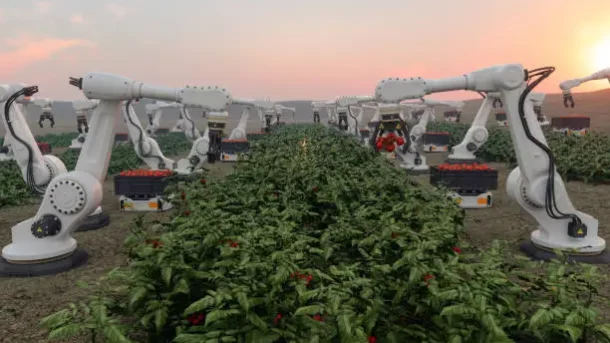
Automation of Labor-Intensive chores: By automating labor-intensive agricultural chores, robots can lessen the need for manual labour. They can efficiently and precisely carry out tasks including planting, seeding, transplanting, weeding, spraying, and harvesting. This automation boosts production, lowers costs, and addresses the labour deficit.

Robots with sophisticated sensors, computer vision, and machine learning algorithms are capable of carrying out tasks with a high degree of accuracy and precision. They may recognise and selectively target particular plants, weeds, or pests, consuming less water, fertiliser, and pesticides in the process. This focused strategy encourages sustainable farming methods while increasing efficiency and decreasing waste.

Robots with sensors and imaging capabilities may monitor and gather data on crops in real-time, including information on their health, their growth patterns, and their environmental circumstances. They may keep an eye on variables including temperature, humidity, nutrient levels, and soil moisture. Robotic data collection assists farmers in making educated decisions regarding crop-related practises such as irrigation, fertiliser application, disease management, and more.

Autonomous Machines and Vehicles: The usage of autonomous vehicles in agriculture is growing, including self-driving tractors and drones. These machines may operate autonomously and carry out duties including field mapping, crop monitoring, planting, spraying, and soil analysis. Autonomous equipment enhances operational effectiveness, lowers human error, and permits 24-hour farming operations.

 How are sensors used in smart agriculture?

sensors

Soil sensors: Soil sensors gauge the soil’s temperature, moisture content, and nutrient levels. Farmers can use this information to make well-informed decisions about managing soil health, applying fertiliser, and scheduling irrigation. In order to track the distribution of moisture and guarantee effective water use, soil sensor can be positioned at various depths.

Weather Sensors: Data on temperature, humidity, precipitation, wind speed, and sun radiation is collected by weather sensors. Monitoring weather trends, forecasting changes, and modifying farming practises all depend on this knowledge. Weather sensor aid in resource management optimisation, crop protection from severe weather, and irrigation optimisation.

Crop health sensor monitor a number of aspects of a plant’s health, such as the amount of chlorophyll present, the temperature of the leaf, and the amount of photosynthetic activity. These sensors are capable of identifying the first hints of stress, nutrient deficits, illnesses, and insect infestations. Farmers can take prompt action to avert or lessen potential damage and improve treatment plans by keeping an eye on the condition of their crops.

Sensors are used in livestock facilities to monitor the health, behaviour, and welfare of the animals. They can monitor things like body temperature, heart rate, level of activity, and dietary habits. Livestock sensor aid in the early detection of illness, stress, or abnormal behaviour, allowing for better herd management and early intervention.

What are the benefits of using drones in agriculture?

drones

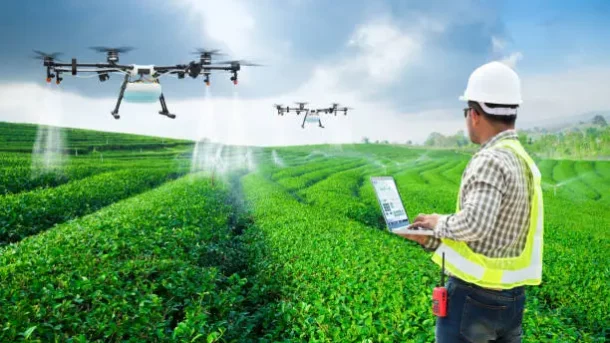
Aerial imaging and mapping: Farmers can construct precise maps of their property using high-resolution aerial photos taken by drones with cameras or sensors. With the help of this data, targeted interventions and precision agriculture techniques may be carried out. They also reveal important insights into crop health, growth trends, and differences within the field.

Drones can regularly fly over crops to obtain visual and multispectral data as part of crop monitoring and health assessments.  this data may be analysed to monitor crop health and find early indications of stress, nutrient deficiency, illness, or insect infestation. Farmers may minimise crop losses, allocate resources more efficiently, and take necessary action with the aid of prompt detection.

Agricultural drones allow farmers to monitor crop and livestock conditions from the air to keep watch for potential problems and help optimize field management. There are several functions that farmers and other agribusiness owners can use agricultural drone services for, including:

  • Land imaging
  • Surveying topography and boundaries
  • Soil monitoring
  • Livestock movement and counting
  • Irrigation monitoring
  • Spraying needs
  • Collecting soil and water samples
  • Troubleshooting

  What is precision agriculture?

precision

Precision farming, commonly referred to as smart farming, is a modern method of farming that makes use of technology and data analytics to maximise the effectiveness and production of agricultural practises. To acquire data on soil conditions, weather patterns, crop health, and other pertinent elements, it makes use of a variety of technologies, including remote sensing, satellite imaging, GPS, sensors, and data analysis tools.

Making focused judgements about crop management that are better informed is the main objective of precision agriculture. Farmers can learn a lot about their fields’ unpredictability by collecting and analysing real-time data. As a result, they may customise their farming techniques to certain regions or even specific plants, maximising resource allocation and reducing waste.The advantages of precision agriculture are numerous.

Farmers may carefully apply fertilisers, insecticides, and water only where and when it is necessary, cutting down on input costs and having a smaller negative impact on the environment. Farmers can spot possible problems early on by keeping an eye on the health and growth patterns of their crops, allowing for prompt actions to stop or lessen damage. Additionally improving crop yield and quality overall is this technology-driven strategy.

Additionally, precision agriculture makes it possible to accomplish operations like planting, spraying, and harvesting with greater accuracy and efficiency by using automated systems and machinery, such as autonomous vehicles, drones, and robotic equipment.

How do you prefer organic or conventional methods?

Managing pests and diseases on a farm involves a combination of preventive measures and control strategies. Here are some common approaches:

Prevention: Implementing preventive measures is crucial to reduce the risk of pests and diseases. This includes practices like crop rotation, using disease-resistant varieties, maintaining proper sanitation, and practicing good farm management techniques.

Cultural control: Cultural practices can help minimize pest and disease problems. Examples include proper irrigation and drainage, timely pruning, maintaining proper plant spacing, and promoting overall plant health through balanced nutrition.

Biological control: This method involves introducing natural enemies of pests to control their populations. Beneficial insects, parasites, predators, and microbial agents can be used to target specific pests. This approach is commonly employed in integrated pest management (IPM) programs.

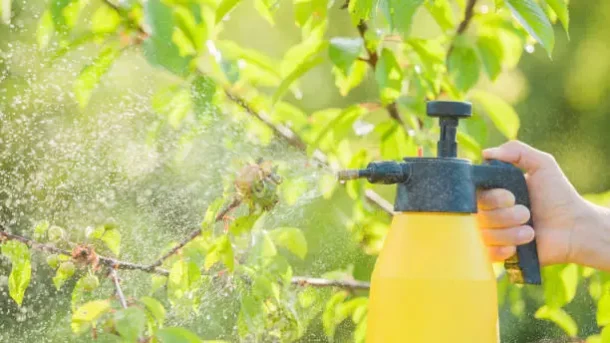
Chemical control: Conventional farming often utilizes chemical pesticides and herbicides to control pests and diseases. These synthetic chemicals can be effective but need to be used with caution to minimize environmental impact and potential risks to human health. It’s important to follow label instructions and adhere to local regulations when using chemical control methods.

 What irrigation methods do you use to ensure proper water supply for your crops?

irrigation methods

Surface Irrigation: This method involves flooding or furrowing the fields to allow water to flow across the surface and infiltrate into the soil. It is one of the oldest and simplest irrigation methods but can be inefficient due to water loss through evaporation and runoff.

Sprinkler Irrigation: Sprinkler systems distribute water through a network of pipes with sprinkler heads that spray water over the crops. This method can be used for both field and orchard crops, and it provides more uniform water distribution compared to surface irrigation. However, it may be prone to water loss due to evaporation and wind drift.

Drip Irrigation: Drip irrigation involves the application of water directly to the plant roots through a network of tubes or pipes with emitters or drippers. This irrigation methods deliver water in a controlled and precise manner, reducing water waste and maximizing water use efficiency. It is particularly useful in arid regions or for water-sensitive crops.

Subsurface Irrigation: Also known as subsurface drip irrigation , this technique involves placing drip lines or tapes below the soil surface to deliver water directly to the plant root zone. Subsurface irrigation helps minimize water loss due to evaporation and reduces weed growth since the surface remains dry.

Center Pivot Irrigation: This method is commonly used in large-scale agriculture. A central pivot system rotates around a pivot point, irrigating a circular area. Sprinklers mounted on the system deliver water as the pivot moves, covering a large area efficiently. It is often used for row crops and can be automated for precise control.

 What are the best practices for managing pests and diseases in crops?

best

The best way to control both pests and diseases is to keep plants healthy.

Build healthy soil. Healthy soil provides a home to friendly insects and helps prevent many plant disease.Plant resistant varieties. Ask farmers or extension agents about seeds to make sure the ones you choose are resistant to common pests and diseases.

Space plants correctly. Planting crops too close together limits the sunshine and air that reaches the leaves, and allows diseases to thrive. But planting crops farther apart leaves room for weeds, dries the soil, and may reduce the harvest. Experiment to see what spacing works best for each crop.

Plant at the right times. Pests and diseases often respond to the weather, such as the first rains or the first warm day. Watching how each crop grows and talking with other farmers about these patterns can help you decide the best time to plant. Planting earlier than usual can make sure crops are big enough to resist pests or diseases that come at a certain time. Planting later can cause most of the pests or diseases to die out for lack of food.Plant a variety of crops and change crop patterns. Large areas with only 1 kind of plant attract pests who like that plant.

Water from below. Watering from above can cause diseases that live in soil to splash onto plants. And wet leaves and stems are good places for diseases to grow. Using drip irrigation or flood irrigation can keep plant leaves and stems healthy.

 How can I improve soil fertility on my farm?

soil fertility

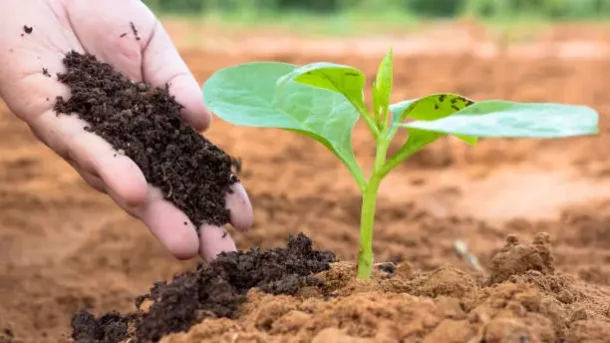
Soil fertility can be further improved by incorporating cover crops that add organic matter to the soil, which leads to improved soil structure and promotes a healthy, fertile soil; by using green manure or growing legumes to fix nitrogen from the air through the process of biological nitrogen fixation; by micro-dose which enhance soil fertility through biological nitrogen fixation, and the application of chemical fertilizers.
Whether grown as pulses for grain, as green manure, as pastures or as the tree components of agro-forestry systems, a key value of leguminous crops lies in their ability to fix atmospheric nitrogen, which helps reduce the use of commercial nitrogen fertilizer and enhances soil fertility.

Nitrogen-fixing legumes are the basis for sustainable farming systems that incorporate integrated nutrient management. Use of nitrogen-15 lends understanding of the dynamics and interactions between various pools in agricultural systems, including nitrogen fixation by legumes and utilization of soil and fertilizer nitrogen by crops, both in sole and mixed cropping systems.

How can I improve the efficiency and sustainability of my farming operations?

operations

Farming operations refer to the various activities involved in the cultivation and management of crops and livestock for the purpose of producing food, fiber, or other agricultural products. These operations can vary greatly depending on factors such as the type of farming, the scale of operation, and the geographical location. Here are some common aspects of farming operations:

Land Preparation: This involves clearing the land, removing any debris or vegetation, and preparing the soil for planting. It may include activities such as plowing, tilling, or leveling the land.

Crop Selection and Planting: Farmers choose the crops they want to grow based on factors such as market demand, soil suitability, and climate conditions. They prepare the seeds or seedlings and plant them in the prepared soil, ensuring proper spacing and planting depth.

Irrigation: Providing water to crops is essential for their growth and development. Farmers use various irrigation methods such as sprinklers, drip irrigation, or flood irrigation to ensure that the plants receive adequate moisture.

Pest and Weed Control: Farmers employ various strategies to protect their crops from pests, diseases, and weeds. This may involve the use of pesticides, herbicides, biological control methods, or integrated pest management techniques.

Fertilization: Crops require essential nutrients for healthy growth. Farmers apply fertilizers to provide these nutrients to the soil, either in organic or synthetic form. They may also use soil testing to determine the specific nutrient requirements of their crops.

Harvesting: Once the crops reach maturity, they are ready for harvest. The timing and method of harvesting depend on the crop type. Some crops are harvested by hand, while others require specialized machinery such as combines for efficient harvesting.

 What are the best practices for soil conservation and erosion control?

soil conservation

Soil conservation is the prevention of loss of the topmost layer of the soil from erosion or prevention of reduced fertility caused by over usage, acidification, salinization or other chemical soil contamination.

The use of pesticides can threaten soil conservation by contaminating the soil and nearby water sources. They affect soil structure and (biotic and abiotic) composition. Differentiated taxation schemes are among the options investigated in the academic literature to reducing their use.

Erosion control practice involves the placement of plastic covers, geotextiles, erosion control blankets, and mats to keep soil from erosion by water or wind. They primarily help newly planted crops to take root in slopes with flowing water.

However, plastic sheeting can only be effective in small erodible areas. Applying it in large areas can cause damage when the water runs off the cover.
that allows the water to flow through it to prevent the spread of water all over the land.

All structures should have pipes or gutters that can effectively drain water out of your yard into a water collection system. Places with heavy water runoff may need an installation of underground perforated drainage pipes.