POSTEDITOR OFFICE

How is 5G technology being implemented in smart farming applications?

5G technology

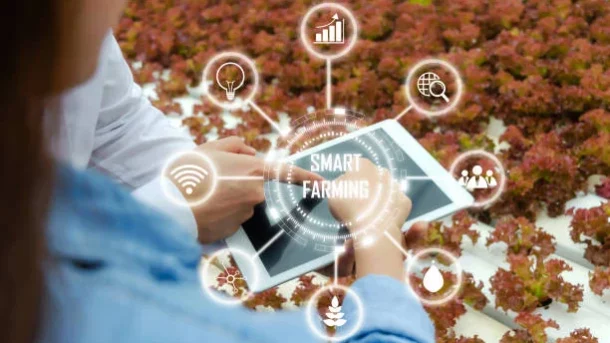
Smart farming apps are using 5G technology to revolutionise agricultural methods and make innovative technologies more widely adopted. The following are some significant applications of 5G in smart agriculture.

Enhanced Connectivity: 5G technology overcomes the drawbacks of conventional networks by offering incredibly fast and dependable connectivity. It makes it possible for seamless real-time data flow between numerous devices and sensors, which makes it easier to include numerous smart agricultural technologies. With this improved connectivity, the various parts of the ecosystem for smart farming can communicate and exchange data easily.

Integration of the Internet of Things (IoT): 5G enables the widespread use of IoT equipment in agriculture. Sensors, drones, robots, and autonomous machines are just a few examples of the gadgets that produce and communicate enormous amounts of data. Real-time monitoring, decision-making, and automation in agricultural operations are made possible by the high-speed and low-latency capabilities of 5G IoT devices.

Remote Monitoring and Control: 5G technology makes it possible to remotely monitor and manage machinery and systems used in agriculture. High-resolution cameras, drones, and other sensors can be used by farmers to remotely monitor their crops, livestock, and infrastructure. They have access to up-to-the-minute information on things like soil moisture, temperature, humidity, and animal health, which enables them to take prompt judgements and action. Precision farming techniques are made easier by remote control of machinery and equipment made possible by 5G connectivity.

What are the benefits of using smart beekeeping technologies?

smart beekeeping

Smart beekeeping technology has a number of advantages for beekeepers as well as for the general wellbeing and production of bee colonies. Here are several major advantages.

Real-time monitoring of hive conditions, like temperature, humidity, hive weight, and activity levels, is made possible by smart beekeeping technologies. This information offers useful insights into the condition of the bee colony, enabling beekeepers to identify possible problems like disease outbreaks, pest infestations, or colony swarming early on. Making informed management decisions and acting quickly to solve any issues requires constant observation of the hive’s conditions.

Swarm prevention: Swarming is a normal behaviour for honey bees, however it can reduce beekeepers’ production. Swarming incidents can be predicted and avoided with the aid of smart beekeeping technologies. Beekeepers can recognise conditions that are conducive to swarming and take preventive actions, such as hive manipulations or queen replacement, to effectively manage swarm control by keeping an eye on colony population, brood development, and environmental factors.

Disease and Pest Management: By offering early diagnosis and action, smart beekeeping systems help with disease and pest management. For instance, monitoring tools can spot varroa mites, a serious hazard to bee colonies, and notify beekeepers to take prompt action. Additionally, monitoring systems enable targeted interventions, limiting the development of illnesses like Nosema and American foulbrood, and assist track their spread.

How are precision irrigation systems improving water efficiency in farming?

water efficiency

Precision irrigation systems are essential for increasing water efficiency in agriculture since they maximise water application and reduce water waste. The following are some ways that precise irrigation systems improve water efficiency:

Application of Site-Specific Water: Precision irrigation systems use tools like soil moisture monitors, weather information, and remote sensing to pinpoint the precise water requirements of certain fields. Farmers may avoid over-irrigation and give the appropriate amount of water to each plant or zone by using real-time analysis to determine these factors. This focused strategy reduces water waste and makes sure that crops get the right amount of moisture.

Precision irrigation systems have a feature called variable rate irrigation (VRI) that enables various parts of a field to have differing water application rates. VRI systems are able to deliver varied amounts of water to various zones or even specific plants within a field by taking into account the terrain, the crop requirements, and the properties of the soil. In order to minimise both over- and under-irrigation and to maximise water use efficiency, farmers can utilise this to match irrigation rates to individual demands.

Water Monitoring and Feedback: Precision irrigation systems come with sensors and feedback mechanisms that offer in-the-moment data on crop water intake, soil moisture levels, and system efficiency. Farmers can make informed judgements regarding irrigation management by remotely monitoring this data using computer interfaces or mobile apps. This information permits prompt modifications.

What is the role of microbial biotechnology in sustainable agriculture?

microbial biotechnology

By using microorganisms to improve many areas of agricultural practises, microbial biotechnology plays a key part in sustainable agriculture. Among the most important functions of microbial biotechnology in sustainable agriculture are as follows.

Biofertilizers: Microorganisms can symbiotically bond with plants or directly improve soil fertility. Examples include nitrogen-fixing bacteria like Rhizobia and phosphate-solubilizing bacteria. These helpful bacteria are found in biofertilizers, which are used to boost nutrient availability and uptake by plants and lessen the need for synthetic fertilisers. This enhances soil health, lowers environmental contamination, and promotes sustainable nutrient management.

Biopesticides: Microbial biotechnology provides pest and disease control agents made from microorganisms like bacteria, fungus, and viruses. The use of these biopesticides supports integrated pest management (IPM) techniques while lowering environmental contamination and health concerns associated with chemical pesticides.

Biostimulants: Microbial-based biostimulants accelerate plant growth, improve nutrient uptake, and increase stress tolerance by containing advantageous microbes or their metabolites. These biostimulants can increase plant toughness, encourage root growth, and raise crop yields. Farmers can lessen their reliance on artificial growth regulators and advance sustainable crop production by utilising biostimulants.

How is satellite-based monitoring used for deforestation detection in agriculture?

satellite-based

A useful method for identifying and keeping track of deforestation in agricultural areas is satellite-based monitoring. Here is how it is applied in agriculture to detect deforestation.

Satellites are able to collect detailed images of agricultural areas across time. Algorithms can analyse the changes in land cover and pinpoint regions where deforestation has taken place by comparing satellite photos collected at various periods. The detection of forest loss and conversion to agricultural land is made possible by this change detection methodology.

Satellite sensors are able to record optical imagery in the visible, near-infrared, and shortwave infrared ranges. Different levels of vegetation health and density can be seen using this imagery. Satellite-based monitoring can locate regions where forest cover has been removed or deteriorated by analysing these spectral fingerprints, potentially exposing deforestation.

Integration of Ancillary Data: Ground-based observations, land-use maps, and socioeconomic data, among others, can be integrated to improve satellite-based monitoring. Understanding the underlying causes of deforestation in agricultural areas is made possible by this integration, which enables a more thorough investigation of deforestation dynamics.

Early Warning Systems: Early warning systems for deforestation can be created using satellite-based monitoring. Alerts can be created when deforestation exceeds predetermined criteria or when unlawful activity is found by continuously monitoring forest cover and changes in land use. These early warning systems allow for prompt action and response to lessen the effects of deforestation on the ecosystem.

What are the advancements in biofuel production from agricultural waste?

biofuel

In order to generate energy from renewable and sustainable sources, there have been substantial improvements in the manufacture of biofuel from agricultural waste in recent years. Here are some significant developments in this area:

Research has progressed in examining a variety of agricultural waste products as feedstock for the creation of biofuels. Dedicated energy crops, food processing waste, forestry residues, animal manure, and crop residues (such as maize stover, wheat straw, and rice husks) are all included in this. Biofuel production can become more sustainable and less dependent on conventional food crops by expanding its feedstock sources.

A key role is played by enzymes and microorganisms in the enzymatic and microbial conversion of agricultural waste into biofuels. The conversion of cellulose and hemicellulose into fermentable sugars has been facilitated by improvements in enzyme technologies, including the creation of more effective enzymes and enzyme combinations. The performance of microorganisms used for fermentation, such as yeast and bacteria, has also been improved through the application of genetic engineering and metabolic engineering techniques, which has raised biofuel yields and improved fermentation efficiency.

Consolidated Bioprocessing (CBP): CBP is a newly developed method that integrates fermentation, enzymatic hydrolysis, and enzyme synthesis into a single stage. This streamlines the manufacture of biofuel, lowers expenses, and boosts overall effectiveness. CBP uses genetically modified microbes to manufacture enzymes and turn biomass into biofuels in a sustainable manner.

How are AI-driven decision support systems used in agricultural planning?

AI-driven

AI-driven decision support systems are being used more and more in agricultural planning to boost productivity and decision-making. The following are some applications of AI-driven decision support systems in agricultural planning:

Yield Prediction and Optimisation: To anticipate agricultural yields, AI systems examine a variety of data sources, including historical yield data, weather patterns, soil conditions, and crop management techniques. These systems can continuously learn and improve their predictions over time by using machine learning techniques. These yield forecasts can help farmers make the best planting choices, choose the right crop kinds, allocate resources wisely, and manage crop rotations.

Crop Planning and Selection: AI-driven decision support systems help farmers choose the best crops for their unique conditions and objectives. To suggest the ideal crops, these algorithms take into account variables including soil type, climate, market demand, and profitability analyses. These systems assist farmers in making well-informed decisions about crop selection and planning by analysing enormous amounts of data and taking into account many aspects.

Irrigation Management: AI-based decision support systems that analyse data from a variety of sources, such as weather forecasts, soil moisture sensors, and crop water requirements, aid in the optimisation of irrigation practises. To guarantee that crops receive the proper amount of water at the proper time, these devices can offer real-time advice for irrigation scheduling. This raises crop output, reduces water waste, and increases water usage efficiency.

What are the benefits of using smart pest management systems?

smart pest

Early Disease and Pest Detection: To identify illnesses and pests at an early stage, smart pest management systems make use of sensors, imaging technology, and data processing. These systems can detect pest infestations before they become severe by continuously monitoring fields and crops. This enables quick intervention and reduces considerable damage.

Targeted and accurate Treatment: Smart pest control solutions make it possible to treat pests in a targeted and accurate manner. These systems can choose the best time, place, and amount of pest control measures by using data from sensors, satellite imaging, and weather forecasts. This focused strategy enables effective pest management while minimising the use of pesticides and their negative effects on the environment.

Better Crop Health and Quality: By assuring prompt and effective pest control methods, smart pest management systems assist maintain crop health and quality. These technologies avoid crop damage, preserve optimal plant growth, and improve the general quality of agricultural produce by successfully managing insect populations.

Smart pest control systems produce an abundance of data about pest dynamics, environmental factors, and treatment efficacy. Informed decisions about pest management tactics, crop rotation, and planting schedules can be made using this data after analysis. Farmers can optimise their pest control techniques, increase output, and improve farm management practises by utilising data-driven insights.

How is remote sensing used for monitoring water resources in agriculture?

remote sensing

By providing useful data on soil moisture, irrigation effectiveness, water stress, and water availability, remote sensing plays a critical role in monitoring water resources in agriculture. Here are some examples of how remote sensing is applied to monitoring agricultural water resources:

Soil Moisture Monitoring: To determine the amount of soil moisture in agricultural fields, remote sensing techniques including passive and active microwave sensing are used. Spatial and temporal data on soil moisture levels by measuring the electromagnetic signals that are reflected or emitted by the soil. By using this knowledge, farmers can plan their irrigation systems and use water more efficiently by knowing when and how much water to apply.

Assessment of Irrigation Efficiency: By measuring crop water use and water stress, remote sensing enables the evaluation of irrigation efficiency. Calculating crop evapotranspiration (ET) rates involves examining the thermal characteristics of plants to determine water usage. Changes in irrigation timing or methods may be necessary if deviations from the norm in ET rates are a sign of water stress or ineffective irrigation tactics.

Water Availability Mapping: By keeping an eye on bodies of surface water, such as lakes, reservoirs, and rivers, remote sensing may gather data on water availability. Water extent, water levels, and changes in water bodies over time can all be measured by satellite-based sensors. This information aids in determining the amount of water available for irrigation needs and efficient use of water resources.

What are the advancements in farm robotics for weed control?

weed

In order to lessen the need for herbicides and labor-intensive physical labour, farm robotics for weed control have made major strides in recent years. Here are a few noteworthy developments in this area:

Automated weed identification systems are being created using cutting-edge image technology including computer vision and machine learning algorithms. These systems examine crop photos and recognise weeds based on their visual traits, enabling focused and accurate weed management.

Robotic weed removal: To automatically find and get rid of weeds in agricultural fields, robotic technologies are being developed. These robots physically remove or destroy weeds using a variety of techniques, including mechanical arms or instruments. Some robots use artificial intelligence to distinguish between crops and weeds, allowing for the selective and accurate removal of the latter.

Robotic sprayers that are equipped with precision spraying technology are utilised to apply herbicides precisely where they are needed. These devices use imaging and sensor technology to instantly find and locate weeds. Herbicides are then only applied by sprayers to the specific weeds that need them, minimising chemical use and harm to the environment.