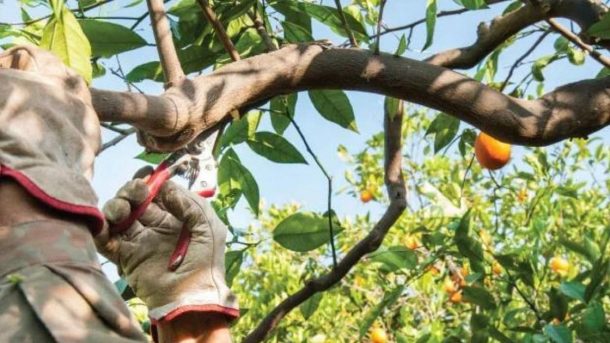
Pruning is judicious removal of plant parts to establish balance between vegetative and productive growth. It has strong influence on fruitfulness of plants. In Deciduous fruits, pruning is important to maintain rhythm of fruiting e.g., no pruning in peach means little or no fruiting; in Ber, annual pruning is essential; in grapes, annual pruning in north India; two pruning’s in Maharashtra and three pruning’s in Tamil Nadu. In Evergreen fruits, pruning is rarely practiced though it is beneficial in some crops like mango and guava. Allowing trees to grow too tall is another mistake. Pruning trees to manageable size keeps them healthy and is necessary for optimal fruit production and longevity of the tree. While pruning, maintain an adequate number of good leaves for quality fruit production. About 30 to 40 good-sized healthy leaves are needed to produce one good-quality fruit. The safest time to prune most trees is after picking the crop in summer to restrict growth. Winter pruning should be restricted to removal of suckers, dead wood and broken or crossing over branches to sufficiently open up the canopy of the tree. Pruning cuts should be at an angle so that moisture does not collect and allow for rot and disease to settle. All pruning cuts should be painted with Bordeaux paste to prevent entry of pathogens.
How pruning is done in orange cultivation?