Seed

What is the purpose of the National Mission on Agricultural Disaster Management (NMADM)?

Agricultural Disaster

Early Warning Systems and Preparedness: Agricultural disaster management efforts seek to improve early warning systems and disaster preparedness. This entails keeping an eye on the weather, climatic patterns, and other pertinent variables in order to forecast impending calamities that can affect agriculture and to offer prompt warnings.

Reducing risks and lessening the effects of disasters on agriculture are the main objectives of the programs. This entails putting strategies into place to increase farming systems’ resilience, such as encouraging crop diversification, water and soil conservation, the adoption of climate-resilient agricultural practices, and building infrastructure to resist calamities.

Initiatives for agricultural disaster management include provisions for emergency response and relief measures to assist impacted farmers and lessen the immediate effects of disasters. To aid farmers in recovering from the consequences of disasters, this may entail offering financial support, food supplies, seeds, fertilizer, support for livestock, and other essential inputs.

Agricultural disaster management initiatives place a high priority on the rehabilitation and recovery of the devastated agricultural sector. This include fixing broken infrastructure, assisting with the rebuilding of livelihoods, easing access to loans and insurance, and giving technical support to help farmers continue farming and reconstruct their lives.

Name a government program that provides financial assistance for the establishment of agri-clinics and agri-business centers.

agri-clinics and agri-business

The “Agri-Clinics and Agri-Business Centers (ACABC) Scheme” is one government initiative that offers financial support for the building of agri-clinics and agri-business centers in India. The Ministry of Agriculture and Farmers Welfare, Government of India, is in charge of carrying out the ACABC Scheme.

The following are the main goals of the Agri-Clinics and Agri-Business Centers Scheme:

Development of Entrepreneurship: The program’s goal is to encourage agricultural graduates, diploma holders, and other eligible people to open their own agri-clinics and agri-business centers. It offers a platform for people to work for themselves and serve farmers with specialized agricultural services.

Agri-Clinics: The program encourages the construction of facilities known as “agri-clinics,” where farmers can receive agricultural advising and consulting services from qualified professionals. To enhance farming practices and raise agricultural productivity, these clinics provide professional advice on a variety of topics including crop development, pest management, soil health, farm management, farm mechanization, and other pertinent areas.

Agri-Business Centers: The program additionally offers financial support for the creation of agri-business centers. These facilities act as hubs for agricultural entrepreneurs, allowing them to carry out a variety of agricultural and related tasks such seed processing, fertilizer formulation, farm equipment rental, marketing of agricultural inputs, value addition, agri-tourism, and other agribusiness endeavors.

The ACABC Scheme places a strong emphasis on capacity building and training programs for agri-preneurs. To broaden their knowledge, it offers technical and entrepreneurial training.

Which government program provides financial assistance for the establishment of seed processing units?

seed processing

The “National Horticulture Mission” (NHM) is one government initiative that offers financial support for the creation of seed processing facilities in India. The Ministry of Agriculture and Farmers Welfare, Government of India, implements the National Horticulture Mission, commonly known as the “Integrated Horticulture Development Programme,” which is a centrally supported program.

The following elements are often covered by the financial support offered for the creation of seed processing units:

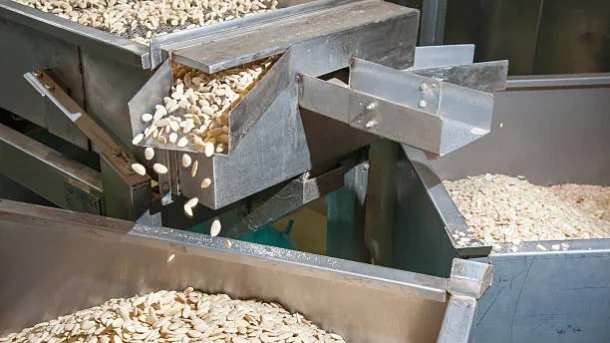
Infrastructure Development: NHM aids in the establishment and growth of seeds processing facilities. This involves offering financial support for the installation of machinery, tools, storage spaces, and other essential infrastructure elements for the processing of seeds.

The plan places a strong emphasis on capacity building and training programs for staff members and operators of seed processing units. To ensure the adoption of best practices and quality control measures, it offers training on seeds processing methods, quality standards, post-harvest management, seed testing, and certification.

Quality Control and Certification: NHM encourages the adoption of procedures for seed certification and quality control. It supports programs relating to maintaining seed quality, genetic purity, and seed health standards as well as seed testing labs, seed certification organizations, and allied organizations.

Market Linkages and Value Chains: The program supports the growth of seed-related market linkages and value chains. To improve market access and encourage the selling of high-quality seeds, it focuses on establishing connections between seed processing facilities and seed buyers, distributors, and seed businesses.

What is the primary goal of the National Mission on Seeds and Planting Material (NMSPM)?

Seeds and Planting Material

Please accept my apologies, but I am not aware of any official project by the name of “National Mission on Seeds and Planting Material” (NMSPM). The project you described might not be well known or a part of the generally acknowledged government initiatives or missions in India. It’s crucial to keep in mind that my knowledge cutoff date is in September 2021, and that there might have been modifications or new projects since then.

If such a mission existed, the following would presumably be its main objectives:

Providing Farmers with Access to High-Quality Seeds: The mission strives to provide farmers with access to seeds and planting Material supplies of the highest caliber. In accordance with the regulatory framework, this involves promoting the production, certification, and distribution of improved seed varieties, including hybrid and genetically modified (GM) seeds.

Increasing Seed Replacement Rate: The goal of the mission can be to raise the percentage of old seeds that are replaced with new seeds each crop season, or seed replacement rate. It tries to dissuade farmers from using old, low-yielding seed types and to promote farmers’ adoption of improved seed varieties.

Developing a Stronger Seed Infrastructure: The mission would likely focus on developing a stronger seed infrastructure, including seed processing units, seed storage facilities, and seed testing laboratories.

Research and development: The mission may give priority to initiatives involving seeds and planting supplies. It can entail encouraging scientific investigation, creativity, and the creation of novel seed technologies, such as biotechnology and genetic engineering, for better agricultural production, pest and disease resistance, and climatic adaptation.

Pradhan Mantri Kisan Samman Nidhi (PM-KISAN) scheme?Pradhan Mantri Kisan Samman Nidhi (PM-KISAN) scheme?

Kisan Samman

The Pradhan Mantri Kisan Samman Nidhi (PM-KISAN) scheme’s main objective is to give small and marginal farmers in India direct income support. The program provides farmers with a certain amount of cash support in an effort to address their financial needs and ease their income misery.

The PM-KISAN system has several primary goals, including:

Income support: The primary goal of the program is to directly assist farmers with their income by sending a set amount of money into their bank accounts. The money is intended to help farmers boost their income and support their agricultural endeavors.

Small and marginal farmers will benefit from the program because they may have limited resources and find it difficult to acquire finance and other financial services. It attempts to give them a dependable source of revenue to cover their agricultural costs and enhance their standard of living.

Increase agricultural productivity: By guaranteeing that farmers have a steady income, the Pradhan Mantri Kisan Samman Nidhi (PM-KISAN) scheme indirectly helps to increase agricultural productivity. It makes it possible for farmers to spend money on agricultural inputs like seeds, fertilizer, and equipment, enhancing their farming methods and crop yields.

Name a government program that aims to promote the cultivation of pulses and increase their production.

production

The “National Food Security Mission-Pulses” (NFSM-Pulses) is one government initiative that seeks to encourage the production of pulses in India. The Government of India established the NFSM-Pulses, a branch of the larger National Food Security Mission (NFSM), to increase the production of pulses, a significant source of protein in the Indian diet.

The NFSM-Pulses program’s primary areas of interest are as follows:

Improvement of varieties: The program aims to advance the production of high-yielding, disease-resistant pulse cultivars. It encourages farmers to use better tools and seeds to raise the yield and caliber of pulses.

Area expansion is the main goal of the NFSM-Pulses initiative, which helps farmers by offering them assistance and financial incentives. To address the rising demand for these products, it seeks to increase the cultivation of pulses in both rainfed and irrigated areas.

Increasing productivity: The program places a strong emphasis on using best practices and technologies to boost pulse productivity. This involves effective water use, suitable crop management practices, integrated nutrient management, adequate seed treatment, and pest and disease management.

Which government program provides subsidized seeds and fertilizers to farmers in India?

subsidized seeds and fertilizers

The “National Food Security Mission” (NFSM) is the name of the government initiative in India that offers farmers subsidized seeds and fertilizers. The Department of Agriculture, Cooperation, and Farmers Welfare, which is a division of the Ministry of Agriculture and Farmers Welfare, is responsible for implementing the NFSM, a program that is centrally financed.

Although the NFSM’s main goals are to boost food production and guarantee food security, it also includes elements for giving farmers access to subsidized seeds and fertilizers. These elements are designed to assist farmers in implementing more productive farming methods and raising crop yields.

As part of the NFSM, qualified farmers can take use of a variety of programs and initiatives, including:

The NFSM offers discounts on the purchase of high-quality, certified seeds, including hybrid and enhanced types. The financial burden on farmers is lessened by the subsidies, which also promote the use of enhanced seed varieties with higher yield potential, disease resistance, and other desirable characteristics.

Subsidized fertilizer distribution to farmers is a part of the NFSM. Through financial assistance and subsidies on fertilizers like urea, DAP (Di-ammonium Phosphate), potash, and other vital nutrients, the program encourages the balanced use of fertilizers.

While the NFSM offers subsidized seeds and fertilizers, it’s vital to remember that state-by-state variations in implementation may occur. The program can be modified by each state government according to unique demands, crop trends, and issues in the state’s agriculture industry.

How do chemical fertilizers contribute to increasing crop yields?

yields

Chemical fertilizers supply plants with concentrated versions of readily available and necessary nutrients. By doing this, it is made sure that plants receive a sufficient and balanced amount of the nutrients they need to grow and develop. The three main macronutrients found in chemical fertilizers, nitrogen, phosphorus, and potassium, are essential for plant growth and have a crucial impact on activities like photosynthesis, root growth, and energy transmission. Chemical fertilizers assist overcome nutritional deficits and promote healthy plant growth, which results in improved agricultural yields, by giving these minerals in the right amounts.

Enhanced Plant Nutrition: Plants can absorb nutrients from chemical fertilizers more quickly and effectively than from organic sources. Chemical fertilizers’ highly soluble nature makes it possible for plants to efficiently absorb nutrients through their roots. This quick availability of nutrients makes for ideal
Improved Crop Quality: Chemical fertilizers can improve the quality of harvested produce in addition to increasing crop yields. The protein content and nutritional value of crops can be increased by providing enough nutrients, especially nitrogen. Phosphorus encourages the development of flowers, fruits, and seeds, improving crop quality and output. Fruits and vegetables with more potassium have better size, color, flavor, and shelf life. Chemical fertilizers help to produce higher-quality crops that satisfy consumer needs by providing adequate nutrient availability.

Increased Photosynthetic Efficiency: The process through which plants turn sunlight into energy, known as photosynthesis, depends on nitrogen, a fundamental ingredient in chemical fertilizers. A lack of nitrogen can hinder photosynthetic activity and affect a plant’s capacity to create biomass and carbohydrates. Chemical fertilizers boost photosynthetic activity by delivering nitrogen.

What are the main components or nutrients present in chemical fertilizers?

chemical fertilizers

The development of leaves, stems, and other vegetative organs depends on the nutrient nitrogen (N), which is essential for plant growth. The synthesis of proteins, photosynthesis, and general plant metabolism all depend on it. Lack of nitrogen can cause stunted growth, leaf yellowing, and decreased yield. Different types of nitrogen, such as ammonium (NH4+), nitrate (NO3), or urea, which are easily absorbed by plants, are frequently included in chemical fertilizers.

Phosphorus (P): For several metabolic activities in plants, such as energy transfer, root growth, flowering, and fruiting, phosphorus is crucial. It facilitates in the movement of energy from one area of the plant to another and encourages the development of robust roots. A lack of phosphorus can cause delayed maturation, poor root growth, and smaller seeds.
Potassium (K): Potassium is essential for a variety of plant processes, including the activation of enzymes, control of water and nutrient transport, and disease resistance. It helps plants be more resilient to stress and have greater overall health. Lack of potassium can cause crops to produce less well, weaken their stalks, and become more vulnerable to pests and diseases. Potassium is provided via chemical fertilizers in the form of potassium sulfate or potassium chloride (Muriate of Potash).

Chemical fertilizers can include secondary nutrients like calcium (Ca), magnesium (Mg), and sulfur (S) in addition to these macronutrients. They can also include micronutrients like iron (Fe), manganese (Mn), zinc (Zn), copper (Cu), boron (B), molybdenum (Mo), and others. Chemical fertilizers’ precise nutrient makeup varies based on their formulation and the needs of the targeted crops.

How do bees and other pollinators play a vital role in agricultural productivity and crop yield?

pollinators

Pollen is transferred from the male reproductive organs (anthers) of flowers to the female reproductive organs (stigma) by pollinators such bees, butterflies, moths, flies, and beetles. The development of seeds and fruits depends on the pollen being transferred, which is necessary for fertilization. This pollination process is crucial for the abundant harvest of many crops.

Increased fruit set: Pollinators aid plants in producing more fruit. Flowers are more likely to successfully fertilize and produce fruit when they get pollen from sources that are compatible with each other. More flowers are effectively pollinated thanks to pollinators, increasing crop yields and yields of products.

Crop features and quality: Consistent fruit and seed development is a result of efficient pollination, which raises crop quality. Consistent size, shape, color, and flavor of fruits and vegetables are made possible by proper pollination. Their market worth, aesthetic appeal, and customer preference are all increased as a result.

Genetic variety: Pollinators help maintain agricultural genetic variation. Pollinators help to encourage cross-pollination, which enables the transfer of genetic material between various plants. Crops are better able to adapt to environmental changes, pests, and illnesses thanks to their genetic diversity.