climate

What are the challenges in achieving sustainable agricultural intensification?

intensification

To achieve sustainable agricultural intensification, agricultural productivity must be raised while adverse environmental and social effects are reduced. Although the idea has many advantages, there are a number of obstacles that need to be overcome before it can be successfully implemented. Among the principal difficulties are:

Environmental Degradation: Unsustainable intensification techniques include excessive pesticide, water, and monoculture use can result in soil erosion, water pollution, and biodiversity loss.

Climate Change: Sustainable intensification faces considerable obstacles from climate change. Agronomic systems can be disrupted and productivity decreased by erratic weather patterns, extreme weather events like droughts and floods, and rising temperatures.

Water scarcity is a major barrier to the expansion of agriculture in many areas. Increased water demands may result in excessive groundwater extraction and resource depletion, which could harm ecosystems and rural populations.

Ecosystem services that are crucial for agriculture, such as pollination and pest control, may be reduced as a result of intensification methods that threaten natural ecosystems.

Social and Equity Issues: Smallholder farmers may not receive an equitable share of the advantages of intensifications, which could result in social inequities and marginalization.

Market Access and Prices: As production rises as a result of intensification, farmers may experience price swings and difficulties accessing the market.

What are the potential impacts of artificial intelligence on the agricultural market?

artificial intelligence

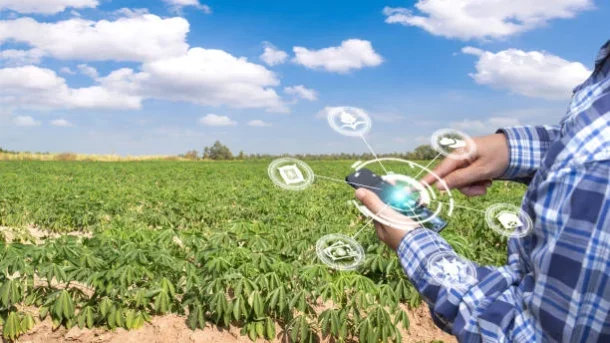
By bringing novel solutions that enhance production, efficiency, and sustainability, artificial intelligence (AI) has the potential to completely transform the agricultural sector. A few possible effects of AI on the agriculture market are listed below:

Precision farming uses AI-powered tools to offer real-time information on crop health, soil conditions, and weather patterns. These tools include drones, satellite photography, and remote sensing. With the help of this information, farmers can utilize precision farming techniques to boost crop yields and optimize resource consumption, such as the targeted application of pesticides and fertilizers.

Crop Management: AI algorithms can evaluate massive volumes of data from sensors and IoT devices to track crop growth, identify diseases, and anticipate pest infestations. Crop losses can be avoided, and total farm output can be raised, with the help of early identification and management.

Automated equipment and robotics: AI can facilitate the creation of self-driving equipment and robots that can do a variety of agricultural jobs, such as planting, harvesting, and weeding. Automation can save labor expenses and help with the agricultural labor crisis.

Climate Prediction and Adaptation: In order to make more precise predictions of climate trends, Artificial Intelligence can examine historical weather data and climate models. With the aid of this knowledge, farmers can modify their methods in response to varying weather patterns and lessen the negative effects of climate change on agriculture.

How does the adoption of precision agriculture technologies affect farm profitability?

precision agriculture

By enhancing productivity, lowering input costs, maximizing resource utilization, and raising yields, the adoption of precision agriculture technologies can have a substantial beneficial influence on farm profitability. Using cutting-edge technology, data analytics, and real-time monitoring, precision agriculture enables knowledgeable and site-specific decisions to be made about farming operations. The following are some ways that implementing precision agricultural technologies can raise farm profitability:

Optimum Resource Use: Precision agricultural technology allow farmers to apply inputs like water, herbicides, and fertilizers precisely where they are needed. Farmers can limit waste and lower input costs, which will result in cost savings and enhanced profitability, by using these resources only where and when necessary.

Increased Yield: Through the use of precision agriculture, farmers can recognize variability in their fields and adjust their management strategies as necessary. This focused strategy can boost crop health and production, resulting in greater yields and more substantial profits.

Reduced Environmental Impact: Precision agriculture can support environmental sustainability by maximizing input utilization and minimizing chemical application. The reputation of the farm and its goods can thus be enhanced, which may result in premium pricing and competitive advantages in the market.

Real-time monitoring: Farmers may access real-time information on crop health, soil conditions, and weather thanks to precision agricultural tools. With the aid of this information, farmers are able to react quickly to shifting environmental factors, avoiding or minimizing potential problems that can adversely affect yields and profitability.

What is the role of commodity price speculation in the agricultural market?

commodity price

In the agricultural market, commodity price speculation has a big impact on price changes and market dynamics. Aiming to profit from price swings, purchasing and selling commodities, notably agricultural products, is referred to as commodity price speculation. Without having a direct stake in the physical possession or consumption of the commodities they trade, speculators engage in market activity. In the agricultural market, commodity price speculation plays the following crucial roles:

Price Discovery and Liquidity: Speculators regularly buy and sell contracts on the agricultural market to increase liquidity, which improves price discovery. Due to their active participation in the market, there are always willing buyers and sellers, which promotes price transparency.

Market Efficiency: By reducing price spreads and promoting information exchange, commodity price speculation can improve market performance. Trading decisions made by speculators take into account the information that is readily available, such as supply and demand statistics and weather forecasts, which helps prices reflect the actual market conditions.

Risk management: In the agricultural market, speculators play a crucial role in risk management. Hedgers that want to lock in prices and lessen their exposure to price volatility include farmers and agribusinesses. In these hedging transactions, speculators take the opposing position and assume the risk that the hedgers want to transfer.

Price volatility: Although speculators help the market function efficiently, their trading activities might temporarily raise price volatility. Large speculative positions or abrupt changes in attitude may have these effects.

What are the implications of climate-smart agriculture in the market?

climate-smart agriculture

The term “climate-smart agriculture” (CSA) refers to agricultural methods and techniques that seek to raise yields, strengthen resistance to climate change, and lower greenhouse gas emissions. The agriculture market may be affected in a number of ways by the adoption of climate-smart practices:

Enhanced Resilience: Climate-smart agriculture aids farmers in adjusting to climate change’s effects, including extreme weather, droughts, and shifted growing seasons. For the advantage of farmers and the market, increased resilience can lead to more steady agricultural production and lower crop failure risks.

Production that is Sustainable: The CSA encourages sustainable agriculture methods that reduce their negative effects on the environment and preserve natural resources. More ecologically friendly and sustainable agricultural products could result from this, which would be consistent with consumer expectations for items made in an ethical and sustainable manner.

Enhanced production: Farmers can increase their production and yield potential by implementing climate-smart techniques including precision agriculture, effective water management, and better pest control. Productivity gains can help the market receive a more plentiful and consistent supply of agricultural goods.

Market Access and Certification: Climate-smart farming techniques may offer doors to new markets and certification programs that place a premium on environmentally friendly and sustainable goods. Farmers who use CSA may have access to upscale marketplaces that emphasize environmentally friendly and sustainable operations.

Agriculture produced using climate-smart methods can be marketed as being both ecologically beneficial and climate resilient. By differentiating products on the market, branding may improve consumer demand and market share.

How does the migration of rural populations impact agricultural labor availability?

rural

The availability of agricultural labor can be significantly impacted by rural population migration. When people relocate to metropolitan areas or other areas in quest of better job prospects, higher living standards, or social services, this is referred to as migration. This movement may have both favorable and unfavorable consequences on the supply of agricultural labor:

Optimistic Effects

Reduction of Labor Surplus: In some locations, there may be a labor surplus in rural areas, which could result in underemployment or unemployment. This surplus may decrease with urban migration, resulting in a more effective distribution of labor in agriculture.

Efficiency Gains: As farmers look for more productive techniques due to the decline in labor availability, migration may boost the adoption of labor-saving technology and practices in agriculture.

Remittances: Migrant workers frequently send remittances to their family back home in rural regions, providing extra money that can be used to invest in farming or rural enterprises.

Revenue diversification: Families with members who work in both agriculture and non-agricultural activities can gain from a more diversified revenue portfolio, which will lessen their reliance on agricultural income alone.

Metropolitan locations provide a labor pool that can be used to fill seasonal or emergency agricultural labor demands during peak times as more individuals move to metropolitan areas.

What are the challenges faced by small-scale farmers in the agricultural market?

small-scale farmers

Small-scale farmers encounter a variety of difficulties in the agricultural market, frequently as a result of their scarcity of resources, lack of access to technology, and weaknesses in the global food supply chain. These difficulties may impair their overall well-being, productivity, and financial success. Small-scale farmers confront a number of significant obstacles, including:

Limited Access to Credit and money: Small-scale farmer frequently experience difficulty obtaining formal credit and money, which makes it difficult for them to invest in modern agricultural inputs, infrastructure, and technology.

Lack of Access to Land: Small-scale farmers may be prevented from growing their businesses and implementing more productive farming techniques by unstable land tenure and limited access to fertile land.

Old-fashioned farming methods: Small-scale farmers may rely on archaic and ineffective farming methods, which can reduce production and keep them from benefiting from contemporary agricultural technologies.

Climate Change and Weather Risks: Small-scale farmer are frequently more susceptible to the effects of climate change and extreme weather conditions, such as storms, floods, and droughts, which can result in crop failure and lower yields.

Limited Access to Technology: The lack of contemporary agricultural technologies, such as mechanized equipment, irrigation systems, and precision agriculture tools, can reduce production and raise labor demands.

How does the volatility of exchange rates impact agricultural trade?

agricultural trade

Big data analytics aids in the discovery of historical trends and patterns in agricultural trade data. This data aids in both short- and long-term forecasting by offering insights into seasonality, demand patterns, and cyclical market movements.

Big data analytics can forecast future price movements of agricultural trade commodities by examining historical and current pricing data. Farmers, dealers, and policymakers can use these price forecasts to inform their actions.

Crop Yield Estimation: Using big data analytics, crop yield estimates for various regions can be made by analyzing satellite imagery, weather data, and crop performance data. Estimating supply levels and market situations is made easier with accurate crop output estimates.

Risk evaluation: Big data analytics evaluates a range of potential hazards, including those connected to the weather, trade interruptions, and illness, that may have an effect on the agricultural market.

Exchange rate changes have an impact on the price of importing agricultural supplies including fertilizer, seeds, and equipment. An rise in import costs due to a depreciation of the home currency may result in an increase in farmers’ production costs.

Terms of Trade: The proportion between a country’s export prices and import prices, or terms of trade, can be impacted by exchange rate volatility. A country’s terms of trade may benefit agricultural exporters if the domestic currency appreciates.

Profitability for Farmers: Exchange rate variations can have a direct effect on the profitability of farmers who depend on exports but earn their revenue in their home currency. When converted to the domestic currency, export earnings are worth less when the local currency is stronger.

The demand for agricultural products may be impacted by exchange rate volatility.

What is the role of commodity trading advisors in the agricultural market?

commodity trading advisors

In the agricultural sector, commodity trading advisors (CTAs) are crucial since they offer clients specific knowledge in trading agricultural commodities. CTAs are qualified people or businesses that have registered with the appropriate regulatory bodies. They provide trading advisory services to manage the investment portfolios of their clients with an emphasis on commodities, including those in the agricultural sector. Here are some of the major jobs and duties that CTAs perform in the agriculture market:

Market research and analysis are carried out in-depth by commodity trading advisors to find prospective trading opportunities in agricultural commodities. They research the underlying principles of supply and demand, weather patterns, geopolitical developments, and other variables that affect agricultural markets.

Development of Trading Strategies: Based on their market analysis, CTAs create trading plans that are specific to each client’s risk tolerance and investment goals. They might use a range of trading tactics, such as volatility-based strategies, mean reversion, and trend following.

Risk management: To safeguard customers’ funds and control exposure to market volatility, CTAs place a high priority on risk management. To effectively manage risk, they put in place risk controls and employ position size strategies.

Diversification: To spread risk and minimize exposure to any one commodity or market, CTAs frequently advise diversifying among other agricultural commodities.

Trade Execution: CTAs either carry out trades manually or automatically on behalf of their clients. They keep a constant eye on the markets and quickly carry out trades in accordance with their trading techniques.

What are the factors contributing to the rise in vertical farming?

vertical farming

Several elements that make this cutting-edge agricultural method more appealing to farmers, investors, and consumers are behind the development in vertical farming. The following are some of the main causes of the development of vertical farming:

Limited Arable Land: Due to urbanization, soil deterioration, and other factors, there is a decreasing amount of arable land available. When opposed to conventional horizontal farming techniques, vertical farming enables agriculture to be carried out in vertical stacks or levels, using less area.

Urbanization and Population Growth: As the world’s population continues to rise and more people live in cities, there is a rising need for fresh produce that is cultivated nearby. Urban populations can obtain fresh produce from vertical farms that can be erected in or close to cities, cutting down on transit costs.

Climate Change and Extreme Weather Events: As the frequency of extreme weather events like droughts and floods rises, climate change causes problems for traditional agriculture. Vertical farms provide improved climatic resilience and protection against inclement weather because they frequently operate in controlled surroundings.

Water conservation: When compared to conventional open-field agriculture, vertical farming uses much less water thanks to its sophisticated irrigation systems. By precisely delivering water to plant roots, methods like hydroponics and aeroponics help to reduce water waste.

Production All Year Long: Vertical farms may run all year long, regardless of the seasons or the weather. A consistent supply of fresh vegetables is ensured by this ongoing production throughout the entire year.