Advanced agriculture

How is blockchain technology being used for fair trade in agriculture?

fair trade

Blockchain can be used to store and verify certifications for fair trade, organic farming, sustainability standards, and other morally upstanding practises. It is simpler to verify the validity and compliance of items by digitising and safely preserving certification data on the blockchain, which lowers the risk of fraud and misrepresentation.

Fair Pricing and Direct Transactions: Blockchain technology can let farmers and buyers conduct direct transactions, doing away with the need for middlemen and enabling direct transactions. Self-executing contracts known as “smart contracts,” which are kept on the blockchain, can automate and enforce agreed-upon terms to guarantee that farmers are fairly compensated for their output.

Auditing and Dispute Resolution: Blockchain-based technologies can support effective and transparent dispute resolution processes. The permanent records on the blockchain and smart contracts can assist automate and streamline the dispute resolution process, assuring fair treatment for all parties. Additionally, blockchain-based auditing can facilitate effective supply chain practises monitoring and offer verifiable proof of conformity with fair trade rules.

Fair trade projects in agriculture can improve transparency, traceability, and accountability by using blockchain technology, encouraging moral and sustainable practises. Blockchain fosters fair pricing for farmers, gives them the ability to make educated decisions, and opens up potential for financial inclusion and direct commerce. In the end, blockchain technology promotes trust and helps to establish a more fair and sustainable agriculture supply chain.

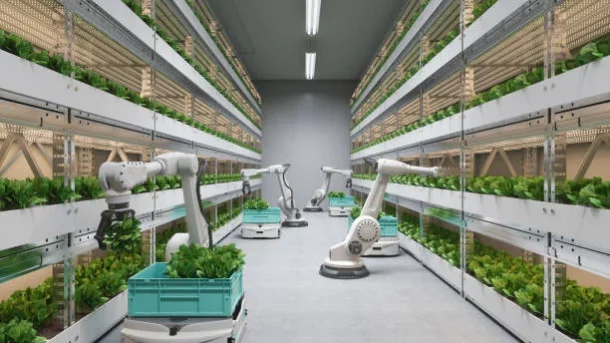
How are autonomous tractors and machinery transforming farming practices?

autonomous tractors

By adding automation and cutting-edge technologies to diverse agricultural processes, autonomous tractors and other equipment are revolutionising farming practises. Here is how they are changing agriculture:

Increased Productivity and Efficiency: Because autonomous tractors and other machinery may function constantly without human intervention, efficiency and productivity are increased. They can labour around the clock and consistently and precisely complete duties like plough, seed, spray, and harvest. As a result, task completion is facilitated more quickly, downtime is decreased, and overall farm output is increased.

Precision Agriculture: Autonomous equipment is fitted with cutting-edge sensors, GPS, and mapping systems, enabling exact input location and application. They can use real-time field data or planned routes to follow in order to optimise tasks like variable-rate sowing or fertiliser application. Utilising precision agriculture techniques,

What are the advancements in agricultural robotics for crop harvesting?

crop harvesting

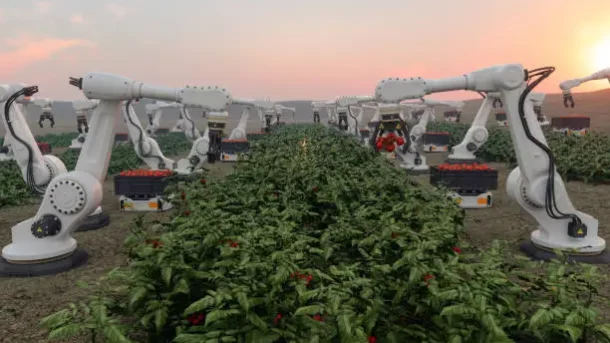
Autonomous Harvesting Robots: To crop harvesting, autonomous robots with robotic arms, computer vision, and machine learning are being developed. These robots are capable of precision field navigation, crop maturity detection, and harvesting operations. They can precisely and dexterously pick fruits, vegetables, or nuts, which decreases the requirement for physical labour and boosts harvesting effectiveness.

Advanced vision systems and sensing technologies are built into harvesting robots to identify and score crop maturity and quality. These tools include cameras, LiDAR sensors, near-infrared spectroscopy, and hyperspectral imaging. They make it possible for crop attributes like colour, size, ripeness, and flaws to be analysed by robots, guaranteeing selective and effective harvesting.

Grippers and Soft Robotics: Soft robotics is a new field that focuses on creating adaptable and flexible robotic systems. Robots can handle fragile or oddly shaped crops without harm thanks to soft robotic grippers that replicate the delicacy and compliance of human hands. Based on the crop being harvested, these grippers, which are made of materials like silicone or elastomers, may change their form and grip intensity.

Swarm robotics: Swarm robotics entails the coordination of numerous little robots cooperating to carry out difficult tasks. Swarm robots can divide the task among several units during harvesting, enabling simultaneous harvesting in various fields. Swarm robotics increases productivity and decreases harvesting operation time.

How are predictive analytics being used for yield forecasting?

yield forecasting

A lot of businesses, especially agricultural, are using predictive analytics to forecast yield. Organisations may estimate agricultural yields accurately using predictive analytics, which improves planning, decision-making, and resource allocation by utilising historical data, statistical models, and sophisticated algorithms. Predictive analytics is used for yield forecasting in the following ways:

Predictive analytics begins by examining historical data, such as weather patterns, soil characteristics, crop kinds, and previous yield records. The patterns, correlations, and trends found in this data are utilised to forecast potential yields in the future.

Integration of weather data: Predicting crop yields requires careful consideration of the weather. In order to evaluate the impact of weather on crop growth and productivity, predictive analytics integrates both historical and real-time meteorological data for accurate yield forecasting.

Predictive analytics makes use of machine learning algorithms to analyse complex data sets and spot trends that may not be obvious to human analysts. These algorithms can produce precise crop yield projections by spotting subtle correlations between different elements.

Data-driven Decision Making: By fusing insights from predictive analytics with additional data sources, including as market trends, historical prices, and input costs, organisations may make well-informed choices about planting, fertilising, irrigating, managing pests, and harvesting. This data-driven methodology maximises agricultural productivity and forecasts of yield.

What are the advancements in precision nutrient application in agriculture?

application

 With the use of variable rate technology (VRT), farmers can apply fertilisers at various rates throughout their fields according to site-specific requirements. To gather information on soil fertility, crop development, and other pertinent parameters, soil sensors, remote sensing, and GPS technologies are employed. The creation of prescription maps that direct the application of fertilisers is then done using the data. By carefully tailoring the distribution of nutrients to the needs of the crop and the various soil conditions, VRT maximises nutrient uptake while minimising nutrient loss.

Sensor-Based Nutrient Management: Several sensors are used to monitor soil nutrient levels and crop health in real-time, including soil moisture sensors, electrical conductivity sensors, and optical sensors. Farmers can use these sensors to gather precise and timely data that will help them decide how to apply nutrients. 

Fertilisers with Controlled-Release: Controlled-release fertilisers are made to release nutrients gradually over an extended period of time. These fertilisers give the crops a more consistent supply of nutrients, which lowers the chance of nutrient leaching, volatilization, or runoff. These fertilisers increase the effectiveness of nutrient utilisation while minimising environmental effects by releasing nutrients in a regulated manner.

Software Tools for Nutrient Management: Tools for nutrient management are available to help farmers make knowledgeable decisions about the application of nutrients. To produce optimised fertiliser recommendations, these software systems take into account elements including soil type, crop type, yield targets, nutrient requirements, and environmental considerations. These tools, which generate customised nutrient management plans taking into account crop nutrient needs, present nutrient levels, and regulatory guidelines, can be used by farmers to input their field data.

How is satellite navigation technology used in precision agriculture?

satellite

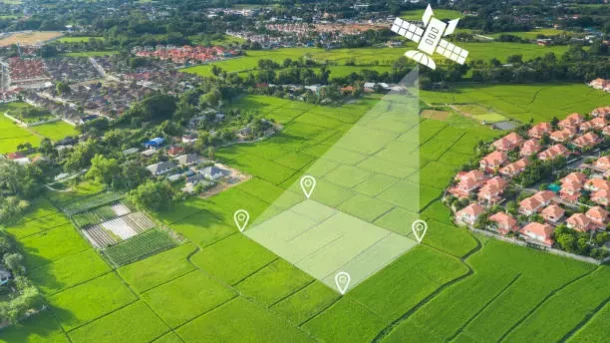
Field Mapping and Surveying: Farmers can precisely map and survey their fields using Global navigation satellite system (GNSS) receivers installed on farm equipment or portable devices. Farmers can detect areas with changes in soil fertility or topography, construct accurate field border maps, and create digital field maps for precision management by gathering exact location data.

Precision Guidance and Auto-Steering: With the help of Global navigation satellite system (GNSS) based guidance systems, farmers may precisely direct their agricultural equipment along pre-determined courses throughout the fields. This minimises input wastage, guarantees precise row spacing, prevents overlaps or gaps during sowing, spraying, or fertilising activities. Agricultural equipment’s location and direction can be managed automatically by auto-steering systems, allowing farmers to concentrate on other duties while maintaining accurate navigation.

Yield Monitoring and Mapping: As harvesting equipment moves through the field, GNSS-enabled yield monitoring devices gather real-time data on crop production. Farmers can produce yield maps that display the spatial diversity in crop performance by fusing yield data with exact location data. These maps aid in the analysis of yield patterns over time, the identification of locations with high or low yield, and the formulation of site-specific management strategies.

Global navigation satellite system (GNSS) technology can be utilised to improve variable rate irrigation techniques in precision agriculture. Aerial photography or soil moisture sensors combined with GNSS positioning can be used by farmers to identify differing irrigation needs for different parts of the field. This makes it possible to use variable rate irrigation, in which water is dispersed precisely in response to crop water requirements, soil moisture levels, and topographic factors.

 How is data-driven decision making transforming agriculture?

data-driven

Precision Agriculture: Data-driven decision making enables farmers to use practises that allow them to target their activities and inputs to certain fields. Farmers may administer inputs (such as fertilisers, water, and pesticides) precisely where and when they are required by gathering and analysing data on soil characteristics, moisture levels, nutrient content, and crop health. This optimisation improves overall efficiency while minimising resource waste and environmental effect.

Crop management: By offering insights into crop health, growth trends, and prospective yield, data-driven decision making promotes improved crop management. Farmers can monitor crop conditions, spot early indications of illnesses or pest infestations, and spot nutrient deficits using data obtained from sensors, drones, satellite imagery, and field observations. Farmers can use this knowledge to implement timely interventions.

Farm Management and Automation: Effective farm management and automation are supported by data-driven decision making. Farmers can monitor and analyse a variety of farm operations, such as equipment usage, labour productivity, financial performance, and inventory management, using data analytics and farm management software. Farmers can detect inefficiencies, streamline processes, and make well-informed decisions about investment, expansion, or diversification with the assistance of these insights.

Continuous Learning and Improvement: Data-driven decision making encourages an agricultural culture of ongoing learning and development. Farmers can find trends, patterns, and best practises that produce better results by collecting and analysing data over time. Farmers and other interested parties can exchange this knowledge, fostering creativity, learning as a group, and the adoption of improved farming practises and technologies.

 How is satellite imagery used in agriculture?

satellite imagery

Crop monitoring: The health, development, and growth of crops can be tracked using satellite photography. The photos offer information on vegetative biomass, vigour, and stress signs such changes in chlorophyll concentration. Farmers can spot problem areas, spot early indications of disease, nutrient deficiency, or water stress by analysing satellite imagery, and then take preventative action to lessen possible problems.

Crop output can be forecasted by combining satellite imagery with additional data sources like weather information and past crop performance. Satellite imaging aids in forecasting and planning for future harvest results by tracking vegetation indices and growth patterns throughout the growing season. Accurate yield forecasting aids in improved resource allocation, logistics, and market planning decisions.

Field Mapping and Boundary Identification: Field mapping, defining field boundaries, and identifying certain geographical areas all make use of satellite images. Crop management, precision farming techniques, and adherence to laws or rules governing agriculture all benefit from this knowledge. Using satellite imagery for field mapping enables accurate field-level monitoring, analysis, and targeted actions.

Management of Irrigation: Satellite photography provide information on the soil moisture levels and irrigation requirements across vast agricultural areas. Farmers may improve their irrigation plans, ascertain when and how much water is needed, and avoid over- or under-irrigating by analysing satellite-based data. Thus, water consumption efficiency is improved. 

How is blockchain technology being implemented in the agricultural supply chain?

agricultural supply chain

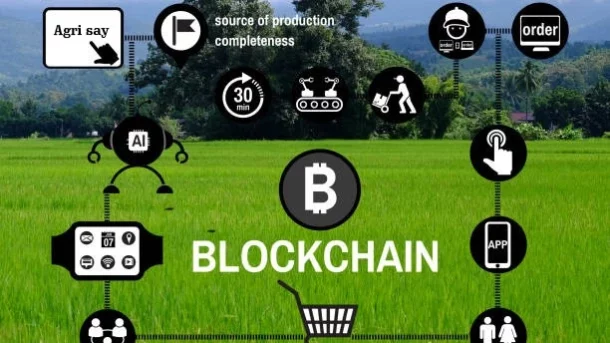
Product tracability: Thanks to blockchain technology, every agricultural product transaction and movement along the agricultural supply chain may be recorded and tracked. The blockchain can be used to track every stage, including production, processing, packing, shipping, and distribution. Consumers and stakeholders may confirm the product’s origin, quality, and authenticity thanks to this immutable and transparent record of its journey.

Transparency in the agricultural supply chain is made possible by blockchain technology, which gives farmers, processors, distributors, retailers, and consumers access to a shared, decentralised ledger. By making transactions transparent, fraud, forgery, and unethical behaviour are reduced. The supply chain’s integrity and dependability are ensured by participants’ capacity to validate and verify the data stored on the blockchain.

Quality and Standards Assurance: Blockchain can be used to store and exchange data on the certifications of products as well as their adherence to standards and laws. This information may cover specifics regarding farming techniques, the use of pesticides and fertilisers, organic certifications, fair trade principles, and other topics. Consumers can make educated decisions and feel confident about the things they buy by having access to this information via the blockchain.

Efficient Payment and Transactions: Blockchain technology makes it possible for the agricultural supply chain to conduct safe and effective digital transactions. Processes like payments, invoicing, and settlements can be automated and streamlined using smart contracts, which are self-executing contracts on the blockchain. This leads to quicker and more secure transactions by reducing paperwork, lowering transaction costs, and doing away with the need for middlemen.

 What is the role of robotics in modern agriculture?

Automation of Labor-Intensive chores: By automating labor-intensive agricultural chores, robots can lessen the need for manual labour. They can efficiently and precisely carry out tasks including planting, seeding, transplanting, weeding, spraying, and harvesting. This automation boosts production, lowers costs, and addresses the labour deficit.

Robots with sophisticated sensors, computer vision, and machine learning algorithms are capable of carrying out tasks with a high degree of accuracy and precision. They may recognise and selectively target particular plants, weeds, or pests, consuming less water, fertiliser, and pesticides in the process. This focused strategy encourages sustainable farming methods while increasing efficiency and decreasing waste.

Robots with sensors and imaging capabilities may monitor and gather data on crops in real-time, including information on their health, their growth patterns, and their environmental circumstances. They may keep an eye on variables including temperature, humidity, nutrient levels, and soil moisture. Robotic data collection assists farmers in making educated decisions regarding crop-related practises such as irrigation, fertiliser application, disease management, and more.

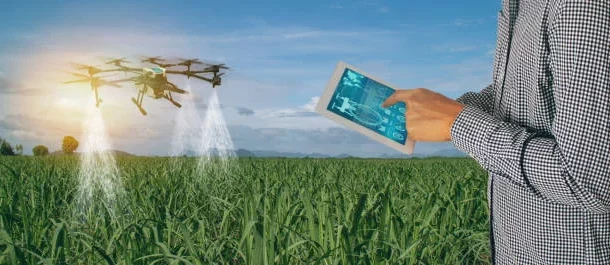
Autonomous Machines and Vehicles: The usage of autonomous vehicles in agriculture is growing, including self-driving tractors and drones. These machines may operate autonomously and carry out duties including field mapping, crop monitoring, planting, spraying, and soil analysis. Autonomous equipment enhances operational effectiveness, lowers human error, and permits 24-hour farming operations.