ScientificFarmingWeb

What is Satluj Purple and it belongs to which cultivar?

Satluj Purple

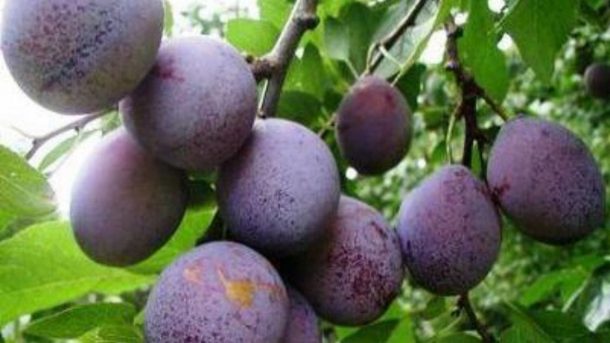
Satluj Purple is the cultivar of plum. It is a self-unfruitful cultivar and requires Kala Amritsari as pollinizer. Kala Amritsari plum should be planted as alternate plant in alternate rows for achieving good fruit set. Tree is medium in vigour with upright habit of growth. The fruit is of medium in size weighing 25-30 g. The epicarp develop crimson colour on ripening.

The epicarp is thick and mesocarp yellow coloured firm flesh. The TSS of Juice ranges between 12-14 percent and acidity 0.5 to 0.7 percent. The fruits are usually eaten fresh. It is an early ripening low yielding cultivar. It ripens in early May and yield 35-40 Kg of fruit per tree.
What is Kala Amritsari and it belongs to which cultivar?

Kala Amritsari

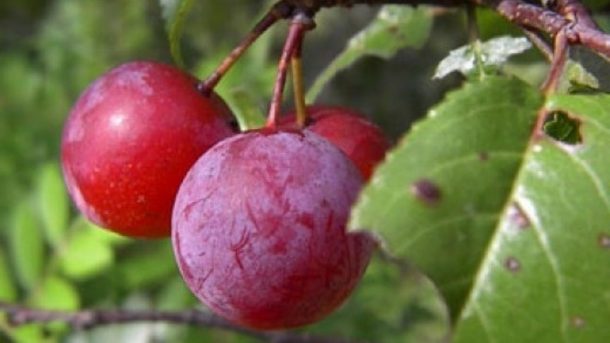
Kala Amritsari is the cultivar of plum. It is self-fruitful high yielding local cultivar. The trees are vigorous with profuse branching. This is most preferred cultivar of plains. Fruits are of medium size, round oblate depressed at both ends. The epicarp (skin) on ripening turn dark purple. The mesocarp (flesh) is yellow in colour with juicy pulp. Fruits are little acidic in taste. The TSS of juice ranges between 13 to 15 percent and acidity l. D-1.3. percent. Fruit ripens in second half of May. Average yield about 55 kg per trees. Its fruits are preferred for making Jam and squash.

How nematode causes damage to plum crop and which rootstocks are resistant to it?

nematode

Nematode namely Meloidogyne incognita infestation leads to malfunctioning of the roots, as a result of which the above ground parts of plants show stunting and yellowing of leaves. Proper rootstock selection can reduce the damage caused by root knot nematode. Marianna 2624, Myrobalan 29C, and Nemaguard are resistant rootstock. Carbofuran granules are also applied (100–300 g/tree) after the harvest of the crop.

What are the damage symptoms of San Jose scale and how it can be controlled?

San Jose

The adults feed on sap from limbs, twigs, and fruits. Small greyish specks appear on the bark covered with a grey layer of overlapping scales that appear as if they were sprayed with wood ash. Dead leaves adhering to fruit spurs during the dormant season indicate the presence of the San Jose scale. Spraying of universal oil during the spring @ 10 litres in 490 litres of water during the dormant season can give effective control. Insecticides such as chlorpyriphos (0.4%) and dimethoate (0.03%) can be sprayed to kill the crawlers during May.

Why crown rot disease occurs in plum and how it can be prevented?

disease

Primarily a disease of the young trees, its onset begins during extended periods of high soil moisture. Cankers develop on the bark below the ground; infected trees appear pale after leafing. If the cankers girdle the trunk, the tree will eventually die. There is no satisfactory control measure once the disease appears. However, it can be prevented by planting the trees at the same depth at which they grew in the nursery or even deeper (graft union should be kept out 30–45 cm above the soil level). Ensuring proper drainage in the tree basins is crucial for preventing the outbreak of the disease.

What is Alternate Wetting Drying and Dry Seeded Rice (AWD-DSR)?

Rice

In India, paddy rice cultivation occupies about 44 million hectares – the largest rice-producing area in Asia – and accounts for 20 per cent of total rice production worldwide. AWD reduces the frequency of flooding in rice farms, thus improving soil quality. Better soil structures allow farmers to intercrop rice with other agricultural crops, which in turn leads to diversified farming systems, providing multiple sources of income. AWD-DSR also reduces the incidence of certain pests and diseases, further improving yields and boosting farmers’ resilience.

In 2021, nurture.farm ran the AWD-DSR programme on 22,000 acres in Punjab and Haryana. In the winter season, nurture. farm led the programme on 120,000 acres in Andhra Pradesh and Telangana. Over the course of both programmes, over 80,000 small and marginal farmers were supported with the technology to perform AWD-DSR, which led to 15 per cent to 30 per cent water savings.

Which soil is suitable for Black gram farming?

Black gram

Black gram does well on heavier soils like black cotton soils that retain moisture. It can be grown in all types of soils from sandy loam to heavy clay soil, except the alkaline and saline soils. Loam or slightly heavy soils with neutral pH levels are best suited for urad bean. The soil must be well drained and have good water holding capacity. Waterlogged, saline and alkaline soil must be avoided. The black gram grows well in fertile soil which is rich in lots of organic contents. Therefore, try to add as much organic content as you can while preparing the soil.

When and how to harvest Hazelnuts?

Hazelnuts

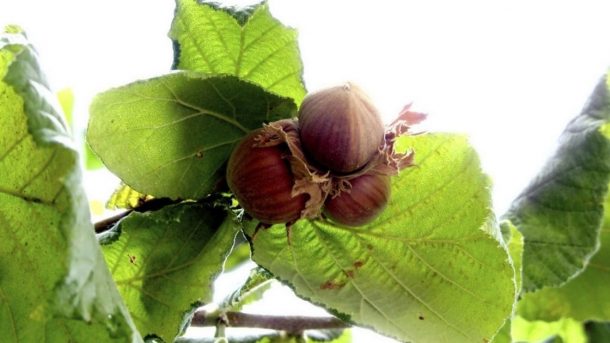
Hazelnuts are harvested annually in mid-autumn. As autumn comes to a close, the trees drop their nuts and tree leaves. Nuts from the hazelnuts’ trees need to be harvested before the autumn rains. As the nuts ripen, they drop from the tree over approximately 6 weeks. Gather Hazelnuts from the ground. Some of the fallen Hazelnuts may be wormy or even empty. It is very easy to distinguish between those nuts that are bad from good one. Place the nuts in water and gloating nuts are the duds. Discard any floaters. Also, insect infested nuts will have holes in the shell and must be tossed out. Once Hazelnuts picking has been accomplished and it’s time to dry the nuts out. The nuts are ready for collection in autumn as soon as husks become yellow colour.