ScientificFarmingWeb

Which soil is suitable for litchi farming?

suitable

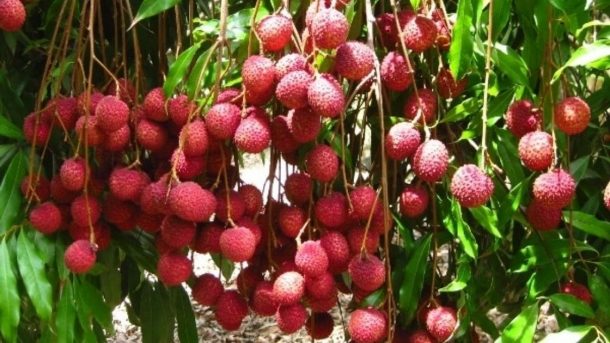
Deep loamy loam soil with normal pH value is most suitable for litchi cultivation. The soil of North Bihar which has high water holding capacity is considered best for its cultivation. Litchi is also being cultivated successfully in mildly acidic and laterite soils.

Its plants have good growth and fruit production in high water holding capacity and humus-rich soil. Waterlogged areas are not suitable for Litchi fruit. Any type of waterlogged soil is not suitable for litchi.

What is the climatic requirement for litchi farming?

litchi

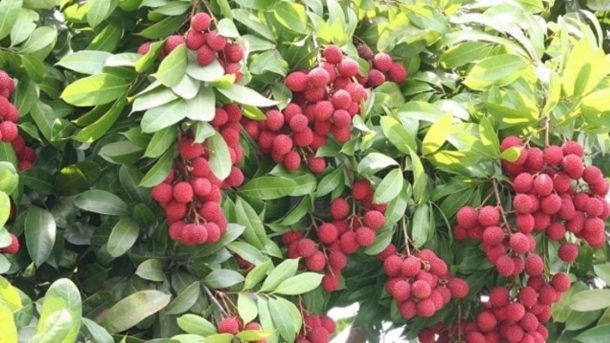
The temperate climate has been found to be very suitable for the production of litchi. It has been seen that due to clear sky increase in temperature and dry climate in the month of January-February there is a good in litchiplant in which more flowers and fruits are produced.

The development of litchi fruits is good in March and April due to less heat as well as normal humidity in the environment in April-May improves the quality and development of pulp in the fruits.

What are the symptoms of root rot disease in moringa and how it can be controlled?

symptoms

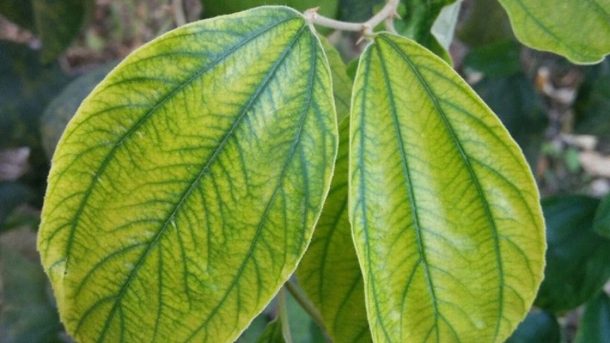
The symptoms of the disease appear as oozing of gum from the affected bark which remains as an encrustation on the bark. Droplets of gum trickle down the stem. Leaves turn yellow and pale and fruit yield is greatly reduced. It can be controlled by maintaining trees and keeping them in vigorous growing conditions. Broken limbs should be cut properly and wound in the bark especially on limbs and forks should be scraped and protected with Bordeaux mixture. Crop rotation, proper sanitation and removal of crop residues is effective in keeping the disease in check.

What are the symptoms of powdery mildew in moringa and how it can be controlled?

symptoms

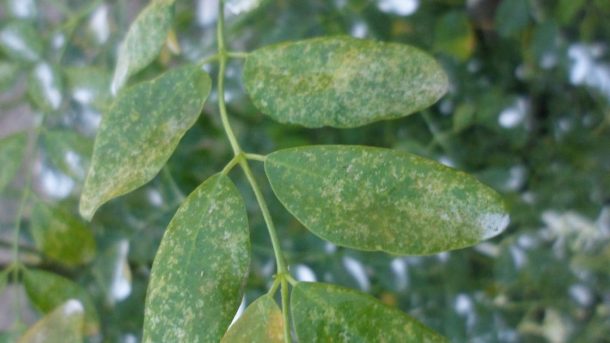
The symptoms appear as white to light grey powdery growth on the under surface of the leaves and the corresponding upper surface exhibits yellow lesions with brown necrotic centres. Affected leaves curl upwards and shed profusely. Affected plants lose their vigour and remain barren. Circular or oblong lesions that are 5 to 20 mm and have a chlorotic or necrotic appearance. The lesions appear on older leaves and there is also severe wilting and death of plants. It can be controlled byapplication of wettable sulphur at 0.2% gives better control. Sanitation and reduced water stress are effective preventive measures.

Why pruning is important in moringa framing?

pruning

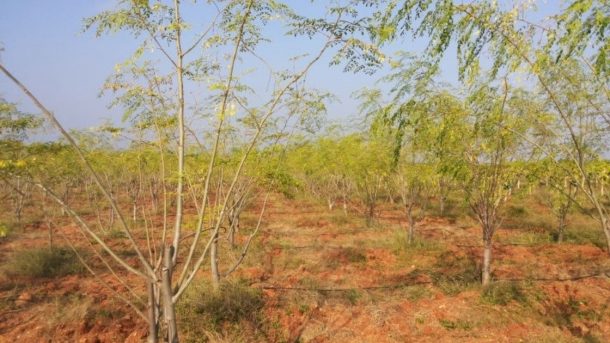
Moringa plants grow vertically long and it produces less pods when it is grown naturally also making the harvesting difficult as it grows 10 to 12 metres long. Pruning cuts the branches short by pinching the terminal bud making the trees short to 1 to 2 metres. It helps in producing more branches which leads to more flowers and fruits, and it also makes the harvesting easier.

What is the irrigation requirement for moringa farming?

Irrigation-moringa

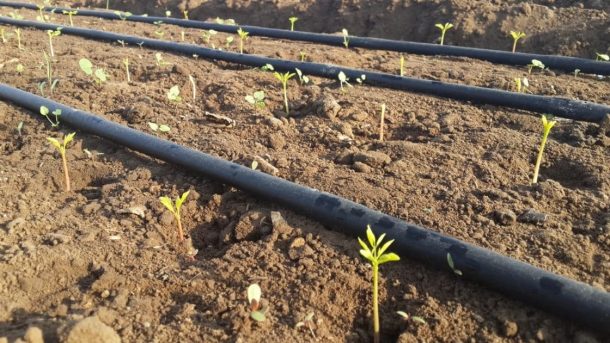
Moringa plants need very little irrigation for better growth. It can withstand drought conditions for up to six months but too dry or too wet soil conditions could lead to flower drop and so for maximum yielding of the crops it requires maintenance of optimum soil moisture avoiding the stagnation of water. Rainy season doesn’t require any irrigation.

How land preparation is done for moringa farming?

moringa

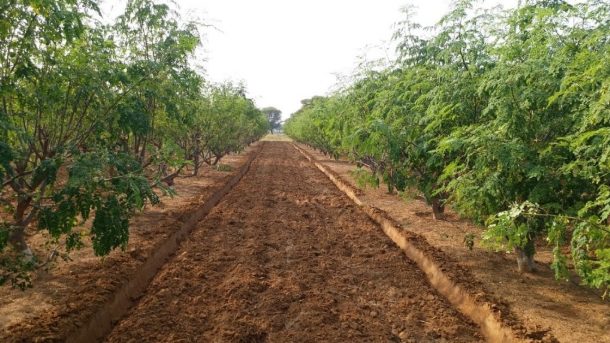
Moringa plants require a deep ploughing of the land before plantation and about 20 tonnes of farmyard manure are added to per hectare of the land. The pit of about 45×45×45 cm is dug, maintaining a space of 6×6 m for perennial crops and a space of 2.5×2.5 m for annual crops. Each pit is then followed by adding a mixture of 10 to 15 kg of farmyard manure with 100g of Nitrogen, 200g of Phosphorus and 50g of Potassium.