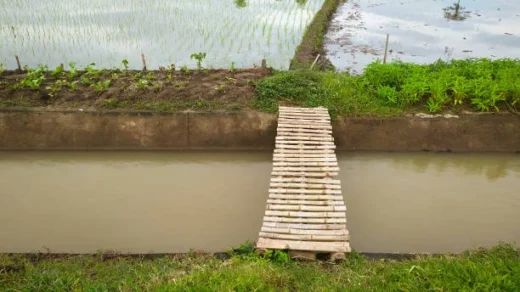
Challenges with irrigation and water scarcity: Agriculture requires a lot of water, and as a result of resource depletion, there may be a shortage of freshwater, especially in areas that are prone to drought. Farmers encounter difficulties obtaining sufficient water for irrigation as water sources become scarcer, which has an impact on crop development and production. Additionally, as a result of water shortage, household, industrial, and agricultural sectors all compete more fiercely for water supplies.
Reduced soil fertility and degradation: Fertile land is necessary for good crop production, but its depletion can happen as a result of unsustainable farming methods, such as overusing chemical fertilizers, having poor soil management, eroding land, and cutting down trees. Farmers struggle to preserve soil fertility on damaged or lost fertile land, which negatively affects crop productivity and the environment.
Agriculture depends on ecological services including nutrient cycling, natural pest control, and pollination, all of which depend on biodiversity. Natural resource depletion can cause habitat loss, fragmentation, and degradation, which will reduce biodiversity and impair ecosystem processes. Without these ecosystem services, farmers could be forced to rely more on artificial inputs, like chemical pesticides and fertilizers, to make up for the loss of natural processes, which would increase their dependency on them and increase their costs as well as the risk to the environment.
Climate change effects: Agriculture is more susceptible to the effects of climate change as a result of the depletion of natural resources. The availability and timing of water for irrigation are impacted by water scarcity and variations in precipitation patterns.