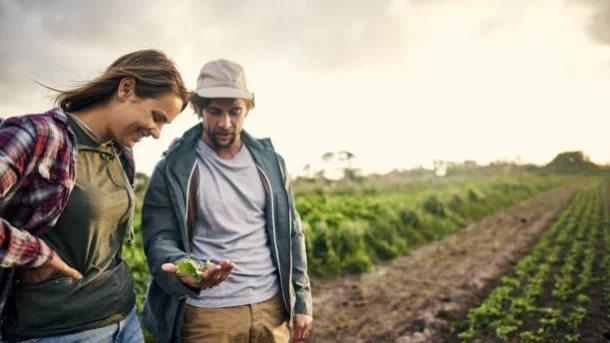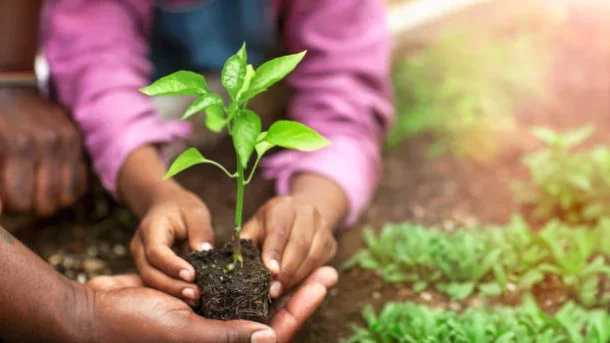
Sustainable agriculture

What are the benefits of using satellite-based weather forecasting in agriculture?

satellite

Utilising blockchain and satellite technology, every transaction and movement of food products from their point of origin to their final destination is tracked in a transparent and immutable ledger. A safe and auditable record of the product’s journey is ensured by the ability of every stakeholder in the supply chain, including farmers, processors, distributors, and retailers, to submit data into the blockchain.

Through the provision of a decentralised and tamper-proof system for tracking and confirming the authenticity and integrity of food products and this technology facilitates traceability.

QR codes and barcodes are frequently used on food packaging to give consumers access to thorough information on the product’s origin and manufacturing processes, and supply chain trip. Consumers can track the merchandise by using a smartphone to scan these codes.

Satellite remote sensing data is critical for monitoring soil, drought and snow cover, and crop development. Satellite rainfall estimates, for example, assist farmers in planning the quantity and timing of irrigation required for their crops.

For example, weather forecasting enables you to properly plan your farm operations, such as planting, irrigation, fertilizer application, pruning/weeding, harvesting or livestock mating and since farming and agriculture as a whole chiefly depend on seasons and weather.
How are smart farming applications being used for food traceability?

food traceability

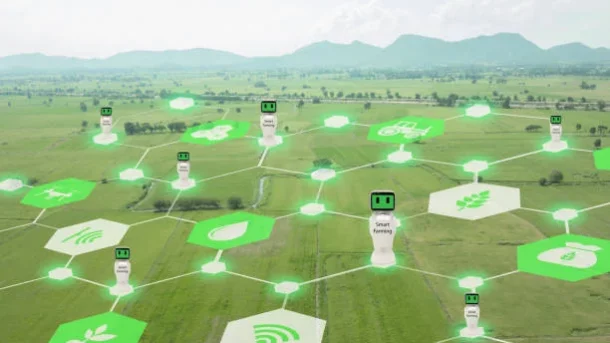
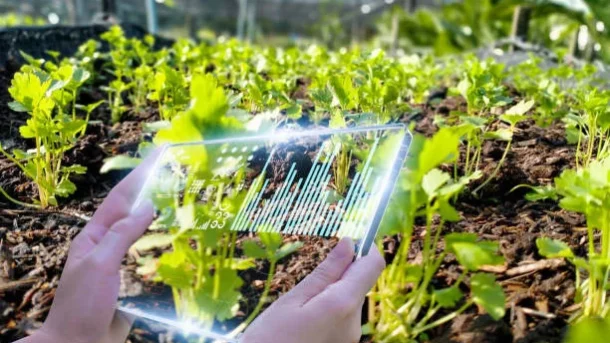
Applications for smart farming are being utilised more frequently to improve food traceability throughout the agricultural supply chain. To ensure transparency and traceability from farm to fork, these applications make use of a variety of technology and data-driven solutions. For food traceability, the following smart farming applications are used.

IoT Sensors and RFID Tags: Throughout the supply chain, different parameters are tracked and monitored using Internet of Things (IoT) sensors and Radio Frequency Identification (RFID) tags. To gather information on temperature, humidity, soil moisture, and pesticide use, IoT sensors can be installed in fields and farms. To track the movement and status of individual products as they travel through the supply chain, such as crates or pallets, RFID tags are affixed to them.

Traceability within food control systems is applied as a tool to control food hazards, provide reliable product information and guarantee product authenticity. Recall or Product Recall is defined as “the action to remove food from the market at any stage of the food chain, including that possessed by consumers”.

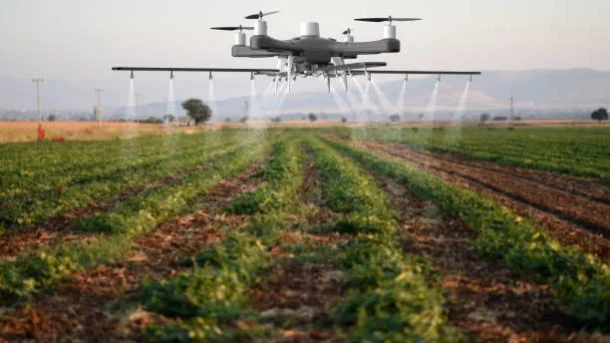
What is the role of remote-controlled drones in agricultural surveillance?

Feature Selection: To provide precise predictions, machine learning algorithms need pertinent features. The most important factors that have an impact on market demand are determined using feature selection approaches. Product characteristics, pricing details, marketing initiatives, seasonality, and outside variables like economic indicators are a few examples of these elements.

Regression, decision trees, random forests, and neural networks are just a few examples of the machine learning models that may be trained utilising preprocessed data. The models discover patterns and connections between the feature inputs and market demand. The models’ internal parameters are changed during training in order to reduce prediction errors.

Model Evaluation and Validation: The trained models are evaluated and validated using historical data that was not used for training. This helps assess the performance and accuracy of the models in predicting market demand. Various evaluation metrics, such as mean absolute error (MAE) or root mean square error (RMSE), are calculated to measure the predictive performance.

What are the advancements in aquaponics systems for sustainable food production?

advancements

Aquaponics is a cutting-edge and environmentally friendly agricultural technique that combines hydroponics (soilless plant cultivation) and aquaculture (fish farming), Here are some developments in aquaponics systems that help produce food sustainably.

Water, nutrients, and trash are recycled and reused in closed-loop systems, which have been the focus of aquaponics advancements. In these systems, nutrient-absorbing plants are grown in hydroponic beds using water that is circulated from fish tanks. A continuous cycle is created when the water is filtered by the plants and then returned to the fish tanks. Because of its closed-loop system, aquaponics is both very water-efficient and environmentally benign. It also reduces nutritional waste.

Automation and monitoring technology integration: To enhance productivity and optimise operations, aquaponics systems are incorporating automation and monitoring technologies. Water quality indicators like temperature, pH, dissolved oxygen, and nutrient levels are tracked using sensors and controllers. These variables are controlled by automated devices, which guarantee ideal conditions for both fish and plants. The connection improves system management and productivity by reducing the need for human monitoring and intervention.

Aquaponic lighting may now be more energy-efficient and individualised thanks to advancements in LED lighting technology. It is possible to customise LED lighting to meet the unique lighting needs of many plant species, maximising photosynthesis and growth. They use less energy than conventional lighting sources, which lowers overall energy costs and increases the sustainability of aquaponics.

What are the benefits of using digital agriculture platforms?

digital agriculture

Platforms for digital agriculture have many advantages for farmers, agronomists, and the agricultural sector as a whole. Among the principal benefits.

Data-Driven Decision Making: Digital agriculture systems gather, process, and analyse voluminous agricultural data from a variety of sources, such as sensors, satellites, and farm machinery. Farmers are able to make well-informed decisions thanks to these data-driven insights, which also aid in the resource allocation and optimisation of crop management techniques.

Precision farming: Using digital platforms for agriculture, farmers can apply precision farming practises including the variable rate application of water, pesticides, and fertilisers. Precision farming maximises resource efficiency and minimises waste, resulting in cost savings and a smaller negative impact on the environment. This is done by customising inputs to the distinct demands of various sections within a field.

Crop Monitoring and Management: Digital systems provide real-time crop monitoring using drones, satellite imagery, and remote sensing technologies. This ongoing observation assists in spotting early indications of stress, ailments, or pests, allowing for prompt intervention and averting potential output losses.

Yield Optimisation: Digital agricultural platforms can assist farmers in maximising crop yields by integrating data on soil health, weather patterns, and previous yield records. Better crop planning, ensuring the proper crops are planted in the right places, and implementing practises that increase yield are all made possible by analysing this data.

How are precision irrigation systems improving water efficiency in farming?

water efficiency

Precision irrigation systems are essential for increasing water efficiency in agriculture since they maximise water application and reduce water waste. The following are some ways that precise irrigation systems improve water efficiency:

Application of Site-Specific Water: Precision irrigation systems use tools like soil moisture monitors, weather information, and remote sensing to pinpoint the precise water requirements of certain fields. Farmers may avoid over-irrigation and give the appropriate amount of water to each plant or zone by using real-time analysis to determine these factors. This focused strategy reduces water waste and makes sure that crops get the right amount of moisture.

Precision irrigation systems have a feature called variable rate irrigation (VRI) that enables various parts of a field to have differing water application rates. VRI systems are able to deliver varied amounts of water to various zones or even specific plants within a field by taking into account the terrain, the crop requirements, and the properties of the soil. In order to minimise both over- and under-irrigation and to maximise water use efficiency, farmers can utilise this to match irrigation rates to individual demands.

Water Monitoring and Feedback: Precision irrigation systems come with sensors and feedback mechanisms that offer in-the-moment data on crop water intake, soil moisture levels, and system efficiency. Farmers can make informed judgements regarding irrigation management by remotely monitoring this data using computer interfaces or mobile apps. This information permits prompt modifications.

What is the role of microbial biotechnology in sustainable agriculture?

microbial biotechnology

By using microorganisms to improve many areas of agricultural practises, microbial biotechnology plays a key part in sustainable agriculture. Among the most important functions of microbial biotechnology in sustainable agriculture are as follows.

Biofertilizers: Microorganisms can symbiotically bond with plants or directly improve soil fertility. Examples include nitrogen-fixing bacteria like Rhizobia and phosphate-solubilizing bacteria. These helpful bacteria are found in biofertilizers, which are used to boost nutrient availability and uptake by plants and lessen the need for synthetic fertilisers. This enhances soil health, lowers environmental contamination, and promotes sustainable nutrient management.

Biopesticides: Microbial biotechnology provides pest and disease control agents made from microorganisms like bacteria, fungus, and viruses. The use of these biopesticides supports integrated pest management (IPM) techniques while lowering environmental contamination and health concerns associated with chemical pesticides.

Biostimulants: Microbial-based biostimulants accelerate plant growth, improve nutrient uptake, and increase stress tolerance by containing advantageous microbes or their metabolites. These biostimulants can increase plant toughness, encourage root growth, and raise crop yields. Farmers can lessen their reliance on artificial growth regulators and advance sustainable crop production by utilising biostimulants.

How are machine learning algorithms used for yield optimization?

yield optimization

Increasingly, agricultural yield optimization uses machine learning methods. In order to maximise crop yields, these algorithms analyse vast volumes of data and generate predictions or suggestions. The following are some significant applications of machine learning for yield optimization:

Machine learning algorithms can estimate crop yields by analysing historical and current data on weather patterns, soil conditions, crop traits, and management techniques. These algorithms produce yield estimates by taking into account a number of variables and their interconnections, assisting farmers and agronomists in making defensible choices about inputs, irrigation, and crop management techniques.

Variable Rate Technology (VRT): Using VRT, inputs like fertiliser, insecticides, and water are applied at different rates depending on the changing field conditions. To produce prescription maps for VRT equipment, machine learning algorithms analyse data from sensors, satellite photography, and previous yield maps. These maps direct the precise application of inputs, maximising yields across several fields and maximising resource utilisation.

Detecting illnesses, pests, and weed infestations in crops can be done by using machine learning algorithms to examine photographs or sensor data. These algorithms learn to identify patterns and anomalies connected to certain diseases or pests by training on labelled data. Early detection enables focused actions, minimising the effect on crop output and the requirement for extensive

What are the benefits of using biodegradable mulch films in agriculture?

biodegradable mulch

What are the benefits of using biodegradable mulch films in agriculture/

Sustainability in the environment: Biodegradable mulch films are made to decompose organically over time, minimising the environmental impact of plastic mulch films. They are often manufactured from biodegradable substances generated from renewable resources, such as starch-based polymers, polyhydroxyalkanoates, or polylactic acid (PLA). They minimise pollution and the buildup of plastic trash since they decompose quickly and do not leave behind plastic residues in the soil.

Microbial Activity and Soil Health: Biodegradable mulch films encourage microbial activity, which improves soil health. They act as a carbon source for soil microbes as they break down, promoting their diversity and growth. This enhances the soil’s general fertility, nutrient cycling, and soil structure. Biodegradable mulch films also aid in water retention and infiltration, which lowers soil erosion and enhances moisture control.

 What is the role of biodegradable packaging in sustainable agriculture?

biodegradable packaging

Environmental Impact: Biodegradable packaging materials are made to disintegrate into the environment organically and naturally without leaving any harmful leftovers. Biodegradable pack lessens trash buildup and has a less negative environmental impact than non-biodegradable materials like plastic, which linger in the environment for a long time and cause pollution. This promotes the preservation of natural resources, wildlife, and ecosystems.

Waste reduction: Agriculture produces a lot of packaging waste, such as bags, labels, wraps, and containers. By supplying packaging materials that can be composted or broken down naturally, biodegradable pack offers a way to reduce this waste. Farmers and agricultural businesses can help reduce waste and advance a circular economy by utilising biodegradable packaging.

Sustainability along the Value Chain in Agriculture: Biodegradable pack is consistent with the concept of sustainability in general along the agricultural value chain. Sustainable packaging helps agricultural goods’ overall environmental impact be reduced from production to consumption. It enhances resource conservation efforts, appropriate waste management, and sustainable agricultural methods, making the agriculture sector more robust and sustainable.

It’s crucial to remember that the development of composting infrastructure and adequate disposal methods are prerequisites for the effective use of biodegradable pack. For the management and processing of biodegradable pack waste to be successful, cooperation between stakeholders, such as packaging producers, waste management facilities, and policymakers, is essential.