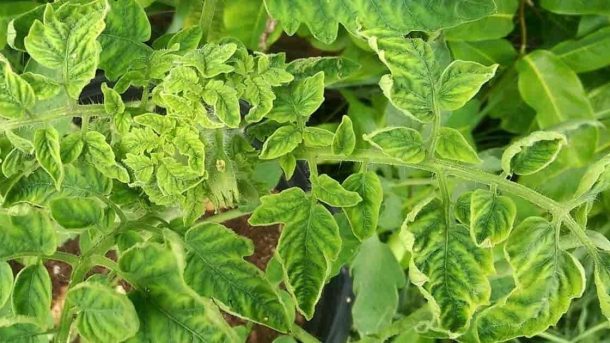
It causes downward rolling and crinkling of the leaves. The newly emerging leaves exhibit slight yellow colouration and later they also show curling symptoms. The older leaves become leathery and brittle. There is drastic reduction in the size of nodes and internodes. The infected plants remain stunted in growth. It is transmitted by white fly. It can be controlled by plants affected by viral disease must be uprooted and destroyed. Monitoring the adult population with yellow sticky traps for early prediction and timely application of insecticide. Spray triazophos (0.04%) or lambda-cyhalothrin (0.004%).
Plant diseases
How early blight causes damage in tomato and how it can be controlled?
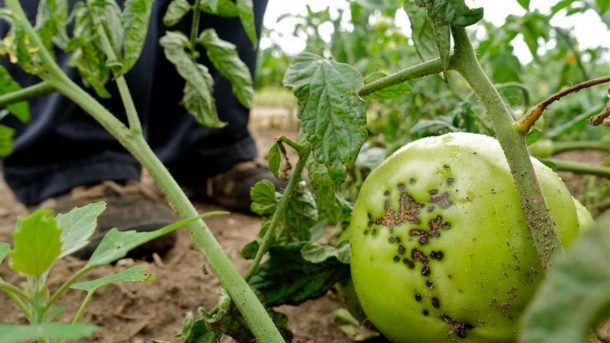
This disease appears on the foliage at any stage of plant growth. It occurs on the plants as small, black lesions mostly on the older foliage. In later stages, concentric rings also appear on the fruit. It can be controlled by seed treatment with Carbendazim @ 2.5 g per kg of seed.
How Buck eye rot causes damage in tomato and how it can be controlled?
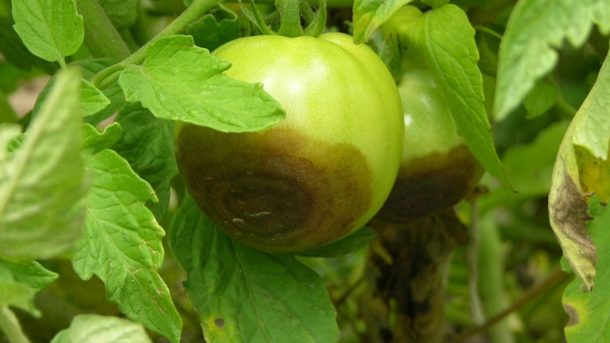
The symptoms appear on fruits as a brownish spot often at point of contact between fruit and soil. It can be controlled by growing resistant varieties. Proper staking and drainage should be ensured. Spray Ridomil MZ @ 2g per litre of water or mancozeb or zineb @ 2.5 g per litre of water at 5-7 days interval.
What are the Pests and Diseases occurring in Pumpkin Farming?

Epilachna beetle, fruit flies, and red pumpkin beetle are the main pests in pumpkin plantation. They can be controlled as in case of bitter gourd, Powdery mildew, and mosaic are the main diseases in pumpkin farming.
What are the symptoms of fruit rot disease in Aonla and how it can be managed?

It is caused by Phoma sp. i.e., Phomopsis phyllanthi, Nigrospora sphearica, Cladosporium tenuissium, Pestalotia creenta, Alternaria alternata, Cytospora sp. The disease appears as small, pinkish brown necrotic spots. Smoke brown to black round lesions, black ring spots or colourless soft areas appear resulting in partial or complete rotting of fruit.
It can be managed by giving post-harvest treatment to the fruit with difolaton @ 1.5 g/l of water or mancozeb @ 1 g/l of water or carbendazim @ 0.5 g/l of water.
What are the symptoms of Anthracnose disease and how it can be managed?
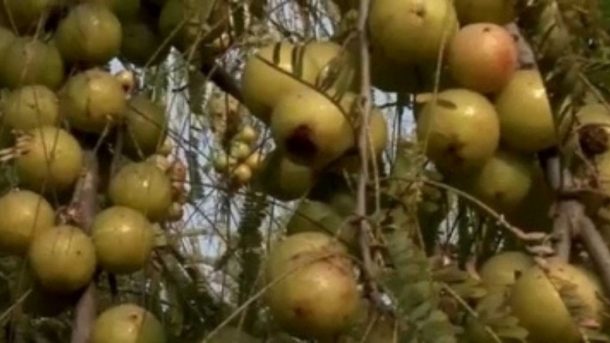
It is caused by Colletotrichum sp. The symptom is minute, circular, greyish spots with yellow margins appear on leaflets, central area remaining greyish with dot-like fruit bodies. Lesions on fruits are depressed, turn dark in the centre, acervuline formed which are arranged in rings. Lesions may vary in size and shape; spore mass appear on fruiting bodies at high humidity. Infected fruits become shrivelled and rot.
It can be managed by Spray mancozeb @ 2 g/l of water or copper oxychloride @ 3 g/l of water or carbendazim @ 0.5 g/l of water at 15 days interval. Repeat sprays as per severity.
How stem rot disease can be managed?
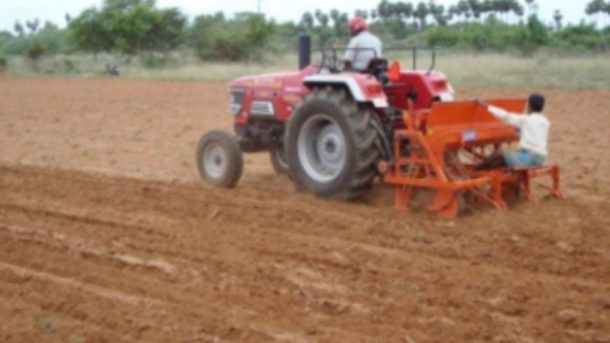
Deep ploughing in summer. Selection of healthy seed. Seed treatment with Tebuconazole 2ds @ 1g or mancozeb @ 3 g/kg of seed. Soil application before sowing with Trichoderma viride developed by mixing 225 kg farm yard manure +25 kg neem cake + 5 kg Trichoderma viride/ha and allow to grow for 15 days under shade. Gypsum application @ 500 kg/ ha. Timely management of foliar diseases leads to reduction of incidence of stem rot.
What are the symptoms of Stem rot diseases and when it occurs?
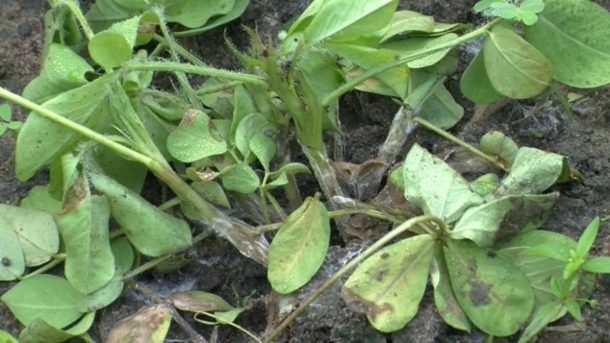
Appears generally after 70 days of sowing. Yellowing and wilting of branches just above the soil. White mycelium of the fungus develops around the affected stem above the soil level. Infection of pegs and pods occurs in severe cases and seeds turn to bluish colour.
What are the symptoms of rust disease and how it can be managed?

Orange coloured pustules appear on the lower surface of the leaflets. In severe cases, lesions also appear on other plant parts expect flowers. Removal of infected plant parts. Collect seed from disease free areas. Seed treatment with Tebuconazole 2ds @ 1g or 3 g of mancozeb/kg of seed. Spraying of mancozeb @1000 g or Chlorothalonil @1000 g or Tridemorph @1000 g /ha in 500 liters of water at 15 days interval starting from disease appearance.
Why crown rot disease occurs in plum and how it can be prevented?
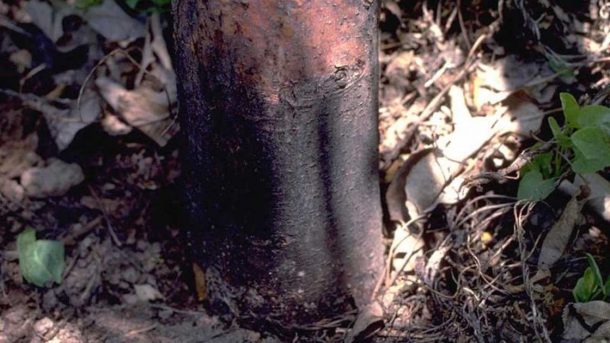
Primarily a disease of the young trees, its onset begins during extended periods of high soil moisture. Cankers develop on the bark below the ground; infected trees appear pale after leafing. If the cankers girdle the trunk, the tree will eventually die. There is no satisfactory control measure once the disease appears. However, it can be prevented by planting the trees at the same depth at which they grew in the nursery or even deeper (graft union should be kept out 30–45 cm above the soil level). Ensuring proper drainage in the tree basins is crucial for preventing the outbreak of the disease.