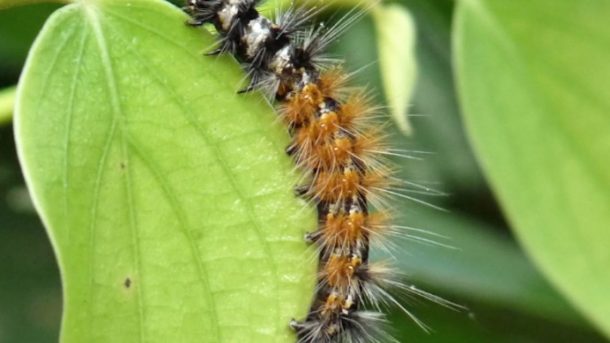
This is a common pest of Moringa that can also become serious. The larvae defoliate the trees quickly, and then collect on tree trunks and branches in groups. They can be killed with a burning torch, spray of fish oil, rosin soap, methyl parathion, chlorpyrifos or quinalphos can also control the pest.
Pests
What are the damage symptoms of bud worm in moringa and how it can be controlled?
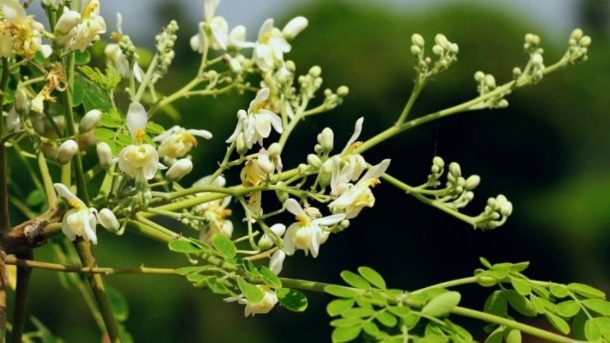
This is a destructive specialist pest only recorded on Moringa. The larvae bore into the flower buds and can cause shedding of up to 78 percent. This infestation is highest during summer. It lays eggs on flower buds which makes the larvae enter the soil and transform into a cocoon, and thus increasing their population, destroying the flower and the pods. It can be controlled by collecting the infected flowers and buds from the topsoil and destroy them completely.Spray 1 litre of Malathion per hectare of the field.
What are the damage symptoms of fruit fly in tomato and how it can be controlled?
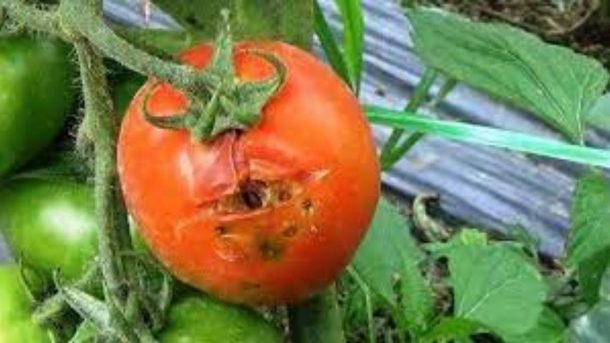
The maggots (larvae) after hatching feed on pulp of the fruits and render them unfit for human consumption. It can be controlled by field sanitation i.e., removal and destruction of dropped fruits and infested fruits daily to minimize the pest intensity. Use of pheromone traps (Palam trap @ 25/ha) for monitoring pest population. Application of malathion (0.05%) cover spray which kill the insects on contact or a bait spray that attracts and kill the adults. Bait spray is prepared by adding 50 g gur + 10 ml malathion in 10 L water.
What are the damage symptoms of tomato fruit borer and how it can be controlled?
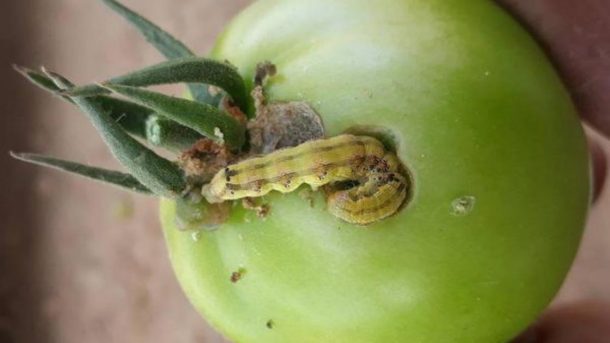
External symptoms appear in the form of a bored hole. Initially, the larvae feed on tender foliage but later on it moves on to flower buds, flowers and developing fruits. The caterpillars make holes into fruits by keeping half of their body inside the fruits and half outside and render them unfit for market. It can be controlled by transplanting crop late in summer (June) escapes the damage of fruit borer. Inundative release of egg parasitoid, Trichogramma chilonis and T. brasssiliensis @ 50,000-75,000 adults/ha Apply nuclear polyhedrosis virus (NPV) @ 250-500 LE/ha Application of Bacillus thuringiensis alone (1.0 litre/ ha) at flowering and fruit setting stage Foliar application of carbaryl (0.1%)/ deltamethrin (0.0028%) and acephate (0.05%) when one larva per five plants is observed. Observe a waiting period of 10 days before picking fruits. Use of African marigold as trap crop.
How thrips cause damage in pomegranate and how it can be controlled?
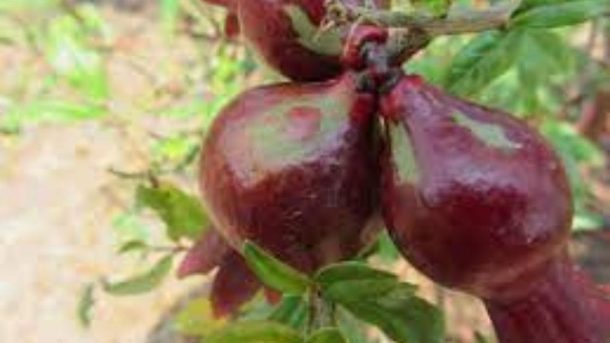
Thrips can be seen by tapping the tender shoots on white background. It always prefers feeding on new growth of plants. Nymphs and adults lacerate and suck the sap from buds, flowers, leaves and fruits. Affected leaves curl upwards and downwards. The tip of the tender shoots becomes dried. Scrapping marks on buds and fruits can be noticed easily. Collect and destroy affected plant parts and dried tender shoots regularly. Do not grow intercrops which act as alternate hosts like chilli, onion, garlic, brinjal and tomato in pomegranate. Spray imidacloprid @ 0.4 ml/l or acephate 75 SP @ 1ml/l on observing the symptoms.
How mites cause damage in pomegranate and how it can be controlled?
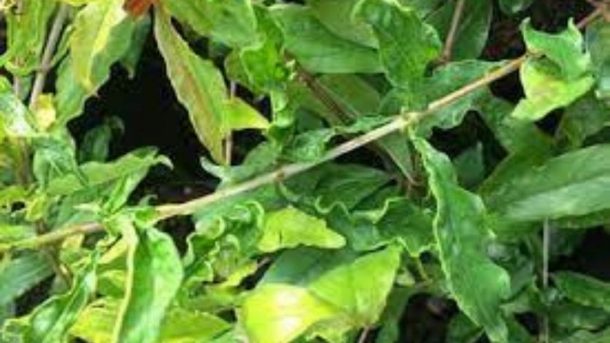
Mites are red or brown in colour and remain most active during dry spell from April to October. Shiny white or brown patches can be seen on the under surface of affected leaves which may further curl and fall. Adult and nymphs feed on the lower leaf surface by sucking sap. Leaf shows reddish look on severe infestation and pressing of infested leaves with thumb give red colour. For mite management, spray of propargite 57% @ 1ml/l, spiromesifen 240 SC @ 0.5 ml/l or dicofol 18.5 EC @ 2.0 ml/l in rotation for effective management and provide irrigation regularly.
How thrips cause damage in banana and how it can be managed?
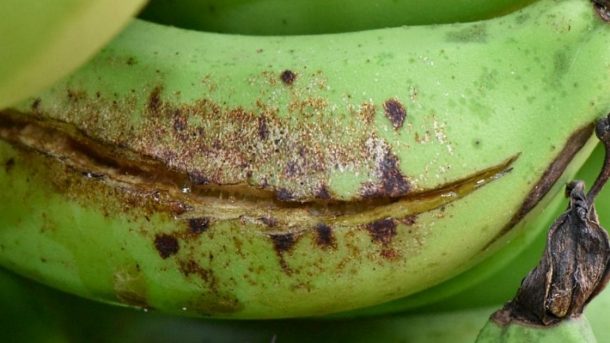
It causes silvery patches on the fruits that later turn brown. The skin of heavily infested fruit may crack permitting secondary infection which results in fruit rot making it unattractive hence lowering its marketability. It can be controlled by removal of male flowers, Covering of bunches/bagging, Use of insecticides, such as – Deltamethrin (Decis 2.5 EC®) – Pirimiphos-Methyl (ACTELLIC 25EC®).
Which is the most damaging pest in banana and how it can be controlled?
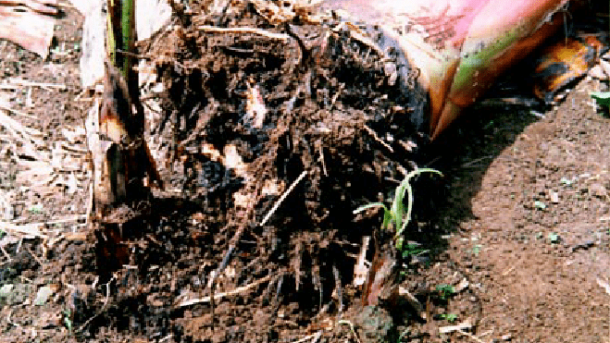
Nematodes are the most damaging pests causing over 70 % loss of the crop. It causes lesions and tunnels within the rhizome. Root destruction leads to toppling of mature plant, especially when the wind blows or during bearing stage. It can be controlled by Use of clean planting material (Tissue Culture or by hot water treatment), use “Tithonia” and “Mexican Marigold” in banana farm as green manure. Apply farmyard manure or poultry manure. Use of nematicides such as Azadirachtin (Achook®), Ethoprophos (MOCAP GR 10®).
What are the Pests and Diseases occurring in Pumpkin Farming?

Epilachna beetle, fruit flies, and red pumpkin beetle are the main pests in pumpkin plantation. They can be controlled as in case of bitter gourd, Powdery mildew, and mosaic are the main diseases in pumpkin farming.
How aphids cause damage to Aolna and how it can be managed
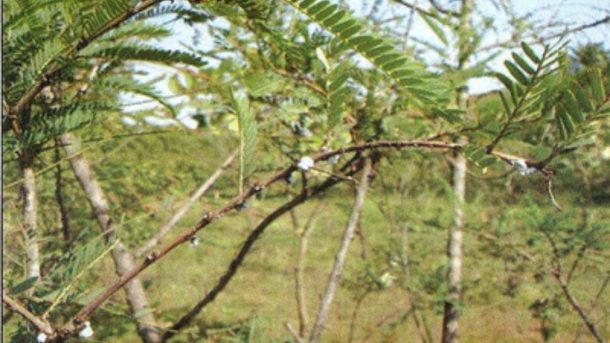
It is a serious pest on new flush. The aphids infest tender shoots, leaves, flower bud and fruits.
It can be managed by Single spray of neem seed kernel extract @ 2 % at the initiation of new flush. Spray dimethoate @ 0.03 % or phosalone @ 0.05 %.