pest management

What are the challenges faced by farmers in adopting and implementing sustainable farming methods?

methods

Knowledge and Information Gap: A major hindrance may be a lack of understanding of sustainable farming methods. Farmers might not be knowledgeable about the advantages, strategies, or effective application of sustainable approaches. To overcome this obstacle, access to education, extension services, and information distribution is essential.

Financial Restraints: Making the switch to sustainable agricultural methods frequently necessitates a large initial investment in new technologies, machinery, organic inputs, or infrastructural upgrades. Farmers’ ability to make investments in sustainable practices may be hampered by a lack of financial resources and easy access to loans.

Farmers may be reluctant to embrace sustainable methods if they do not believe that there is enough market demand or if they are unable to get price premiums for their sustainably produced commodities. Farmers may be discouraged from switching to sustainable practices due to a lack of market incentives or lack of access to markets that value and reward sustainability.

Technical Support and Expertise: Using sustainable agricultural methods may need for technical assistance and knowledge, particularly in the beginning. Crop rotation, agroforestry, integrated pest management, soil health management, or water conservation techniques may require advice for farmers. To offer the required support, it is crucial that extension services, agronomists, and farm advisers are accessible.

What are the problems caused by unsustainable agricultural practices, such as monocropping?

monocropping

Monocropping, which involves cultivating the same crop repeatedly, causes the soil to become depleted of certain nutrients and subject to erosion. This eventually results in decreased soil fertility, decreased organic matter levels, and deterioration of soil structure.

Increased Dependence on Chemical Inputs: To sustain crop yields, monocropping frequently makes heavy use of chemical pesticides and fertilizers. It may be necessary to apply chemical inputs while cultivating a single crop continuously since it can foster the growth of pests and illnesses. This may contribute to pesticide resistance growth and environmental contamination.

Loss of Biodiversity: Because monocropping systems often have fewer plant species, there are less habitats and food sources available to birds, beneficial insects, and other organisms. By upsetting the ecological balance, decreasing the effectiveness of natural pest management, and endangering pollinators, this loss of biodiversity makes plants less resilient and more susceptible to insect outbreaks.

Monocrop fields are more vulnerable to erosion because they lack a variety of plant species and their root systems. The risk of soil erosion by wind and water, which can cause the loss of fertile topsoil and sedimentation in water bodies, is increased by the absence of ground cover.

How are farmers adopting agroecological practices for biodiversity conservation?

biodiversity

Crop Diversity: By adding a greater diversity of crop species, types, and landraces, farmers are enhancing biodiversity in their cropping systems. This lowers the possibility of pest and disease outbreaks, promotes a diversity of pollinators and helpful insects, and aids in the creation of various habitats. Crop variety also improves the health of the soil, the cycling of nutrients, and the demand for outside inputs.

Agroforestry: Agroforestry is the practice of combining trees or shrubs with animals or crops on the same piece of land. Farmers can create more habitats, enhance biodiversity, and improve microclimate conditions by adding trees into their agricultural landscapes. Agroforestry systems also help to produce a variety of goods, including lumber, fruits, and feed, which benefits farmers financially.

Conservation of Habitat: Farmers are designating areas on their properties for the preservation of habitat. Field margins, buffer zones, hedgerows, and fallow fields are a few examples of these places. These ecosystems provide as a haven for helpful animals including birds, insects, and other wildlife, which promotes biodiversity and helps with natural pest management. Some farmers also build wetlands or ponds on their properties, which are crucial breeding grounds for amphibians and aquatic life.

Natural Pest Control: Agroecological approaches put a lot of emphasis on encouraging beneficial insects, birds, and other naturally occurring pest enemies in order to promote natural pest control mechanisms. Farmers can entice beneficial organisms by offering nesting places, food sources, and shelters. As a result, the agroecosystem’s ecological balance is supported and the use of chemical pesticides is decreased.

How is the use of remote sensing and GIS being applied in crop monitoring and management?

sensing

Crop Health Assessment: The health and vigor of a crop can be evaluated using remote sensing techniques like satellite imaging and aerial surveys. Farmers and agronomists can spot fields that might be under stress, have nutrient deficits, or have pest and disease outbreaks by examining vegetation indices obtained from satellite data, such as the Normalized Difference Vegetation Index (NDVI). Targeted actions like modifying irrigation, providing fertilizer, or putting in place pest control measures are made easier with the aid of this information.

Crop yield estimation and forecasting are made possible by the combination of remote sensing data with crop modeling methods. Farmers and decision-makers can forecast crop output potential by continuously observing variables including vegetation growth, canopy density, and chlorophyll content. This knowledge aids in

Remote sensing is extremely important in the assessment and management of water resources for agricultural use. Remote sensing aids farmers in streamlining irrigation schedules and increasing water use effectiveness by tracking soil moisture content, evapotranspiration rates, and indicators of water stress, such as the Water Stress Index (WSI). It makes it possible to undertake precision agriculture, ensuring that crops have access to water while reducing waste.

How is the use of agrochemicals being reduced and replaced with sustainable alternatives?

IPM is a method that focuses on combining several pest control techniques in order to reduce the use of chemical pesticides. It entails keeping an eye on pests, using biological control agents, putting cultural methods (such as crop rotation and trap farming) into effect, and, as a last option, using chemical pesticides. IPM seeks to keep pest numbers below those that are environmentally harmful and economically destructive.

Biological control: Using beneficial insects, nematodes, or microbial agents—all natural enemies of pests—to suppress pest populations is known as biological control. This strategy encourages ecological equilibrium and lessens the demand for artificial pesticides. Using insect pathogens, releasing predator insects, and using biopesticides made from naturally occurring microbes are a few examples.

Crop Diversity and Rotation: By preventing the population growth of pests and lowering the demand for chemical controls, crop diversity and rotation help break pest cycle cycles. Farmers can stop the multiplication and survival of pests by switching crop species and families. Additionally, a field or farm’s general resilience to pests and illnesses can be improved by growing a variety of crops there.

What are the recent developments in precision spraying and pest control technologies?

spraying and pest

Accuracy, efficiency, and sustainability have been prioritized in recent advances in precision spraying and pest management systems. Here are a few noteworthy developments:

Artificial Intelligence and Machine Learning: To analyze data and make precise judgements in pest management, artificial intelligence (AI) and machine learning algorithms are being used. For the purpose of locating pest hotspots, streamlining spraying schedules, and anticipating pest outbreaks, these technologies can handle copious volumes of data from sensors, drones, and satellites. Real-time monitoring and focused treatments are made possible by systems powered by AI, which eliminates the need for widespread pesticide application.

Advanced sensor technology and Internet of Things (IoT) gadgets are being incorporated into pest control systems. Real-time monitoring of environmental variables, pest populations, and crop health is possible with these sensors. They give useful services.

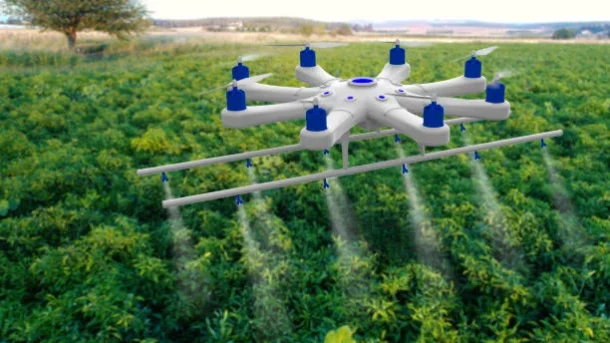
Precision spraying and pest management are being revolutionized by robotics and drone technology. Unmanned aerial vehicles (UAVs) with sensors and cameras may gather detailed information on crop conditions, insect populations, and disease outbreaks. Farmers can target specific locations for pesticide application and maximize resource use with the help of this information. Robotic equipment on the ground can also precisely distribute biological control agents or perform targeted spraying.

Variable Rate Technology (VRT): Based on spatial variability within a field, variable rate technology provides precise administration of pesticides. In order to adjust the pesticide application rate in response to crop conditions and pest distribution, VRT systems use maps created from sensor data or remote sensing data.

How is the use of robotics and automation improving efficiency in farming operations?

robotics and automation

Agriculture is being revolutionized by the use of robotics and automation in farming operations, which boosts production, sustainability, and efficiency. Here are some examples of how robotics and automation are benefiting society:

Precision farming uses robots with sensors, cameras, and GPS to gather information on the soil, the health of the plants, and crop development. Due to the precise decisions that can be made by farmers regarding irrigation, fertilization, and pest management, resources are used optimally, and crop yields are increased.

Robotic vehicles, including self-driving tractors, are able to carry out a variety of operations automatically, including plough, seed, and harvest. These machines run precisely and consistently, which lowers labour costs, reduces room for error, and boosts productivity.

Crop monitoring and management: Unmanned aerial vehicles (UAVs) and drones with imaging sensors may monitor crops in real time, spotting irregularities, illnesses, or nutritional deficits. With less need for manual scouting and better crop management overall, farmers can target specific regions for intervention.

What are the challenges and opportunities in agricultural supply chain management?

supply chain

Fragmentation: There are many different parties involved in the agricultural supply chain, including farmers, suppliers, distributors, and retailers. Due to the industry’s fragmentation, it might be difficult to coordinate and integrate their efforts.

Seasonal Variability: Seasonal elements, such as weather patterns and crop cycles, have a significant impact on agriculture. It can be challenging to manage changes in supply and demand throughout the year; this calls for good planning and forecasting.

Transporting agricultural goods from farms to markets can be difficult, particularly in isolated locations with poor infrastructure. Post-harvest losses and increased costs might result from poor logistics and insufficient storage facilities.

Maintaining the high standards of quality and safety for agricultural goods all the way through the supply chain is essential. But problems like contamination, spoilage, and pest infestation might arise at different times and call for strong quality control procedures and traceability systems.

What are the advancements in plant phenotyping technologies?

phenotyping

The study and comprehension of plant features and their interactions with the environment have been completely transformed by advances in plant phenotyping technologies. The following are significant developments in plant phenotyping.

High-Throughput Phenotyping: In high-throughput phenotyping, numerous plant properties are quickly and non-destructively measured. Robotics, imaging platforms, sensors, and other automated systems are used to do this. These technologies can quickly collect data from hundreds or thousands of plants, allowing scientists to more precisely and quickly analyse plant properties. Breeding programmes, genetic research, and agricultural development initiatives have all been greatly enhanced by high-throughput phenotyping.

Non-Invasive Sensors: Non-invasive sensors that don’t injure or disturb plants, such spectrometers, fluorometers, and gas analyzers, are used to detect their varied physiological and biochemical characteristics. For instance, gas analyzers can evaluate carbon absorption and transpiration rates, while chlorophyll fluorescence sensors can gauge photosynthetic effectiveness and stress responses. These sensors offer real-time information on plant health, functioning, and responses to external stimuli.

UAVs and Remote Sensing: The use of unmanned aerial vehicles (UAVs) and satellite pictures for remote sensing has greatly improved the ability to phenotype plants. Large-scale monitoring is possible thanks to satellite images, which also offers information on growth trends, crop health, and vegetation indices. High-resolution cameras or sensors on UAVs can gather precise and localised data on plant characteristics including biomass, leaf area, and crop.

What are the benefits of using smart pest management systems?

smart pest

Early Disease and Pest Detection: To identify illnesses and pests at an early stage, smart pest management systems make use of sensors, imaging technology, and data processing. These systems can detect pest infestations before they become severe by continuously monitoring fields and crops. This enables quick intervention and reduces considerable damage.

Targeted and accurate Treatment: Smart pest control solutions make it possible to treat pests in a targeted and accurate manner. These systems can choose the best time, place, and amount of pest control measures by using data from sensors, satellite imaging, and weather forecasts. This focused strategy enables effective pest management while minimising the use of pesticides and their negative effects on the environment.

Better Crop Health and Quality: By assuring prompt and effective pest control methods, smart pest management systems assist maintain crop health and quality. These technologies avoid crop damage, preserve optimal plant growth, and improve the general quality of agricultural produce by successfully managing insect populations.

Smart pest control systems produce an abundance of data about pest dynamics, environmental factors, and treatment efficacy. Informed decisions about pest management tactics, crop rotation, and planting schedules can be made using this data after analysis. Farmers can optimise their pest control techniques, increase output, and improve farm management practises by utilising data-driven insights.