Water conservation

What is the primary goal of the National Mission on Agricultural Education and Extension (NMAEE)?

Agricultural Education

Enhancing Agricultural Education: Improving the standard and applicability of agricultural education in India is the main objective of agricultural educations program. This entails improving agricultural universities, colleges, and institutes, encouraging research and development initiatives, and encouraging partnerships with national and international institutions to offer agricultural students a top-notch education and training.

Enhancing Extension Services: Agricultural extension efforts seek to enhance extension services and make it easier for farmers and other stakeholders to access technology, expertise, and best agricultural practices. This entails educating and empowering extension staff, creating cutting-edge extension strategies, and creating efficient channels of communication between researchers, extension staff, and farmers.

Agricultural education and extension programs place a strong emphasis on encouraging sustainable farming methods that maximize resource utilization, boost output, and guarantee environmental sustainability. Information on organic farming, conservation agriculture, integrated pest management, water management, and climate-smart agricultural techniques are some of the topics covered in this.

Farmer Empowerment: The projects’ goal is to give farmers the knowledge, expertise, and information they need to make wise decisions regarding their farming methods. This involves educating farmers on cutting-edge farming methods and farm management, financial literacy, marketing tactics, and other matters that help them enhance their overall standard of living.
Name a government program that provides financial assistance for the construction of farm ponds and wells.

farm ponds and wells

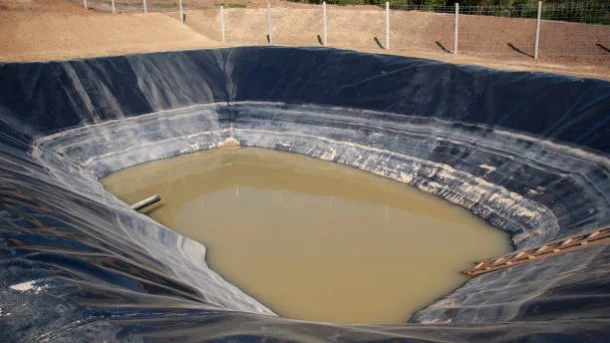
The “Pradhan Mantri Krishi Sinchayee Yojana” (PMKSY) is one government initiative that offers financial support for the development of farm ponds and wells in India. The Ministry of Agriculture and Farmers Welfare, Government of India, implements the PMKSY, a centrally supported program, with the goal of guaranteeing water security and enhancing irrigation effectiveness in agriculture.

The following elements are commonly covered by the financial aid given for the construction of agricultural wells and ponds:

Costs of construction: PMKSY provides farmers with financial assistance for building agricultural ponds and wells. This help pays for the costs of excavation, lining, bunding, building supplies, and other costs related to constructing the water storage structures.

Technical Advice: The plan gives farmers technical advice on the layout, building, and operation of farm ponds and wells. To ensure correct use and upkeep of these water storage facilities, it provides training programs, demonstrations, and extension services.

Building capacities: PMKSY focuses on helping farmers enhance their capacities and skills in water management methods. It offers education and outreach initiatives on the effective use, conservation, and upkeep of agricultural ponds and wells. This aids farmers in bettering their irrigation techniques and maximizing water supplies.

Convergence with Other Programs: The program encourages convergence with other federal initiatives, such as the Mahatma Gandhi National Rural Employment Guarantee Scheme (MGNREGS), to offer more assistance for the development of agricultural ponds and wells. Farmers can take advantage of resources from many sources in this way, increasing the efficiency of the infrastructure for water storage.

Name a government initiative that focuses on the development of agricultural infrastructure in rural areas.

agricultural infrastructure

The “Pradhan Mantri Krishi Sinchayee Yojana” (PMKSY) is one government effort that focuses on the building of agricultural infrastructure in rural areas. The Government of India introduced the PMKSY, a centrally supported program, with the goal of providing water security and boosting agricultural production through the construction of irrigation and agricultural infrastructure.

The Pradhan Mantri Krishi Sinchayee Yojana’s main goals are as follows:

Development of Irrigation infrastructure: The program aims to increase the area served by irrigation infrastructure and encourage the effective use of water resources in agriculture. It focuses on the construction of new canals, reservoirs, check dams, lift irrigation systems, and water diversion structures, as well as the development of irrigation infrastructure. The objective is to increase irrigation water accessibility and raise agricultural output.

Watershed Development: To preserve water, recharge the groundwater, and stop soil erosion, PMKSY encourages watershed management practices and rainwater gathering methods. It encourages the creation of microirrigation systems, water storage facilities, and soil and moisture conservation techniques to increase water usage effectiveness and boost agricultural systems’ resistance to climate change.

Command Area Development: The plan places a strong emphasis on the creation of command areas as well as the efficient use of irrigation water. In order to maintain equitable water distribution and reduce water losses, it focuses on strengthening water conveyance systems, distribution networks, and water application techniques in command areas.

Which scheme aims to promote agroforestry and provide support for tree planting on farmlands?

tree planting on farmlands

The “National Agroforestry Policy” in India is one program that tries to promote agroforestry and offer funding for tree planting on farmlands. I can give you information about the National Agroforestry Policy based on its goals and usual elements, even if my understanding is limited and my knowledge cutoff is in September 2021, and there may have been updates or new efforts after then.

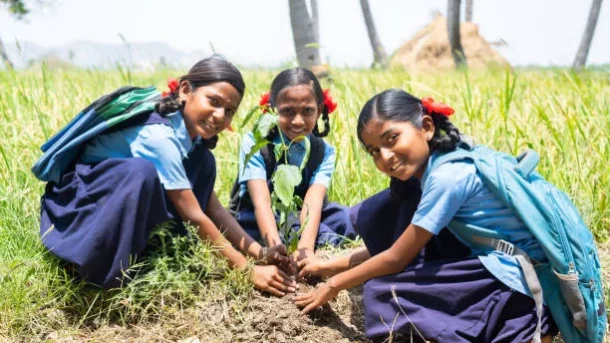
Promoting Agroforestry Systems: The goal of the strategy is to encourage the development of agroforestry systems, which entail the purposeful blending of trees with agricultural fields. In order to gain various benefits, including improved soil health, increased biodiversity, climatic resilience, and increased farm output, it encourages farmers to plant trees next to their crops or in specified patterns.

Enhancing Carbon Sequestration: Agroforestry is essential for reducing carbon emissions, preventing climate change, and encouraging environmentally friendly land management techniques. To increase carbon sequestration and help national and international climate change goals, the program encourages planting trees on farmlands.

Diversifying Income Sources: Through the sale of lumber, fruits, nuts, fodder, and other tree planting on farmlands, agroforestry systems give farmers access to new revenue streams. 

Agroforestry methods aid in preventing soil erosion, enhancing water retention, and efficiently managing available water supplies. The strategy encourages planting trees with extensive root systems because they help to stabilize the soil, stop nutrients from draining, and improve water penetration.

What is the purpose of the National Mission for Sustainable Agriculture (NMSA)?

Sustainable Agriculture (NMSA)

The National Mission for Sustainable Agriculture (NMSA) in India was established to promote sustainable agricultural methods and to solve the problems that Indian agriculture faces in relation to resource conservation, climate change, and agricultural productivity. One of the eight tasks included in the Government of India’s National Action Plan on Climate Change (NAPCC) is NMSA.

The following are the main goals of the National Mission for Sustainable Agriculture:

Increasing production and protecting natural resources: NMSA seeks to boost agricultural output while assuring the wise use of resources like water, land, and soil. To maximize resource usage and reduce environmental damage, it focuses on developing effective irrigation methods, conservation agriculture techniques, and soil health management.

Climate change adaptation: The mission attempts to increase Indian agriculture’s resistance to the effects of climate change. It encourages the implementation of climate-smart agriculture techniques, such as the use of agroforestry systems that can endure climatic pressures and lessen vulnerability to extreme weather events, as well as crop diversification and climate-resilient crop types.

Promoting integrated farming systems: To increase production and give farmers more options for income, Sustainable Agriculture (NMSA) supports integrating crops, livestock, and fisheries. To optimize resource usage and boost farm profitability, it encourages the implementation of integrated farming systems, such as mixed farming, agroforestry, and livestock-based treatments.

Which scheme focuses on promoting sustainable water management in agriculture?

water management

The “Water Efficient Farming Scheme” is one program that promotes environmentally responsible water management use in agriculture. I can give you a general summary of what such a scheme normally entails, even if I am unaware of the most current advancements in this field because my knowledge cutoff date is September 2021.

The Water Efficient Farming Scheme is intended to assist and motivate farmers to implement strategies that reduce water use and increase water efficiency in agricultural operations. Various activities, rewards, and instructional initiatives that support sustainable water management are often included in the plan. Typical elements of such a plan could be the following:

Irrigation management is the practice of encouraging farmers to use irrigation techniques that supply water directly to plant roots while reducing runoff and evaporation losses, such as drip irrigation or precision irrigation systems.

Encourage the adoption of water-saving methods like mulching, which keeps soil moist and lowers evaporation, and good soil management techniques, which increase soil’s capacity to hold water.

Crop Rotation: Promoting crop rotation practices that assist preserve soil health and lower water demand, as well as giving farmers advice on choosing crops that are suited to the local climate and require less water.

What is the purpose of the National Mission on Oilseeds and Oil Palm (NMOOP)?

Oilseeds and Oil Palm

India’s government launched the National Mission on Oilseeds and Oil Palm (NMOOP) with the goal of encouraging the growth of oilseed and oil palm plantations to boost local oilseed production and lessen the nation’s reliance on imports. The objective is to improve India’s overall oilseed production situation while increasing the yield and profitability of oilseed crops.

The National Mission on Oilseeds and Oil Palm has several main goals, including:

An increase in oilseed production is one of the goals of the NMOOP, which includes peanut, soybean, rapeseed, mustard, sunflower, and sesame as examples of crops. The goal is to increase crop productivity by implementing better agricultural methods, offering high-quality seeds, encouraging balanced nutrient management, and embracing contemporary technologies.

Increasing oilseed production: The National Mission on Oilseeds and Oil Palm NMOOP places a strong emphasis on the use of best management methods to raise oilseed crop yield. The utilization of high-yielding varieties, effective irrigation systems, integrated fertilizer management, successful pest and disease management strategies, and post-harvest management approaches are some examples of this.

Promoting oil palm cultivation is another goal of the mission, which is targeted at areas with the right agroclimates in the nation. Palm oil, an important vegetable oil used in cooking, food processing, and a variety of industries, is produced by oil palm, a high-yielding crop. The NMOOP seeks to expand the area under oil palm cultivation and enhance oil palm plantation output.

Which scheme provides financial assistance to farmers for the establishment of polyhouses and shade net houses?

polyhouses

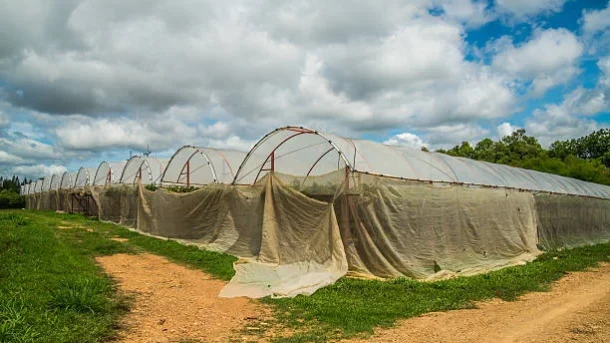
The “National Horticulture Board’s (NHB) Polyhouse and Shade Net Development Scheme” is the program that offers farmers financial support for the construction of polyhouses and shade net houses in India. This program is carried out by the National Horticulture Board, an agency of the Ministry of Agriculture and Farmers Welfare, to encourage protected farming methods in horticulture.

The Polyhouse and Shade Net Development Scheme’s salient characteristics are:

Financial support: The program offers financial assistance to farmers in the form of grants or subsidies to help them build polyhouses and shade net houses. Depending on the size of the building and the kind of horticultural crop that will be grown, different amounts of financial aid are provided.

Technical assistance and training: The program provides farmers with technical assistance and training on the building, running, and maintenance of polyhouses and shade net houses. This contains details on picking appropriate crops, watering techniques, managing pests and diseases, and making the best use of inputs like fertilizers and growth regulators.

Infrastructure development: The plan’s main objective is to build the infrastructure required to support protected agriculture. It involves the construction of shade net or cluster-based polyhouses, which offer shared services including electricity, water supply, storage, and marketing facilities to help farmers.

Building capacity: The plan places a focus on enhancing farmers’ knowledge and abilities in protected agriculture techniques by holding training sessions, workshops, and exposure tours. By doing this, farmers are able to adopt best practices and increase their yields and earnings.

What is the main objective of the Pradhan Mantri Krishi Sinchai Yojana (PMKSY)?

Krishi Sinchai Yojana

The Pradhan Mantri Krishi Sinchai Yojana (PMKSY)’s primary goal is to increase agricultural crop yield and boost water use effectiveness through the adoption of effective irrigation techniques. The government of India introduced the program in 2015 with the intention of delivering “Har Khet Ko Pani” (Water for Every Field).

The following are the main goals of the Pradhan Mantri Krishi Sinchai Yojana:

The PMKSY is focused on ensuring that there is water available for irrigation in every agricultural sector. To meet the irrigation needs of farmers, it strives to develop new water sources, improve existing water sources, and upgrade water storage and distribution facilities.

Increasing the number of irrigated areas: The program encourages the adoption of effective irrigation methods and technology in order to increase the number of irrigated areas throughout the nation. It focuses on maximizing water use effectiveness, decreasing water waste, and enhancing the irrigation system as a whole.

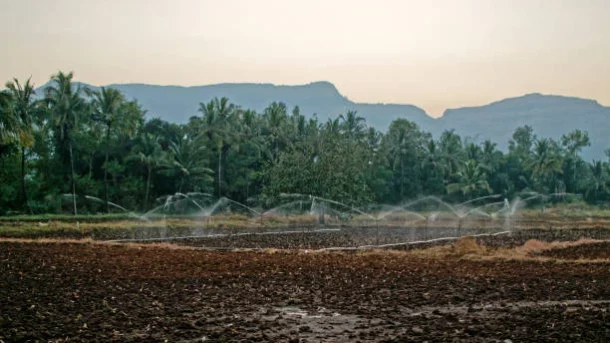
The PMKSY seeks to increase the effectiveness of water consumption in agriculture by promoting the use of micro-irrigation methods including drip irrigation and sprinkler irrigation. These methods aid in increasing agricultural water intake, minimizing water losses from evaporation and percolation, and supplying water directly to plant roots.

Which scheme aims to provide irrigation facilities to every field in India?

irrigation facilities

The “Pradhan Mantri Krishi Sinchayee Yojana” (PMKSY) is a program that intends to give irrigation infrastructure to every land in India. The Department of Agriculture, Cooperation, and Farmers Welfare, which falls under the Ministry of Agriculture and Farmers Welfare, is the government agency irrigation facilities responsible for carrying out PMKSY.

The Pradhan Mantri Krishi Sinchayee Yojana’s main goals are to increase the nation’s water use efficiency and guarantee agricultural users have access to water. Its main objectives are to promote sustainable water management techniques in agriculture and increase irrigation facilities coverage.

The PMKSY’s main attributes and objectives are as follows:

Expanded irrigation: PMKSY seeks to quicken the speed of irrigation facilities development in India by providing funding for the construction of new irrigation infrastructure, such as the building of dams, canals, and other structures.

Watershed development: The plan encourages integrated watershed management for the preservation of soil and water. By implementing watershed development projects, it seeks to improve soil moisture retention, groundwater recharge, and rainwater harvesting.

Micro-irrigation: PMKSY encourages the use of methods like drip irrigation and sprinkler irrigation for micro-irrigation. Micro-irrigation systems are installed with financial assistance, assisting in the efficient use of water, lowering water waste, and enhancing agricultural output.