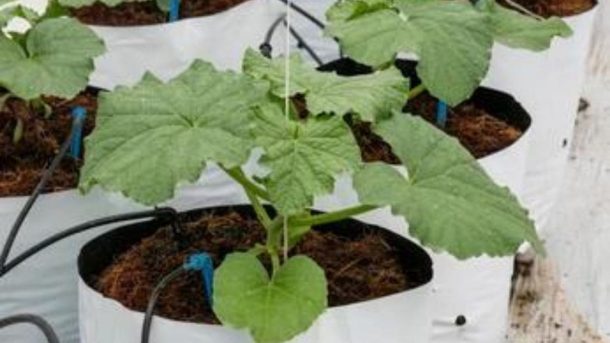
Give water to the plant in depth and several times, about one to two inches of water is required per week. Be careful while giving warm water to a drip hose or soccer hose, so its leaves remain dry. Reduce the war, water gradually when ripening the fruit, so that is tastes good and sweet. When the warm or Luke water is high during the ripening the fruit can split.
Irrigation
What is the water requirement for the beans crop?
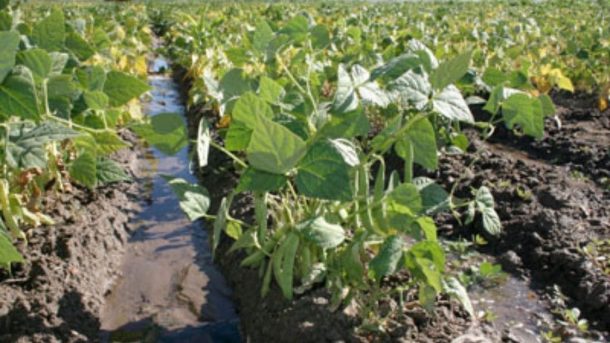
Drip irrigation is the most effective method for beans farming. Irrigation is done immediately right after sowing the seed, again on 3rd or 4th day and after once in a week is needed. Again, Indian bean is commonly cultivated as a rainfed crop, if it’s the rainy season, irrigation should not be given and make sure the soil has good drainage.
What is the irrigation requirement for Pistachio cultivation?
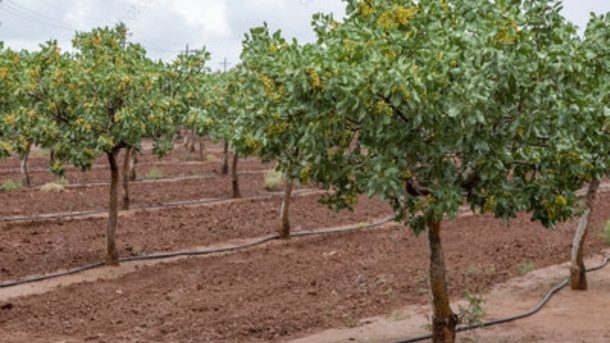
Though Pistachio trees are drought tolerant, they should be maintained with enough moisture whenever needed. Mulching is the best practice to retain the water. Drip irrigation can be adopted for proper utilization of water. Avoid any water logging conditions. Rainy season don’t need any irrigation.
What is the irrigation requirement for jamun farming?
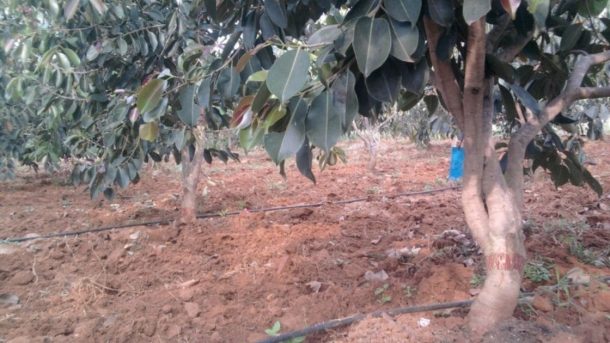
Young jamun plants in early stages requires frequent watering but subsequently, irrigations should be reduced, initial stages of plants require about 12 irrigation per year. Mature trees require once in 2 months in a year, this is important at the fruit ripening stage, occasional irrigation may be carried out when the soil becomes dry and to keep the soil in moist condition.
How to irrigate via smartphone?

Mobile technology is playing the main role in monitoring and controlling crop irrigation systems. With the right equipment, a farmer can control irrigation systems from a phone or computer instead of driving each field. Moisture sensors in the ground can communicate information about the moisture level present at certain depths in the soil. This increased flexibility allows for more precise control of water and other inputs such as fertilizer that are applied by irrigation pivots.
What is the water requirement for brinjal plants?
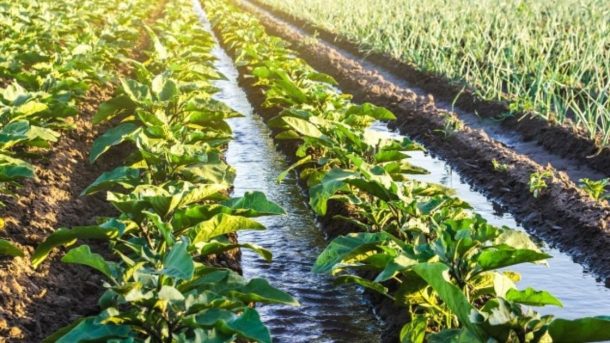
Water the field as per the need of the crop. Timely irrigation is quite essential for good growth, flowering, fruit setting and development of fruits. Higher yield may be obtained at optimum moisture level and soil fertility conditions. In plains, irrigation should be applied every third to the fourth day during hot weather and every 7 to 12 days during winter. Irrigation is given before top dressing of there is no rain. The brinjal field should be regularly irrigated to keep the soil moist during frost days.
How irrigation plays a significant role in organic turmeric cultivation in polyhouse?
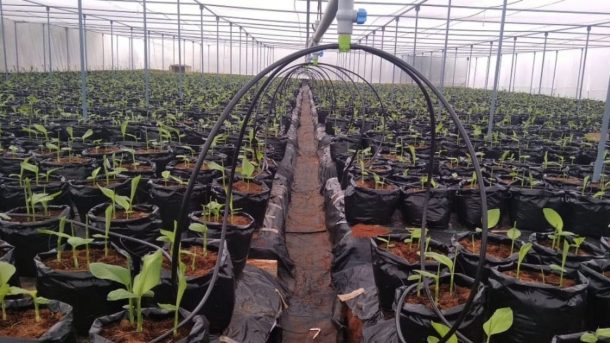
Turmeric thrives in soil with plenty of moisture but, make sure to not to do overwatering. Soil should be evenly moistened poorly drained soils not only harm the turmeric crop but encourage the development of diseases and pests. Quality of irrigation water is vital, sewage water, waste water from industry is not allowed.
First irrigation is given before planting. Good soaking irrigation is given immediately after sowing. Turmeric crop duration is generally 7 to 9 months depending on the variety. Subsequent irrigations are given at 7 to 10 days interval depending on the soil.
What is the irrigation requirement for Organic chilli cultivation?
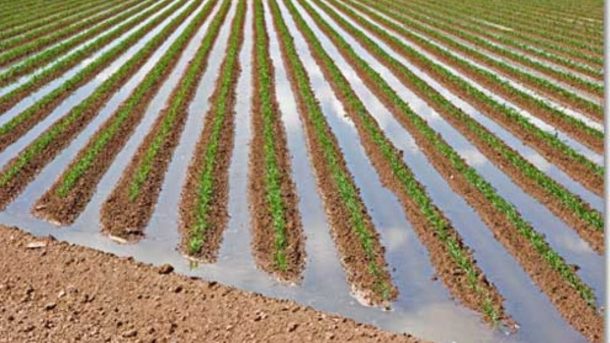
Chilli crop can’t withstand heavy moisture so apply irrigation only when needed. Heavy irrigation causes lanky vegetative growth and chilli flower drop. Interval of irrigation mainly depends on soil and climatic condition. If the chili plant show dropping at 4 pm, it is an indication of plant needed irrigation. Flowering and fruit development are the most critical stages of water requirement. Stagnation of water must not be allowed in nursery and field as it causes fungal infection.
What is runoff farming?

Runoff farming is the same with water harvesting but for irrigation functions. When the harvested runoff water from uncropped areas is directed to a cropped area, this technique is known as runoff farming. Soil profile acts as a water storage container, but storage in ponds or cisterns is feasible. Factors affecting the capacity of the soil storage are the depth of the soil profile, depth of plant roots, texture, structure, infiltration rate and the water holding capacity of the soil. The catchment to field ratio can vary from 1:1 and from 1: many square kilometers. The higher the aridity of an area, the larger is the necessary catchment area in relation to the cropping area for the same water yield.
Why Borewell digging is prohibited in few areas?
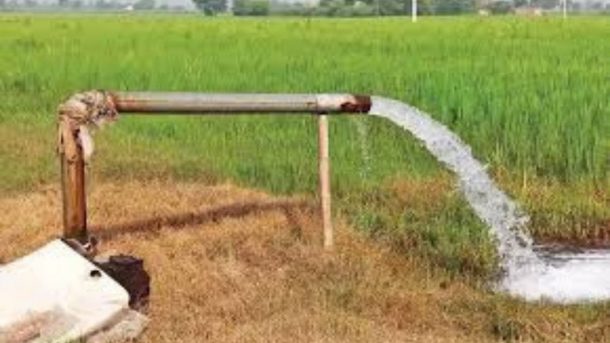
Due to the excessive drilling of borewells the underground water level is decreasing day by day. This causes depletion of the water levels. Hence government has prohibited digging borewells in few areas, especially in the water scare regions. This is implemented under the groundwater legislation act.
Central ground water Board, has the complete reports of water resources depicting the status of the country. So as to control the digging of borewells in order to save the groundwater resources.