
Rooftop farming is a top trend in urban agriculture. This method makes careful use of an urban space that is generally unused and its positive environmental effects are appreciated. Roof farms provide additional insulation for building, maintaining low temperatures in summer and warmth in winter. Due to declining agricultural land, roof farming can be a viable option for urban agriculture, especially in Indian cities. Roof farming is gaining popularity in urban areas as it is easy to handle, economical and has a range of health and environmental benefits. It makes the city greener, simplifies waste management, improves air quality and provides unadulterated, fresh and nutritious food products. Roof gardens provide nutritious food throughout the year, which is enough for both high-income and low-income households. A wide range of fruits and vegetables such as Spinach, Cucumber, Cabbage, Tomato, Garlic, Onion, Guava, Strawberry, Herbs can be grown on rooftops.
farming practices
What is the rate of fertilizer application in maize ?
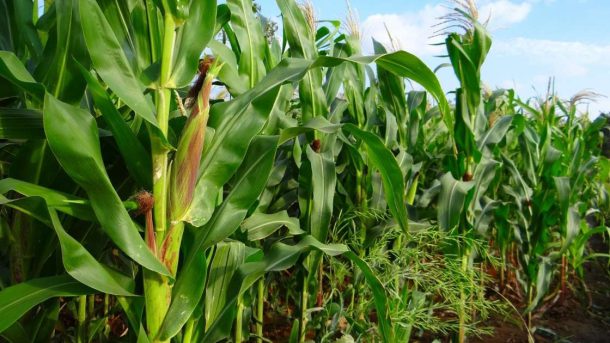
Apply NPK fertilizers as per soil test recommendation as far as possible. If soil test recommendation is not available adopt a blanket recommendation of 135:62.5:50 NPK kg/ha. Apply quarter of the dose of N; full dose of P2O and K2O basally before sowing. In the case of ridge planted crop, open a furrow 6 cm deep on the side of the ridge, at two thirds the distance from the top of the ridge. Apply the fertilizer mixture along the furrows evenly and cover to a depth of 4 cm with soil.
What is aeroponics?
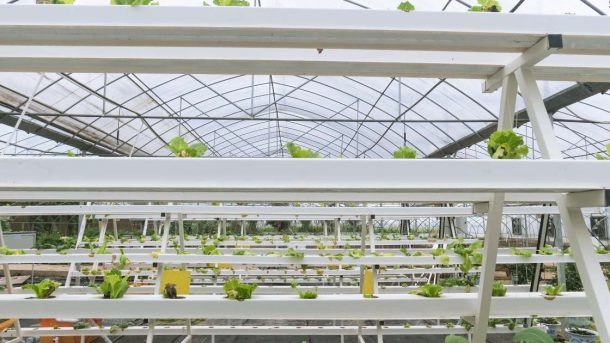
Aeroponics is the process of growing plants within an air or mist environment. It’s one of the six basic types of hydroponic plant-growing method where plants are suspended with the roots exposed in the air. Every few minutes, a nutrient solution is sprayed directly on the roots itself. Aeroponics is considered the most technologically advanced hydroponic method.
What is transplanting?
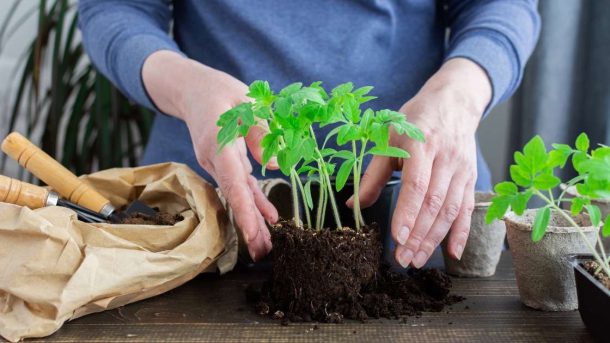
Transplanting is taking a rooted crop and replanting it elsewhere. Transplanting is common practice for transferring baby plants from their optimal sprouting conditions to another location, like outdoors.
Which are the different farming systems?

Different type of farming systems include arable farming, mixed farming, subsistence farming, shifting cultivation plantation farming, livestock farming.
What is broadcast seeding ?

Broadcast seeding is spreading seed over a large and imprecise region, either by hand or mechanically. Broadcast seeding is easier and faster than row planting. It takes more seed and can result in overcrowding and uneven plant cover distributions. It’s suitable for plants that don’t require specific spacing or depth. This method of sowing is also used in plants that can be thinned simply after germination.
Why and how trash mulching is done in sugarcane ?
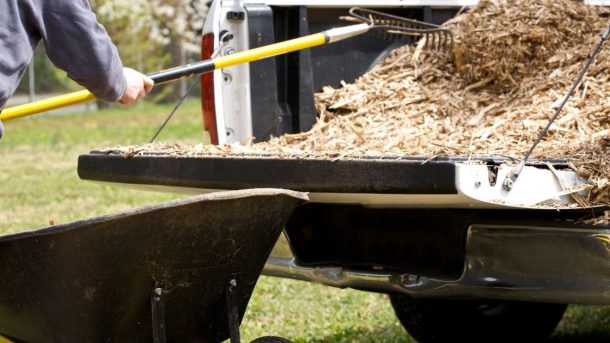
Within a week of planting, uniformly mulch the ridges with cane trash to a thickness of 10 cm. It aids in drought relief, moisture conservation, weed control, and the prevention of shoot borer infestations. After 21 days of planting in heavy soil and wetland conditions, mulch the field with trash. Avoid using trash mulching in places where termites have been discovered.
What is in-situ moisture conservation?
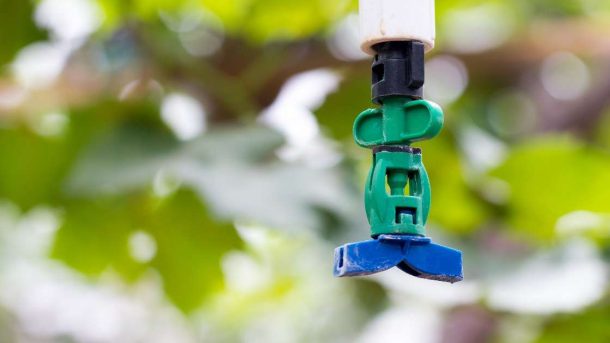
In-situ moisture conservation is done by constructing small beds where moisture is conserved consistently in the field. It also helps to decrease water runoff and soil erosion. The moisture saved thereby decreases water stress throughout the key growth stage. This results in a guaranteed yield of rainfed crops such as Jowar and Bajra.
What are the advantages of plastic mulching ?
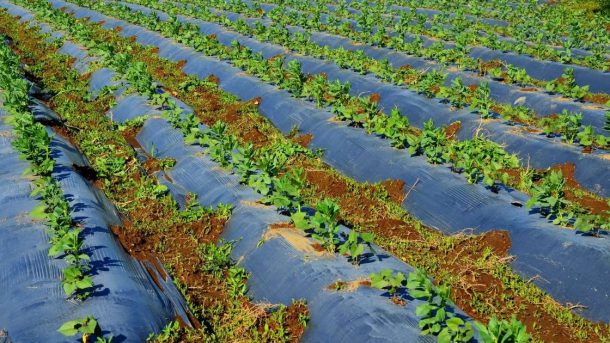
Plastic mulching is completely impermeable to water. It conserves moisture by preventing direct evaporation of moisture from soil. By evaporation suppression, it prevents the rise of water containing salts. Mulch can facilitate fertilizer placement and reduce the loss of plant nutrient through leaching. Mulches can also provide a barrier to soil pathogens. Opaque mulches prevent germination of annual weeds from receiving light. Reflective mulches will repel certain insects.
What is paired row technique ?

Paired row technique is growing crop on both side of the furrow. This is done by increasing the ridge spacing . Thus , a single furrow can be used for irrigating two rows. This method of irrigation has been experimented for crops like greengram, blackgram, groundnut and sunflower. The results showed that there was saving of about 20 % irrigation water and 15 % increase in crop yields.