
Depending upon Tulsi plant growth habit, prepare seed beds of about 4.5 ×1.0×0.2m size. Seeds should be sown at a distance of about 60 cm by 60 cm. The distance between the beds mainly depends on available cultivation equipment and end-user. Normally, large commercial producers use a mechanical planter or a vegetable seeder. The seeding rate will depend on the desired planting density, in turn, depends on the end market.
farming practices
How much space is required for growing holy basil?
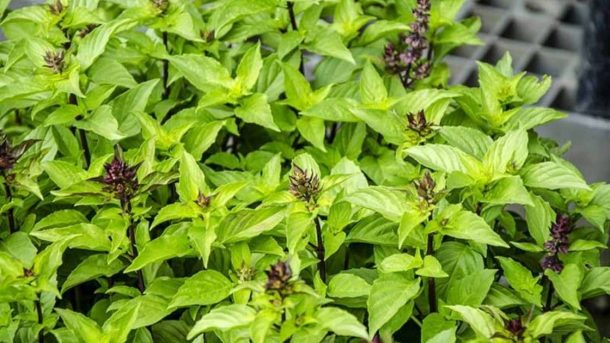
Seedbeds with measurements of 4.5 meters x 1.0 meters x 0.2 meters size should be prepared. As tulsi seeds are small in size, they should be mixed with sand in 1: 4 ratio and sown in nursery beds. Ensure the sowing distance of 60 cm× 60 cm. Usually basil seeds are sown at a depth of 2 cm. Tulsi seeds starts germinating after 10 days of sowing on nursery beds. These seedlings will be ready after 6 to 8 weeks when they attain 4 to 5 leaf stage.
In which Season, Sowing and Planting is done for Growing Holy Basil?
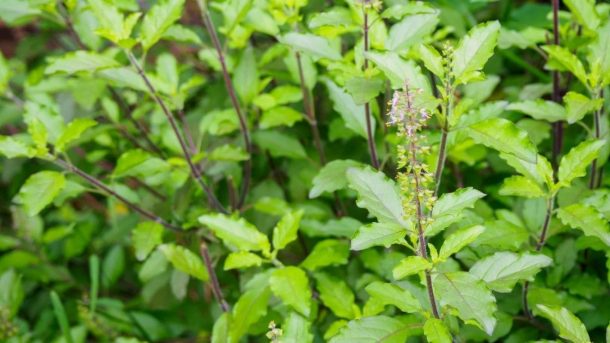
Usually, in commercial cultivation of holy basil, the nursery raising is carried out in the 3rd week of February and transplanting is done in the middle of April month.
Basil seeds should be sown in the nursery beds and the nursery ought to be located with irrigation facilities in shade conditions. Soil is worked to a depth of 30 cm. Well decomposed farm yard manure (two kg/sq. meter) should be applied to the soil before making seedbeds.
How propagation is done in Holy Basil?
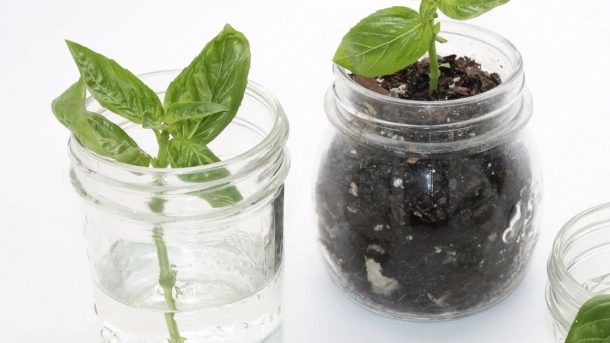
The propagation is done by Seed and also through vegetative methods. Propagation of basil is done by fresh seeds. Avoid using old stock as they will not germinate. Vegetative propagation of Holy Basil is propagated by means of terminal cuttings. This method of propagation is successful when the crop is planted during October to December. In this method, select terminal cuttings of 12 to 15 cm length with 9 to 10 nodes on them. Except for the first 2 to 3 pairs of leaves, the rest should be trimmed off. Later, these cuttings should be planted in prepared nursery beds. You can even plant in polythene bags filled with top soil mix. You can expect rooting of the cuttings after 5 to 6 weeks and they will be ready for transplantation in the main field. In the main field, use a spacing of 40 cm between rows.
What is the Spacing maintained in Gerbera Flower Farming?
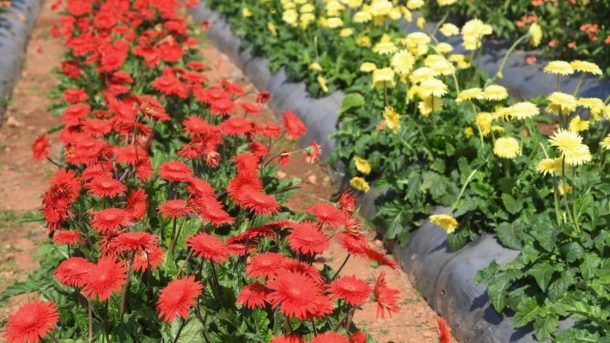
Spacing of 25-30 cm within the row & 30-40 cm between the rows should be maintained to accommodate 7 to 10 plants/square meter.
How Planting is done in Gerbera Farming?
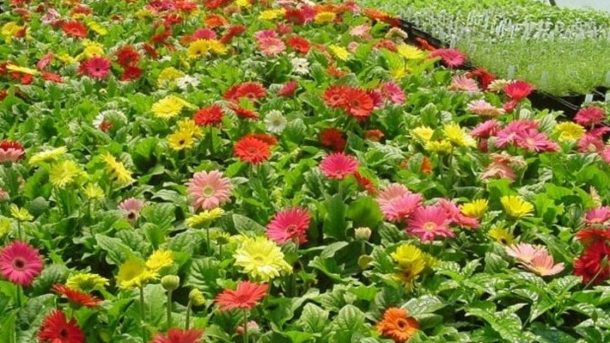
Raising gerberas in bed improves air circulation (Aeration) & drainage. Keep the crown of gerbera plants 1 to 2 cm above the soil level at the time of planting as the root system establishes deep in soil and pulls down from the ground level.
How Propagation is done for Gerbera Flower Farming?
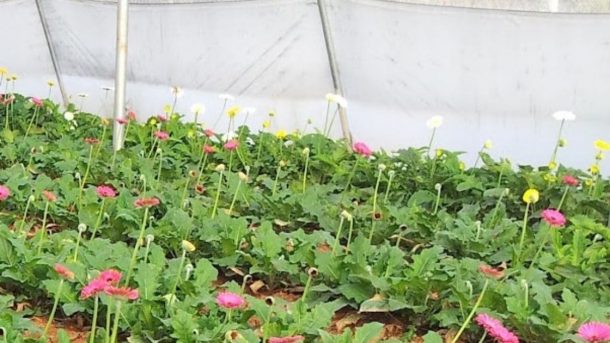
Gerbera plants commercially propagated through suckers & tissue culture.
Division and Micro-Propagation are the two propagation methods used in Gerbera cultivation.
In Division method, propagation is done through division of clumps in June -July month and this most commonly used method.
In Micro-propagation method flower heads, shoots tips, flower buds, inflorescence, capitulum & mid ribs are used as ex-plants. This method, is gaining popularity day by day for fast and large-scale production.
In which season Planting is done for Gerbera Flower Farming?
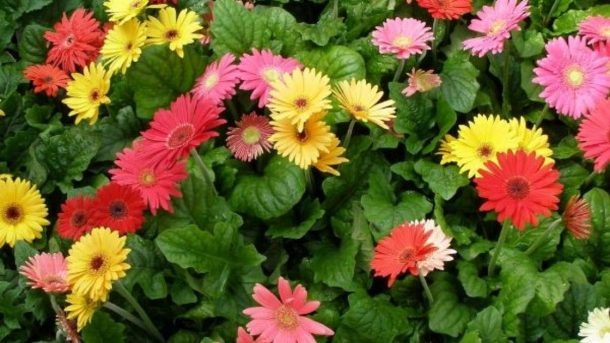
Gerbera plantation can be done in spring as well as summer season. Gerbera needs good light intensity, planting in spring season (Jan to March) is best for 1.5-year tissue culture. Summer (June to July) is Suitable for 1-, 1.5- & 2-years tissue cultures. Planting in autumn and winter (November and December) is not recommended due to low light intensity and high heating cost. Planting should be avoided in late August or September as it has to sustain in winter season.
How Seed Propagation is done in tamarind?
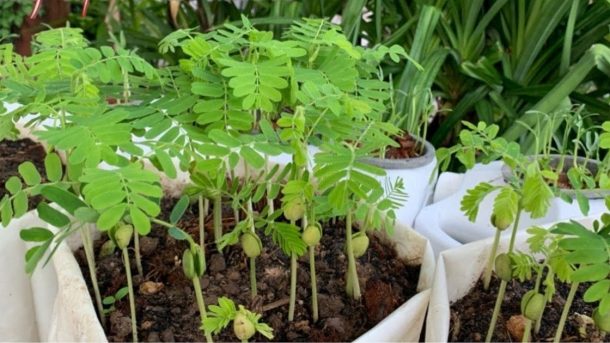
By seed is the least expensive means of propagation and can be used to crop a large number of new plants from a minimum of stock material. Moreover, seed propagation is essential to produce seedlings to be used as rootstocks onto which designated cultivars can be grafted. The major disadvantage of seed propagation is that seeds fail to produce plants true to type and also resulting seedlings take a longer time to produce productive plants than those produced through vegetative propagation. A better understanding of the processes involved in initial growth and seed germination is the most important prerequisite for the increased domestication and cultivation of Tamarind. Seed propagation of Tamarind is the simplest method of propagation which does produce feasible seeds but seeds do not produce true to the type plants. Seed propagation in Tamarind is done by collecting the pods from February to April. Seeds from ripe fruits are wash well with plain water. After this, it is tried for germination within 1 to 2 days. Generally, 1 kg of seeds contains 1800 to 2000 seeds. Seeds are then somewhat sun-dried to retain its viability.
How Training and Pruning is done in Cherry Fruit Cultivation?
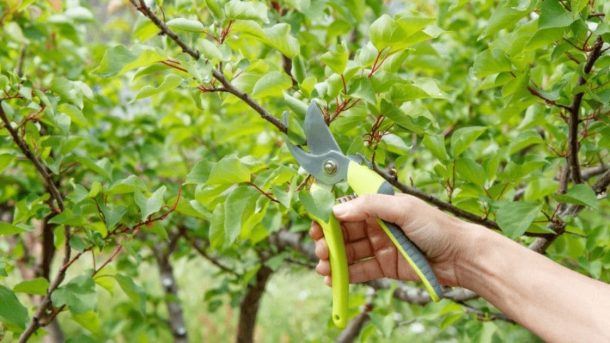
Generally, cherry tree requires “modified leader system” as training system. In this system, plants should be headed back to 70-80 cm at the time of planting. The central leader should be retained and 3 to 5 branches (wide angled), which are at 25 cm apart are selected for the first pruning. After 3 to 4 years, central leader should be headed back and allowed the lateral branches to grow. Cherry fruit bearing trees require some kind of pruning to keep the center of the tree open. Dead and diseased and intercrossing branches should be removed as part of the pruning.