Crop varieties

 What are the key technologies used in precision agriculture?

precision

A variety of technologies are used in precision agriculture to collect information, make defensible judgments, and implement site-specific management techniques. Here are some crucial technologies that are frequently applied in precision agriculture:

Global Positioning System (GPS): GPS technology enables precise and accurate location tracking, allowing farmers to pinpoint the specific coordinates of their machinery, sensors, and crop monitoring equipment. GPS enables accurate mapping and geolocation data, which forms the basis for many precision agriculture applications.

Geographic Information System (GIS): GIS technology combines other agricultural data with spatial data, such as soil mapping, topography, and field borders. It enables site-specific decision-making and precision management techniques by enabling farmers to visualize, analyze, and manage data in a spatial context.

Using sensors on satellites, drones, or aircraft, remote sensing involves gathering information about crops and fields. Remote sensing techniques including thermal imaging, multispectral and hyperspectral imaging, and Light Detection and Ranging (LiDAR) can gather useful data on a variety of factors, including crop health, biomass, water stress, and nutrient content. Making targeted management decisions and spotting crop variability are both made easier by this data.

Drones, also known as unmanned aerial vehicles (UAVs) or drones, are being employed in precision agriculture more and more often. They can gather information on crop health, plant population, and other characteristics as well as high-resolution aerial photography. Monitoring crops, spotting anomalies, and evaluating field conditions may all be done effectively and economically with drones.
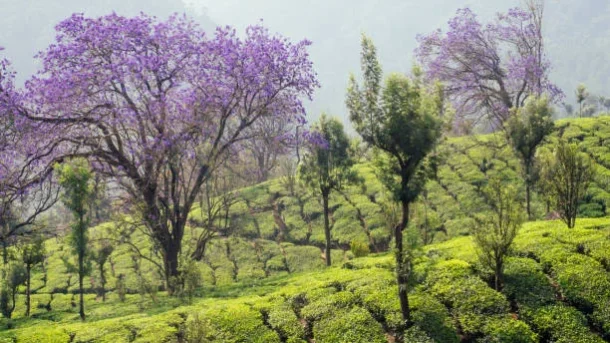
Name a government program that aims to promote the cultivation of aromatic crops and essential oil extraction.

government

The “Aroma Mission” is one government initiative that seeks to encourage the growing of aromatic plants and the extraction of essential oils in India. The Government of India has established a program called the Aroma Mission with the goal of boosting the growing of fragrant crops including lavender, rose, lemongrass, vetiver, and other plants abundant in essential oils.

The following are the main objectives of the Aroma Mission:

Growing Aromatic Crops: The objective is to encourage the growth of aromatic crops by offering farmers technical advice, education, and financial help. To assure the production of high-quality aromatic crops, it promotes the adoption of sustainable farming techniques, including as organic farming.

Extraction of Essential Oils: By establishing essential oil extraction units and processing facilities, the Aroma Mission seeks to improve the extraction of essential oils from aromatic crops. This makes it easier to extract aromatic oils from plant matter, ensuring product value addition and improved marketability.

Research and Development: The mission promotes initiatives in the fields of essential oil extraction methods and aromatic crop research and development. This involves research on crop improvement, the creation of high-yielding cultivars, the improvement of extraction techniques, and the investigation of new opportunities and uses for aromatic oils.

Market Linkages and Promotion: The Aroma Mission helps farmers who grow aromatic crops and make essential oils connect with markets. It encourages the use of aromatic oils in a variety of fields, including aromatherapy, cosmetics, perfumery, and pharmaceuticals.

Name a scheme that aims to promote the cultivation of pulses and oilseeds in rainfed areas.

oilseeds

The “Pradhan Mantri Annadata Aay Sanrakshan Abhiyan” (PM-AASHA) is one program that tries to encourage the growing of pulses and oilseeds in rainfed areas of India. A government program called PM-AASHA was introduced in 2018 to support farmers’ prices for pulses and oilseeds grown in rainfed regions.

Price Support Scheme (PSS): As part of PM-AASHA, the PSS component intends to give farmers a minimum support price (MSP) for their goods. In the event that market prices drop below the MSP, the government steps in to buy the crops from the farmers at the MSP in order to guarantee that their products will be paid for fairly.

Price Deficiency Payment Scheme (PDPS): Under the PM-AASHA, this alternative mechanism pays farmers directly for the shortfall between the MSP and the real market price. This program gives farmers the freedom to sell their produce on the open market, and in the event that the market price is less than the MSP, they will be compensated with a price deficiency payment.

State governments and other private parties may buy pulses and oilseeds directly from farmers at the MSP thanks to the Private Procurement and Stockist Scheme (PPSS). This program intends to include private sector involvement in procurement, providing a vibrant and open market for agricultural products.

The PM-AASHA program primarily targets oilseeds (such peanut, mustard, and urad) and pulses (like gram, tur, moong, and urad).

Which scheme aims to promote the cultivation of medicinal plants in India?

cultivation of medicinal plants

The “National Medicinal Plants Board (NMPB) Scheme” is one program that tries to encourage the development of medicinal plants in India. The National Medicinal Plants Board, an agency of the Government of India’s Ministry of Ayurveda, Yoga & Naturopathy, Unani, Siddha, and Homoeopathy (AYUSH), implements a number of policies and initiatives to encourage the growth, preservation, and sustainable cultivation of medicinal plants.

The National Medicinal Plants Board Scheme’s primary goals are as follows:

Therapeutic Plant Cultivation: The program’s main objective is to encourage the nationwide cultivation of therapeutic plants. It offers assistance with setting up nurseries, growing medical plants in designated locations, and using good agricultural practices (GAPs) for growing medicinal plants.

The plan has a strong emphasis on capacity building and training programs for farmers, business owners, and other parties involved in the cultivation of medicinal plants. It offers instruction in a variety of topics, such as nursery management, plant propagation methods, organic farming techniques, post-harvest handling, and medicinal plant value addition.

Research and Development: The program funds initiatives in the study and cultivation of medicinal plants. It encourages scientific research, the recording of traditional knowledge, the preservation of rare and endangered medical plant species, and the creation of novel medicinal plant cultivars with enhanced properties.

The plan’s primary areas of focus are market promotion and the development of the value chain for medicinal plants. It backs programs to create market connections, improve farmers’ and collectors’ access to markets, and promote to farmer.

What is the purpose of the National Mission on Oilseeds and Oil Palm (NMOOP)?

Oilseeds and Oil Palm

India’s government launched the National Mission on Oilseeds and Oil Palm (NMOOP) with the goal of encouraging the growth of oilseed and oil palm plantations to boost local oilseed production and lessen the nation’s reliance on imports. The objective is to improve India’s overall oilseed production situation while increasing the yield and profitability of oilseed crops.

The National Mission on Oilseeds and Oil Palm has several main goals, including:

An increase in oilseed production is one of the goals of the NMOOP, which includes peanut, soybean, rapeseed, mustard, sunflower, and sesame as examples of crops. The goal is to increase crop productivity by implementing better agricultural methods, offering high-quality seeds, encouraging balanced nutrient management, and embracing contemporary technologies.

Increasing oilseed production: The National Mission on Oilseeds and Oil Palm NMOOP places a strong emphasis on the use of best management methods to raise oilseed crop yield. The utilization of high-yielding varieties, effective irrigation systems, integrated fertilizer management, successful pest and disease management strategies, and post-harvest management approaches are some examples of this.

Promoting oil palm cultivation is another goal of the mission, which is targeted at areas with the right agroclimates in the nation. Palm oil, an important vegetable oil used in cooking, food processing, and a variety of industries, is produced by oil palm, a high-yielding crop. The NMOOP seeks to expand the area under oil palm cultivation and enhance oil palm plantation output.

Which scheme provides insurance coverage to farmers against weather-related crop losses?

crop losses

The Pradhan Mantri Fasal Bima Yojana (PMFBY) is an insurance program that protects farmers in India from agricultural losses caused by weather. The Indian government introduced the Pradhan Mantri Fasal Bima Yojana, Which scheme provides insurance coverage to farmers against weather-related crop losses insurance program, in 2016 to take the place of the National Agricultural Insurance Scheme (NAIS) and Modified National Agricultural Insurance Scheme (MNAIS), which had previously existed.

The Pradhan Mantri Fasal Bima Yojana’s principal goal is to give farmers financial assistance and insurance protection in the event that their crop losses due to natural disasters, pests, illnesses, or unfavorable weather. The program attempts to protect farmers’ income and guarantee their stability in the event of crop failure.

The Pradhan Mantri Fasal Bima Yojana’s main characteristics are as follows:

Comprehensive coverage: The PMFBY offers insurance protection for all horticultural, oilseed, and food crops (including cereals, millets, and pulses). It covers crop losses caused by recognized hazards, such as drought, flood, cyclone, hailstorm, pest attacks, illnesses, etc., both before sowing and after harvest.

Premium Subsidy: The program provides farmers with premium subsidies to lessen their financial burden. Farmers can only pay a maximum premium of 2% for Kharif crops, 1.5% for Rabi crops, and 5% for horticulture crops. The premium rates are negligible. The federal and state governments split the remaining premium payment.

How does the lack of research and development investments hinder innovation in agriculture?

research and development

Limited technological progress: R&D expenditures are essential for advancing agriculture’s technology. These investments aid in the creation of novel crop varieties, enhanced agricultural techniques, mechanization, precision farming, and eco-friendly farming methods. Without sufficient financing for research and development R&D, technical advancement moves more slowly, making it harder to access cutting-edge equipment and methods that could boost agricultural output, sustainability, and resilience.

Inadequate responses to new problems: Agriculture has several difficulties, such as pests and illnesses, soil deterioration, water scarcity, and shifting consumer needs. Investments in research and development R&D are required to address these issues by creating cutting-edge technology and solutions. Research into climate-resilient crops, sustainable production methods, precision agricultural technologies, and other farming aids is lacking due to a lack of financing.

Limited adoption and knowledge transfer: R&D investments not only produce new knowledge and technology but also make it easier for people to use and accept them. research and development R&D initiatives offer advice, best practices, and extension services based on evidence to assist farmers in understanding and utilizing novel ways. The dissemination of new technology and techniques to farmers is hampered by a knowledge transfer gap caused by insufficient R&D investments. Due to slower adoption rates, innovations’ potential effects on farm productivity and sustainability are constrained.

Inadequate capacity building and human capital development: R&D investments help the agricultural sector increase capacity and develop human capital. The training of scientists, researchers, technicians, and extension personnel who may promote innovation and information dissemination is supported by these investments. Lack of R&D funding decreases.

How is urban agriculture gaining momentum in addressing food security?

urban agriculture

Increased food production: Urban agriculture reduces the distance between food sources and consumers by bringing food production closer to urban areas. Particularly in regions with limited access to fresh and wholesome products, this localised production aids in ensuring a more constant and dependable food supply. Urban agriculture boosts the overall capacity for food production in cities by utilising underutilised urban areas including roofs, vacant lots, and community gardens.

Access to food is improved: Urban agriculture improves food access for urban inhabitants, especially in low-income areas and food deserts where there are few fresh, healthy food options. Urban agriculture promotes the availability of fresh vegetables at reasonable rates while reducing reliance on lengthy supply lines. Farmers’ markets, urban farms, and community gardens offer immediate access to wholesome food.

Diversification of food sources: Encouraging the development of a variety of crops, which helps to diversify food supplies. This diversity boosts the availability of a wide range of fresh produce while reducing reliance on a small number of basic crops. It supports a diet that is more nutritious and well-balanced, addressing nutrient inadequacies and enhancing overall food security.

Urban agriculture can increase resilience to shocks like climate change and others that might disrupt traditional food supply lines. Cities can reduce the dangers brought on by severe weather, traffic jams, and fluctuating food prices by cultivating food locally. City residents have the chance to learn about environmentally friendly farming methods, promoting self-reliance and resilience.

How are farmers adapting to water scarcity and drought conditions?

drought

Soil moisture monitoring: Farmers monitor soil moisture levels and water availability, drought in real-time using sensors and monitoring systems. They can use this information to decide when and how much water to apply with confidence. Farmers may optimise water use and save waste by staying away from over-irrigation and making sure that water is applied only when necessary.

Crop rotation and selection: Farmers rotate their crops and pick crop varieties that are more resilient to water scarcity in arid climates. Crops that can withstand drought, such as some types of sorghum, millet, and some legumes, are grown in regions where water is scarce. Crop rotation practices reduce the overall need for irrigation by alternating crops with differing water requirements, which contributes to efficient water resource management.

In order to adapt to the water shortage and drought circumstances, farmers are using a variety of tactics and using cutting-edge practises. In difficult water-scarce conditions, these modifications seek to maximise water use, increase water efficiency, and preserve agricultural productivity. Here are some crucial strategies that farmers are using.

Modern irrigation techniques that maximise water efficiency are being adopted by farmers more and more. For instance, drip irrigation provides water straight to plant roots, minimising runoff and lowering water loss due to evaporation. In order to focus water application more accurately and make sure that water reaches the crops successfully, other techniques are also utilised, such as sprinkler irrigation, precision sprinklers, and micro-sprinklers.

How has climate change impacted agricultural productivity and food security?

impacted

The productivity of agriculture and the availability of food have been significantly impacted by climate change, creating difficulties for the world’s food chain. Here are a few ways that agriculture has been impacted by climate change.

Temperature and precipitation changes: Increasing temperatures and shifting precipitation patterns have a direct impact on the growth and development of crops. Crop yields can be affected by heat stress, and it can also affect pollination and raise water usage. Schedules for planting, irrigation, and harvesting can be affected by droughts or floods brought on by changes in rainfall patterns.

Changes to Phenological Cycles and Traditional Growing Seasons: Planting, flowering, and harvesting times may all be impacted by climate change. Agricultural practices may be difficult for farmers to modify in response to the changing environment, which could result in lower crop yields and unstable production.

Water Scarcity and Unpredictability: Climate change may make it more difficult to get enough water for irrigation systems, crops, and cattle in many areas. Water shortages may result from altered rainfall patterns and higher rates of evaporation, which may have an impact on agricultural productivity and food production.

Pest and disease spread: Changes in the climate can have an impact on the distribution and prevalence of pests and diseases, increasing the risks and difficulties in managing crops and livestock. Warmer weather can encourage the spread of illnesses and pests, necessitating more resources and pest control techniques.