Chemical fertilizers

How is the agriculture sector addressing the issue of food safety and traceability?

food safety

Good Agricultural Practices (GAP) are being adopted and put into practice by farmers. These practices include standards and guidelines for sustainable and safe agricultural production. The right use of fertilizers and pesticides, water management, personal hygiene, and the health and safety of workers are all covered by these practices. GAP aims to minimize hazards to food safety throughout the production of agricultural products.

Adoption of Quality Assurance Systems: Many agricultural businesses and farmers are putting quality assurance systems, including ISO 22000 and HACCP, into place. These systems concentrate on locating and eliminating risks to food safety at various points along the supply chain, from farm to fork. To ensure the safety, they assist in establishing preventive measures, monitoring systems, and traceability methods.

Enhancing Traceability Systems: To track and document the movement of food products along the supply chain, the agriculture sector is installing and enhancing traceability systems. To enable real-time monitoring and recording of product information, this entails the use of technologies like blockchain, barcoding, and RFID (Radio Frequency Identification). Food product origin, processing, and distribution histories may all be traced using traceability systems, which makes it simpler to spot possible safety hazards and take appropriate action.

Testing and Quality Control: To ensure the safety of agricultural goods, regular testing and quality control procedures are essential. Pesticide residues, heavy metals, microbiological contaminants, and genetically modified organisms (GMOs) are just a few of the things that can be tested for.
What are the current debates on agricultural subsidies and market distortions?

agricultural subsidies

Policymakers, economists, and stakeholders in the agriculture sector are always debating and conversing about agricultural subsidies and market distortions. The following are some of the main arguments over agricultural subsidy and market distortions:

Trade distortions: The potential for agricultural subsidies to distort international agricultural markets is one of the main issues associated with them. The competitiveness of farmers in developing nations, who cannot match the subsidies provided by affluent countries, is harmed by subsidies since they can result in overproduction and the dumping of subsidized products in international markets. In international trade discussions, such as those conducted by the World Trade Organization (WTO), this subject has been a major source of dispute.

Effects on Domestic Markets: Agricultural subsidies can have a big impact on domestic markets, impacting prices, output levels, and the ability of domestic farmers to compete internationally. Supporters contend that subsidies are essential to protect rural livelihoods, stabilize prices, and guarantee food security. Subsidies, according to their detractors, can cause inefficiencies, overproduction, and a fictitious distortion of resource allocation, which could hurt small-scale farmers and put more of a financial strain on taxpayers.

Environmental Impacts: Agricultural subsidies may have an impact on how land is used and how food is produced, which may have an impact on the environment. Some subsidies, critics claim, especially those linked to input usage or output levels, may encourage unsustainable agricultural practices, such as excessive use of pesticides and fertilizers, deforestation, and overuse of water sources.

How are farmers using satellite imagery and GIS for land management and monitoring?

imagery

Farmers are using Geographic Information System (GIS) technology and satellite imagery more and more for land management and monitoring. Here are some significant applications of these technologies:

Crop monitoring and yield estimation are made possible by satellite imagery, which gives farmers a bird’s-eye perspective of their fields and enables them to track crop development, identify stress factors, and calculate yields. Farmers can spot changes in crop health, nutritional deficits, pest infestations, and disease outbreaks by examining satellite photos. They can use this knowledge to make educated decisions about irrigation, fertilizer use, and pest control, which results in more effective resource management and higher crop output.

GIS and satellite imagery are essential components of precision agriculture techniques. Farmers can improve yields by combining information from satellite pictures, soil sensors, and other sources.

Crop Rotation and Land Use Planning: GIS and satellite imagery help with crop rotation and land use planning techniques. Farmers can evaluate the viability of various regions of their property for particular crops based on criteria like soil type, terrain, and drainage by analyzing historical and current satellite pictures. In order to reduce disease pressure, nitrogen depletion, and soil erosion while increasing yields and maintaining soil health, farmers can use GIS technologies to construct the best crop rotation schedules.

Irrigation management: GIS and satellite-based data are useful resources for enhancing irrigation procedures. Farmers may determine the amount of water crops will need and keep track of the soil moisture levels in their fields by combining satellite photography, weather information, and evapotranspiration models. This knowledge enables them to more accurately plan irrigation, preventing under- or over-irrigation, minimizing water waste.

What are the advancements in plant disease detection and management techniques?

management

Early detection and efficient control of plant diseases have tremendously benefited from improvements in plant disease detection and management approaches. Here are a few noteworthy developments in this area:

Molecular diagnostic tools: The identification of plant diseases has been revolutionized by molecular methods including DNA sequencing, real-time PCR, and polymerase chain reaction (PCR). These instruments use specific DNA or RNA sequences to quickly and precisely identify infections. They make it possible to diagnose diseases early, even before they show any outward signs, allowing for prompt disease management approaches.

Technologies for remote sensing and imaging: Plant diseases are being found over wide areas using remote sensing methods, such as hyperspectral imaging and unmanned aerial vehicles (UAVs or drones). These technologies are able to recognize tiny alterations in plant health and early disease indications.

Plant breeding programmes concentrate on creating disease-resistant crop types using either traditional breeding methods or genetic engineering. Breeding for resistance entails locating and introducing into crop kinds the genes that provide resistance to particular diseases. Disease-resistant cultivars offer long-term, sustainable options for managing diseases while reducing the need for chemical pesticides.

Technologies for precision agriculture and sensors are being utilized to manage disease. Examples include sensors, data analytics, and automation. Moisture content, nutritional levels, and disease markers are just a few of the factors that soil and plant sensors may assess. By using the information gathered from these sensors, irrigation, fertilization, and pesticide applications may be made more effective, which will help with disease prevention and resource management.

How is the concept of agroforestry being integrated into climate change mitigation strategies?

climate change mitigation

Agroforestry is increasingly recognized as a valuable approach for climate change mitigation due to its potential to sequester carbon, enhance resilience, and promote sustainable land management. Here are some ways in which the concept of agroforestry is being integrated into climate change mitigation strategies:

Carbon Sequestration: Agroforestry systems, with their combination of trees, crops, and/or livestock, have the capacity to sequester significant amounts of carbon in both above-ground biomass and soil. Trees in agroforestry systems capture and store carbon dioxide from the atmosphere, reducing greenhouse gas concentrations. Agroforestry practices such as silvopasture (integrating trees and livestock), alley cropping (trees intercropped with crops), and forest farming (cultivating crops under the shade of trees) can effectively contribute to carbon sequestration.

Reduced Emissions from Deforestation and Forest Degradation (REDD+): Agroforestry plays a crucial role in REDD+ initiatives, which aim to reduce carbon emissions from deforestation and forest degradation. By promoting agroforestry practices, which offer alternative land uses to slash-and-burn agriculture and forest clearance, countries can mitigate greenhouse gas emissions while simultaneously meeting agricultural and livelihood needs.

Agroforestry is a crucial part of climate-smart agriculture, a strategy that attempts to boost agricultural output, improve climate change resistance, and lower greenhouse gas emissions. Agroforestry practices offer a variety of advantages, including improved water management, increased biodiversity, and varied income streams. These advantages help make agricultural systems more resilient to climate change mitigation overall.

Agroforestry contributes to sustainable land management by promoting water retention, minimizing erosion, and improving soil health. In agroforestry systems, the presence of trees aids in preventing soil erosion, promoting nutrient cycling, and increasing organic matter content, improving soil structure and fertility. By storing carbon in the soil and requiring fewer chemical inputs, this helps to mitigate climate change mitigation.

What are the efforts to promote sustainable and responsible aquaculture practices?

aquaculture practices

Governments, international organizations, industry stakeholders, and environmental groups have all participated in initiatives to promote sustainable and ethical aquaculture practices. The following are important programmes and techniques:

Certification programmes and standards: To promote ethical aquaculture practices, a number of certification programmes and standards have been created. The Aquaculture Stewardship Council (ASC) accreditation, which establishes environmental and social standards for ethical aquaculture production, is the most well-known. Various parts of ethical aquaculture are covered by other initiatives, such the Global Aquaculture Alliance’s Best Aquaculture practices (BAP) and the Global GAP Aquaculture Standard, which offer standards and certification procedures.

The goal of integrated coastal zone management (ICZM), which includes aquaculture, is to balance the usage of coastal areas with the preservation of ecosystems and natural resources. ICZM

Development of Regulations and Policies: To oversee and support sustainable aquaculture practices, governments are creating regulations and drafting policies. Aspects including site selection, water quality management, feed management, disease prevention and control, and the responsible use of chemicals may be covered by these rules. In order to enforce compliance with laws and encourage best practices, governments also set up licensing and permitting systems.

Better Nutrition and Feed: Sustainable aquaculture practices place a strong emphasis on the creation and application of feeds that lessen dependency on wild fish supplies and contain alternative, ecologically friendly ingredients. To reduce waste and adverse effects on the environment, research is concentrated on improving feed formulations, increasing nutrient utilization, and lowering feed conversion ratios.

How is the use of agrochemicals being regulated and monitored?

use

The use of agrochemicals, including pesticides, herbicides, and fertilizers, is regulated and monitored by various national and international bodies to ensure their safe and responsible use. The specific regulations and monitoring practices may vary among countries, but here are some common approaches:

Registration and Approval: Agrochemicals undergo a rigorous registration process before they can be legally marketed and used. This involves submitting scientific data and conducting risk assessments to assess the product’s efficacy and potential impacts on human health, the environment, and non-target organisms. Regulatory agencies evaluate the data and grant approvals based on the product’s compliance with established standards.

Maximum Residue Limits (MRLs): MRLs are regulatory limits set for the maximum allowable concentration of pesticide residues in food and feed commodities. These limits are established to protect consumer health and ensure that agrochemical residues remain below levels deemed safe. Monitoring programs are in place to test produce for compliance with MRLs, and enforcement actions are taken if residues exceed the established limits.

Labelling and Use Instructions: Agrochemical goods must have labels that clearly state how to use them in a safe and efficient manner. Proper application rates, timing, safety gear, storage, and disposal are all covered by these labels. In order to guarantee consumer safety and environmental protection, regulatory bodies monitor the sufficiency and accuracy of product labels.

Monitoring and Surveillance: To determine the presence and concentrations of pesticide residues in crops, soil, water, and other environmental compartments, governments and regulatory agencies perform monitoring and surveillance programmes. To verify adherence to specified criteria, samples are gathered from farms, food markets, and processing facilities and tested. Monitoring programmes aid in spotting possible dangers, patterns, and areas requiring regulatory action.

How is the use of pesticides and fertilizers being regulated and monitored?

pesticides

Through a combination of national and international regulatory frameworks, enforcement tactics, and monitoring programmes, the use of pesticides and fertilisers is controlled and monitored. Here are some essential components of the regulation and oversight of pesticides and fertilisers.

Regulatory frameworks: To regulate the registration, resale, and use of pesticides and fertilisers, various nations have put in place regulatory frameworks. These frameworks commonly consist of laws, rules, and policies that establish requirements for product safety, labelling specifications, application procedures, and allowable levels of pesticide residues or nutritional content in agricultural goods. The execution of these regulations is supervised by regulatory authorities, such as the Environmental Protection Agency (EPA) in the United States.

Pesticides and fertilisers must go through a rigorous registration process in order to be marketed and used legally. The provision of scientific data on product effectiveness, safety, and environmental impact is expected from manufacturers and distributors. These data are evaluated by regulatory bodies to ascertain if the products comply with the requirements for registration. Identifying suitable circumstances of usage and evaluating potential dangers connected to product use are both part of the registration procedure.

Labelling requirements: Labelling laws apply to pesticides and fertilisers in order to give users crucial information about how to use them safely and effectively. Application instructions, cautions, handling and storage recommendations, safety information, and environmental danger alerts are frequently found on labels. Additionally, labels may contain details on suggested application rates, scheduling, and targeted pests .

How are drones used for spraying pesticides and fertilizers?

spraying

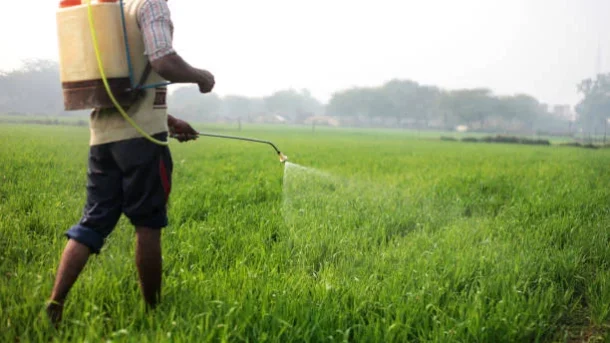
Aerial Application: Drones can spraying transport and disperse pesticides or fertilizers over agricultural fields when outfitted with properly engineered spray systems, which include tanks, pumps, and nozzles. These drones discharge the spray mixture in a controlled manner while flying at a predetermined altitude over the crop canopy. Multiple nozzles that release tiny droplets from the spray system may be used to provide even coverage and reduce drift.

Drones’ ability to fly at low altitudes and adhere to predetermined flight paths allows them to be used in precise applications. Drones are capable of precise navigation and can maintain a constant spray pattern thanks to internal GPS and sophisticated flight control technologies. This accuracy ensures focused coverage of the crops or particular areas of interest, minimises waste, and lowers the chance of overapplication.

Drones’ adaptability and accessibility allow them to enter spaces that could be difficult or hazardous for conventional machinery or human operators to enter, such as fields with uneven shapes or steep slopes covered in dense vegetation. Farmers can efficiently spray crops in difficult locations and make the best use of their property by using drones.

Reduced Human Exposure: By removing the need for human operators to come into close touch with pesticides or fertilisers during spraying operations, drones add an extra layer of protection. When harmful or dangerous substances are used, this serves to safeguard the operators’ health and safety.

How fumigation used in agriculture?

Fumigation

Fumigation is a pest control method used in agriculture to eliminate or control harmful insects, pathogens, and other pests that can damage crops. It involves the use of gaseous or vaporized chemicals, called fumigants, which are applied to soil or stored grain to kill or control pests.

There are different types of fumigation methods, each of which uses a specific type of fumigant and application method. Some common fumigants used in agriculture include methyl bromide, phosphine, and sulfuryl fluoride.

Soil fumigation is a common pest control method for crops such as strawberries, tomatoes, and peppers. The fumigant is applied to the soil before planting, and it penetrates the soil to kill pests that live in or on the soil, such as nematodes, root-knot nematodes, and fungal pathogens.

Grain fumigation is used to control pests in stored grain, such as grain bins or silos. The fumigant is introduced into the grain storage facility to eliminate insects and other pests that can infest and damage stored grain.

Fumigation is an effective pest control method, but it is also highly toxic and requires careful handling and application.