Beneficial organisms

Can biofertilizers be used in combination with soil amendments like gypsum?

gypsum

The use of gypsum, a popular soil amendment, in conjunction with biofertilizers can be advantageous in the following ways:

Gypsum is frequently used to enhance soil aggregation and reduce compaction in order to improve soil structure. It aids in the flocculation of clay particles, facilitating improved root penetration and water infiltration. By encouraging microorganisms to produce polysaccharides and glue, which aid in soil aggregation, biofertilizers can further help the improvement of soil structure.

Gypsum can increase the availability of several minerals, especially calcium and sulfur, without directly supplying those elements. By improving nutrient solubilization and nutrient uptake efficiency, biofertilizers can complement this impact and make nutrients more available to plants.

Nutrient imbalances can occasionally be brought on by the excessive use of particular fertilizers or the presence of unfavorable soil conditions. Gypsum can help correct particular nutritional imbalances by raising soil pH and enhancing nutrient uptake. Through their interactions with plants and the soil microbial population, biofertilizers can help to promote a more balanced nutrient profile.

Gypsum can assist plants in surviving in salty or sodic soils, which are characterized by high sodium levels. Gypsum can increase the stress tolerance of plants by improving soil structure and lowering salt toxicity. When used in conjunction, biofertilizers can improve root development and nutrient uptake, making plants more resistant to environmental stresses and boosting stress tolerance.


What are the storage requirements for biofertilizers?

storage

To keep biofertilizers viable and effective, storage must be done properly. The type of biofertilizer and its formulation will determine how long it has to be stored. Here are some general recommendations for storing biofertilizers, though:

Cool and dry conditions: To stop moisture absorption and microbial growth, biofertilizers should be storage in a cool and dry environment. Moisture can make the helpful microorganisms in the biofertilizer less viable, which lowers their efficiency.

Avoid direct sunlight: Direct sunlight might cause temperature changes and harm to the biofertilizer’s microorganisms. Biofertilizers should be kept in a shady place to avoid exposure to extreme heat and light.

Use airtight containers or sealed packaging to prevent air exposure, which can cause the biofertilizer to dry up or become contaminated with undesirable microbes.

Clearly mark the product name, manufacture date, and expiration date on each biofertilizer container to ensure proper labeling and date monitoring. By monitoring the shelf life, it is possible to make sure that older batches are utilized before more recent ones.

Check the viability and quality of stored biofertilizers on a regular basis. Microbial viability testing is one example of a quality control measure that can assist guarantee the product’s continued efficacy.

Are there any biofertilizers specifically designed for specific crops?

specific crops

These are a few illustrations of specific crops biofertilizers:

Biofertilizers based on Rhizobium: Rhizobium inoculants are made for leguminous plants like beans, peas, lentils, and soybeans. Leguminous plants and rhizobium bacteria collaborate to fix atmospheric nitrogen, which serves as a substantial supply of nitrogen for the plants. Because they lessen the demand for nitrogenous fertilizers and support sustainable agriculture, these biofertilizers are essential for the growth of legumes.

Biofertilizers made from azospirillum are frequently used to non-leguminous crops like wheat, maize, sorghum, and millets. By generating growth-stimulating compounds like auxins and improving nutrient uptake, particularly nitrogen, these bacteria aid in plant growth.

Phosphate-solubilizing biofertilizers: These fertilizers can be used with a variety of crops since they contain phosphate-solubilizing microorganisms. However, they are especially helpful for crops like rice, oilseeds, and root crops that need a higher phosphorus supply. These biofertilizers make more phosphorus available in the soil, which encourages root formation and plant growth in general.

Mycorrhizal fungus associate symbiotically with the roots of most plants to produce mycorrhizal biofertilizers. Mycorrhizal biofertilizer formulations can be made especially for a certain crop or crop family. For instance, there are mycorrhizal inoculants designed for particular tree species, vegetables, or fruit trees. These biofertilizers facilitate the uptake of nutrients and water, particularly in plants with deep root systems.

How do biofertilizers benefit soil microorganisms?

soil microorganisms

The community of soil microorganisms is supported and flourishes thanks to the use of biofertilizers. Biofertilizers increase microbial diversity, activity, and interactions by introducing beneficial microbes, which improves soil health and nutrient cycling. What are the advantages of biofertilizers for soil microorganisms?

Microbial Inoculation: Biofertilizers have certain beneficial microorganisms in them, such as nitrogen-fixing bacteria, phosphate-solubilizing bacteria, mycorrhizal fungi, or other bacteria that encourage plant growth. These biofertilizers interact with the already present soil microbial population by introducing new microbial species when applied to the soil.

Enhanced Microbial Diversity: Biofertilizers have the potential to introduce new microbial strains, enhancing the diversity of microbes in the soil as a whole. A varied microbial community is more resilient and able to carry out a number of advantageous tasks.

xSynergistic Interactions: The microorganisms added to biofertilizers have the potential to create synergistic interactions with the soil microorganisms already present. These interactions could include the exchange of nutrients, the activity of signaling molecules, and assistance in fending off environmental stressors.

Beneficial microorganisms included in biofertilizers help the soil’s nutrient cycling activities. While phosphate-solubilizing bacteria liberate bound phosphates, making them available to plants and other microbes, nitrogen-fixing bacteria transform atmospheric nitrogen into forms that are useful to plants.

Compost and other organic matter-containing biofertilizers may aid in the decomposition of organic matter in the soil. During decomposition, microbial activity releases nutrients and promotes the development of other soil microbes.

How do biofertilizers compare to compost and manure?

compost

Compost, manure, and biofertilizers are all excellent organic sources of nutrients and helpful microorganisms for plants. However, they vary in terms of composition, nutrient content, application techniques, and nutrient release mechanisms. Here is a comparison of manure, compost, and biofertilizers:

Composition:

Products containing helpful microorganisms like nitrogen-fixing bacteria, phosphate-solubilizing bacteria, mycorrhizal fungi, or plant growth-promoting rhizobacteria (PGPR) are referred to as biofertilizers. They frequently interact with plants in symbiotic ways and are living creatures.

Compost: Compost is a byproduct of the breakdown of organic material, such as plant materials, yard waste, and kitchen scraps. It lacks specialized microbes but is abundant in organic materials, humus, and crucial nutrients.

Nutritional Value:

Biofertilizers: Biofertilizers primarily increase the availability of nutrients through the actions of their helpful microbes, which fix nitrogen, solubilize phosphates, or encourage plant nutrient uptake.

Compost: Compost offers a variety of nutrients, such as organic matter, nitrogen, phosphorous, and potassium, as well as micronutrients and other nutrients that release nutrients over time.

Manure: Manure comprises organic matter, which releases nutrients gradually as it decomposes, as well as necessary nutrients like nitrogen, phosphorous, and potassium.

Release of Nutrients:

Biofertilizers: The growth and activity of the helpful microorganisms in the soil determine how slowly and gradually nutrients are released from biofertilizers.

Composts: As compost decomposes and breaks down, nutrients are progressively released over a lengthy period of time.

Manure: As manure decomposes and becomes available to plants over time, nutrient release from it is also slow.

How do biofertilizers influence plant disease resistance?

influence

Through a variety of techniques that improve the plant’s natural defense systems and support a better rhizosphere environment, biofertilizers can influence plant disease resistance. The interactions between the beneficial bacteria in biofertilizers and plants help plants resist disease and have better immunity. Here are a few ways that biofertilizers affect a plant’s ability to withstand disease:

Some biofertilizers have the ability to make plants develop systemic resistance. A plant’s capacity to protect itself against a variety of pathogens after being exposed to a particular beneficial microbe or one of its byproducts is known as systemic resistance. When helpful bacteria are present in biofertilizers, the plant’s influence system is triggered, which results in the synthesis of defensive substances and proteins that guard against numerous infections.

Competition with Pathogens: Pathogenic bacteria compete with biofertilizers for resources and space by colonizing the roots of plants and the rhizosphere around them. The risk of disease development can be decreased by this competitive exclusion, which can restrict the proliferation and establishment of pathogens in the rhizosphere.

Antagonism: A number of helpful microorganisms included in biofertilizers have an adverse effect on plant diseases. Through the synthesis of antimicrobial compounds or by competing with diseases for nutrients and space, they may directly restrict the growth of pathogens.

The generation of antifungal chemicals in plants is induced by several biofertilizers, notably those that contain mycorrhizal fungi. These substances can offer defense against infections that are carried by the soil.

Can biofertilizers be used in soilless farming systems?

soilless farming

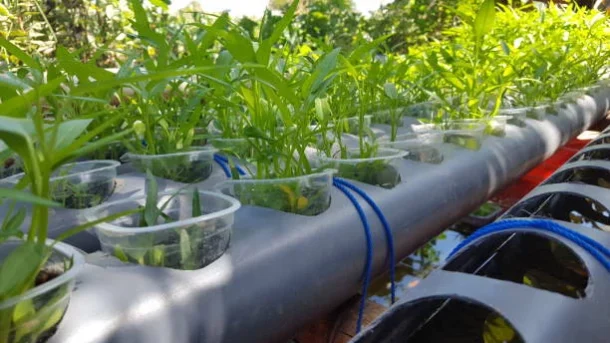
Yes, soilless farming techniques, commonly referred to as hydroponic or aquaponic techniques, can use biofertilizers. Plants are grown without the use of traditional soil in soilless farming; instead, they are grown in nutrient-rich water solutions or inert mediums like coco coir, perlite, vermiculite, or rockwool. Despite the absence of natural soil in soilless farming, biofertilizers can still be useful in these systems to promote plant development and supply vital nutrients.

In soilless agricultural systems, biofertilizers can be applied as follows:

All of the vital nutrients needed for plant growth in hydroponic systems are delivered directly to the roots of the plants through the nutrient solution. Biofertilizers, especially those that contain bacteria that fix nitrogen, can increase the amount of nitrogen in the nutrient solution. Thus, there is less need for agriculture.

Even in soilless environments, mycorrhizal biofertilizers, which form symbiotic interactions with plant roots, can improve root health and development. Mycorrhizal fungi can increase the efficiency of nutrient and water uptake, maximizing the available nutrient solution and promoting wholesome plant growth.

breakdown of Organic Matter: Some biofertilizers, such as compost-based or organic extracts, aid in the breakdown of organic matter in the growing media. The medium becomes more enriched with helpful bacteria and nutrients as a result of the decomposition process, which improves the conditions for plant roots.

Biostimulants: By encouraging plant growth and improving stress tolerance, biofertilizers can act as biostimulants in soilless systems. The metabolism and productivity of plants can be positively impacted by growth-promoting chemicals produced by some biofertilizers.

Disease Suppression: By promoting systemic resistance and strengthening the plant’s defensive mechanisms, mycorrhizal biofertilizers and other helpful microbes can help protect plants in soilless systems from some infections.

What is the role of cyanobacteria-based biofertilizers in agriculture?

cyanobacteria

By enhancing soil fertility, nutrient availability, and sustainable crop production, cyanobacteria-based biofertilizers are beneficial to agriculture. A class of photosynthetic microbes known as cyanobacteria are able to fix atmospheric nitrogen and carry out photosynthesis in a manner comparable to that of plants. In agriculture, cyanobacteria-based biofertilizers have the following role:

Nitrogen Fixation: One of the main functions of biofertilizers based on cyanobacteria is nitrogen fixation. Heterocysts, specialized cells found in cyanobacterias, are capable of fixing atmospheric nitrogen into an ammonia-like compound that plants may utilize. This technique is comparable to the ability of other biofertilizers, such as rhizobia bacteria in legumes, to fix nitrogen. By providing a natural and sustainable source of nitrogen without the need of synthetic nitrogen fertilizers, cyanobacterias help increase the soil’s nitrogen content, which benefits crops.

Cyanobacteria-based biofertilizers can improve the fertility and structure of soil. Cyanobacterias fix nitrogen, enhancing the soil’s nutritional level and promoting crop growth. In addition, their presence and development help to create soil aggregates, which improve soil structure, water retention, and aeration, promoting improved root growth and soil health in general.

Organic Matter Contribution: As cyanobacteria-based biofertilizers develop and naturally decompose, they add to the organic matter content of the soil. In addition to enhancing soil fertility and supporting advantageous microbial activity, increased organic matter content also supports nutrient cycling and soil health.

Cyanobacterias are capable of surviving in droughts and other harsh environmental conditions. Cyanobacterias can help crops more effectively endure drought stress by forming a symbiotic relationship with them and delivering fixed nitrogen, promoting their growth even under water scarcity.

Sustainable Agriculture: By minimizing the need for synthetic fertilizers, protecting natural resources, and promoting long-term soil health, the use of cyanobacteria-based biofertilizers is consistent with the concepts of sustainable agriculture. This strategy might result in more durable and sustainable farming methods.

How do rhizobium biofertilizers benefit leguminous crops?

rhizobium

Leguminous crops benefit greatly from rhizobium biofertilizers’ exceptional capacity to fix atmospheric nitrogen and develop a symbiotic interaction with plant roots. Leguminous crops gain from rhizobium biofertilizers in the following ways:

Nitrogen Fixation: Nitrogen fixation is the process by which Rhizobium bacteria transform atmospheric nitrogen (N2) into ammonia (NH3), a form that is useful to plants. One of the most significant advantages of rhizobium biofertilizers is this. Leguminous plants, like peas, beans, lentils, and soybeans, contain specific nodules on their roots that are home to rhizobia. The bacteria in these nodules transform the nitrogen gas in the air into ammonia, which the plants can use to fuel their growth. This lessens the need for synthetic nitrogen fertilizers and increases the productivity of leguminous.

Increased Nitrogen Availability: Rhizobium biofertilizers provide fixed nitrogen, which increases the nitrogen availability for the leguminous plants. Higher yields are a result of the plentiful nitrogen supply’s good effects on plant growth, leaf development, and general vigor.

Growth that is Dependent on Nitrogen: Because legumes may house bacteria that fix nitrogen, they have a higher nitrogen demand than other crops. Leguminous crops are guaranteed access to a regular and dependable source of nitrogen throughout their growth cycle by rhizobium biofertilizers.

Sustainable Nitrogen supply: Rhizobium biofertilizers are an eco-friendly and sustainable supply of nitrogen for leguminous crops. They fix nitrogen. It lessens the need for synthetic nitrogen fertilizers, which require a lot of energy to make and can have negative effects on the environment such nitrate leaching and greenhouse gas emissions.

Do biofertilizers work for all types of crops?

types

Biofertilizers can be beneficial for a wide range of crops, but their effectiveness may vary depending on the type of biofertilizer, crop species, and environmental conditions. While some biofertilizers are more specific to certain crops or plant families, others have a broader spectrum of application. Here’s a breakdown of how biofertilizers work with different types of crops:

Leguminous Crops: Nitrogen-fixing biofertilizers, such as Rhizobium, are particularly effective for leguminous crops like peas, beans, lentils, and soybeans. These biofertilizers establish a symbiotic relationship with the roots of legumes, forming nodules where they fix atmospheric nitrogen and make it available to the plants.

Non-Leguminous Crops: While nitrogen-fixing biofertilizers have a specific association with leguminous plants, certain biofertilizers like Azotobacter and Azospirillum can promote nitrogen availability in non-leguminous crops as well. Although they are not as efficient as Rhizobium for legumes, they can still contribute to plant growth.

Every Crop: All types of crops benefit from phosphate-solubilizing biofertilizers and mycorrhizal fungus. All plants require phosphorus for growth, and phosphorus-solubilizing biofertilizers can increase phosphorus availability. Different plant species’ roots and mycorrhizal fungus develop symbiotic partnerships that improve nutrient uptake, drought resistance, and overall plant health.

Biofertilizers tailored for certain crop families include those that are crop-specific. For instance, whereas some biofertilizers are designed for cereals or vegetables, others are specifically intended to assist fruit trees. These crop-specific biofertilizers are frequently created to satisfy the target crops’ unique nutrient needs and growth characteristics.