Agricultural schemes

What are the current trends in agricultural investment and financing?

current trends

The increased understanding of agriculture’s significance in achieving food security, sustainability, and rural development is reflected in current trends in agricultural investment and financing. These significant developments.

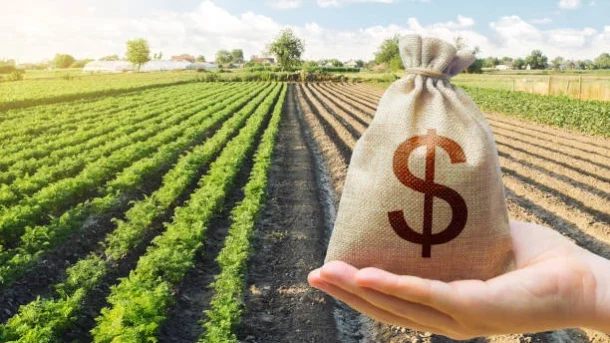
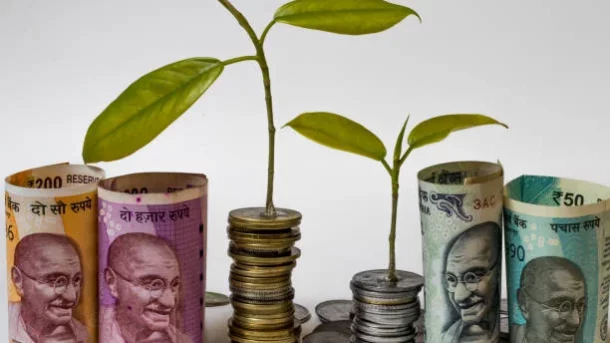
Impact investing: Current trends show a growing number of impact investors are allocating money to support food and agricultural systems. Along with financial gains, impact investment seeks to have a beneficial social and environmental impact. These investments are concentrated on fields like sustainable farming methods, smallholder support, agribusiness growth, and advancements in agricultural technology.

Climate-smart investments: Mitigation and adaptation to climate change are becoming important factors in agriculture investment. Investors are searching for projects and programmes that support climate-smart agriculture, such as agroforestry, sustainable land management, integrating renewable energy sources, and resilient farming practises. Green bonds, specialised climate funds, and climate finance structures are possible sources of funding.

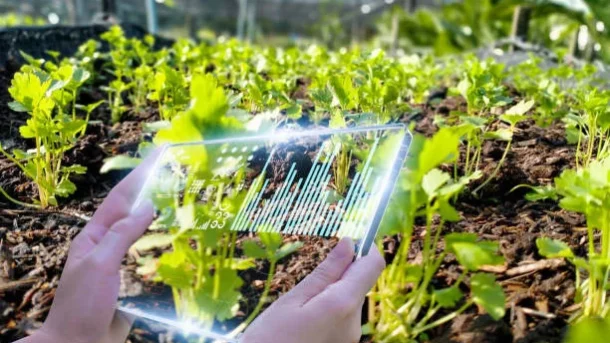
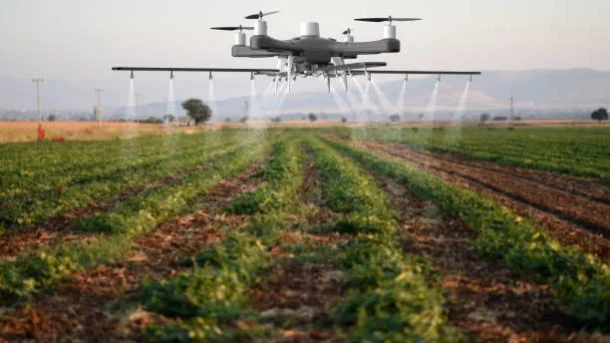
Agtech investments and digital agriculture: Agtech investments are becoming more and more popular. This involves financial commitments to robotics, drones, remote sensing, farm management software, and data analytics. Solutions for digital agriculture are thought to increase farming operations’ productivity, efficiency, and sustainability.
What are the implications of agricultural labor shortages and migration?

shortages

Migration and labour shortages in agriculture have substantial effects on the industry as well as society at large. Here are some significant ramifications.

Lowered agricultural productivity: Lowered agricultural output can result from a labour shortage. Farmers may experience poorer yields and financial losses as a result of delayed planting, insufficient cultivation, and incomplete harvesting due to a lack of available labour. Food security, supply chains, and food production may all be impacted by this.

Costlier production: As farmers compete for a small pool of workers, labour shortages frequently result in higher labour costs. In order to recruit and keep staff, farmers may need to give greater wages or additional incentives, which will increase the cost of production. Increased labour costs may affect agricultural product affordability, competitiveness, and farm profitability.

Mechanisation of agriculture and changes in agricultural practises: Labour shortages may lead to the adoption of labor-saving technologies. To compensate for labour shortages, farmers may invest in machinery, automation, and robots. While mechanisation can boost productivity and efficiency, it may also need for financial outlays, specialised knowledge, and changes to standard farm management procedures.

Dependence on migrant labour: In many areas, the lack of agricultural labour is alleviated by hiring migrant workers, frequently from foreign nations. Seasonal labour shortages in agriculture are largely met by migrant labour. However, relying heavily on migrant labour may present problems with regard to worker protections, labour laws, social integration, and issues with immigration law and policy.

What are the challenges and opportunities in agricultural research and development?

agricultural research and development

Agricultural research and development (R&D) presents a variety of opportunities as well as obstacles. Here are some major issues and chances in agricultural research and development.

Feeding a growing population: With the expectation that there will be approximately 10 billion people on the planet by the year 2050, agricultural R&D must find ways to increase food production in order to keep up with the demand. To achieve this, high-yielding, climate-resilient, nutrient-dense crop types must be created, along with efficient and sustainable production methods.

Climate change and environmental sustainability: Climate change has an impact on agriculture, including altered weather patterns, a rise in the frequency of extreme weather, and altered dynamics of pests and diseases. To reduce greenhouse gas emissions, protect natural resources, and improve ecosystem health, agricultural research and development must create climate-smart practises, robust crop types, and sustainable production methods.

Resources: The difficulty of resource limits, such as land availability, water scarcity, and deteriorating soil fertility, must be addressed by agricultural R&D. For agriculture to be sustainable, it is essential to develop methods and technology that maximise resource utilisation, encourage effective irrigation, improve soil health, and make use of marginal lands.

Development of efficient and long-lasting strategies for managing pests and diseases is a challenge for agricultural R&D. Pests and diseases can significantly lower crop quality and diminish yields. To create integrated pest management plans, resistant crop varieties, biocontrol tactics, and diagnostic tools for early diagnosis and efficient management, research is required.

How are agricultural subsidies and support programs changing globally?

Global interests, trade agreements, and the requirement to address numerous issues in the agricultural sector are driving changes in agricultural subsidies and support programmes. Here are some noteworthy developments and trends in agricultural assistance and subsidy schemes.

Focus shifting to sustainability: Through incentives and support initiatives, sustainable agriculture practices are being promoted more and more. The adoption of ecologically friendly farming techniques like organic farming, agroecology, conservation agriculture, and the utilisation of renewable energy sources is increasingly being encouraged by governments. Subsidies are frequently associated with particular sustainability results, including lowering greenhouse gas emissions or enhancing soil health.

Direct payments and income support: Several nations have moved away from production-based subsidies and towards more direct payments and income support initiatives. Governments are implementing programmes that offer financial aid to farmers based on variables like farm size, historical income, or environmental stewardship rather than offering subsidies connected to particular crops or production levels. With less production distortion and more support for diversification, this change intends to give farmers stability and financial support.

Governments are putting more emphasis on risk management and insurance programmes to assist farmers in reducing the effects of unforeseen catastrophes like natural disasters, market volatility, or crop failures. These initiatives offer monetary security and stability, enabling farmers to control risks and bounce back from setbacks.

What is the role of nanosensors in precision agriculture?

nanosensors

By providing real-time and extremely localised data on numerous factors relating to soil, plants, and environmental conditions, nanosensors play a significant part in precision agriculture. These tiny sensors, which are typically nanoscale in size, have a high sensitivity and precision for detecting and measuring particular features. The following are some crucial functions of nanosensors in precision agriculture.

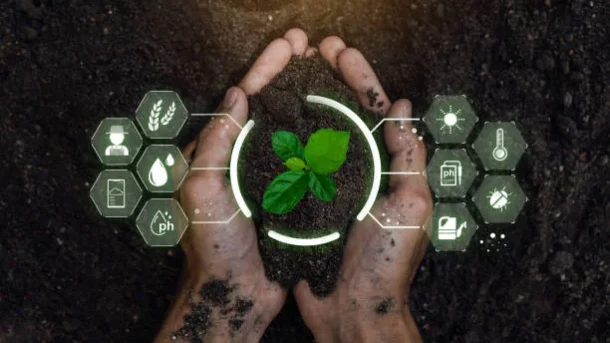
Nanosensors can be used to monitor soil parameters, such as salinity, pH, moisture content, and nutrient levels. Farmers can optimise irrigation schedules and fertilisation practises based on the particular requirements of various soil locations thanks to the accurate and localised data they can supply.

Real-time monitoring of plant health metrics, such as leaf temperature, chlorophyll content, and nutritional status, is made possible using it. Nanosensors assist farmers in taking prompt action to treat stress or nutrient deficits by spotting early warning indications, enhancing crop health and productivity.

Monitoring particular biomarkers or volatile organic molecules released by infected plants allows nanosensors to identify the presence of pests and illnesses in plants. Early detection enables farmers to execute focused pest control strategies, minimising crop losses and the need for broad-spectrum chemical applications.

How are AI and computer vision being used for weed identification and control in Agriculture?

computer

Agriculture weed identification and management are greatly aided by AI (Artificial Intelligence) and computer vision technologies. To identify and manage weeds, computer vision and artificial intelligence are being employed as follows.

Weed Detection and Segmentation: Using computer vision and AI algorithms, photos or videos taken in the field can be examined to identify and separate weeds from nearby crops or soil. To learn the visual traits and patterns of various weed species, deep learning models, such as convolutional neural networks (CNNs), are trained on massive datasets of weed photos. Even under difficult and congested field circumstances, these models are able to distinguish and identify weeds properly.

AI-based systems can use species categorization and weed identification to make recommendations for the best herbicide for efficient weed management. AI algorithms can recommend the best herbicide or herbicide combination to target a particular weed species, maximising effectiveness while minimising environmental damage, by analysing the identified weed species and their accompanying herbicide resistance patterns.

Precision Weed Control: AI and computer vision technology can direct methods for precise weed control, such as mechanical weed removal or targeted spraying. Automated systems can precisely spray pesticides or eradicate specific weeds with little effect on neighbouring crops once weeds have been located and identified. This lessens the requirement for widespread herbicide application and reduces the use of chemicals, leading to financial savings and positive effects on the environment.

What are the advancements in automated harvesting systems for fruits and vegetables?

harvesting

To alleviate labour shortages, boost productivity, and cut costs in the agriculture sector, automated harvesting methods for fruits and vegetables are continuously improved. Here are a few of the noteworthy developments.

Robotic devices are being developed to carry out harvesting activities that were formerly handled manually. These robots have sensors, cameras, and robotic arms that allow them to recognise ripe fruits and vegetables, gently grip them, and pick them without inflicting any harm. With the use of GPS or computer vision technologies, they can move throughout fields.

Advancements in soft gripping technology have been designed to handle delicate fruits and vegetables without breaking them. Harvesting may be done gently and precisely thanks to the use of soft grippers that resemble the human hand’s delicate touch and conform to the shape and texture of the product.

Robotic Harvesting Systems: Specialised harvesting systems are being created for several kinds of crops. For instance, specialised robots have been developed to gather high-value crops like strawberries, tomatoes, lettuce, and other. These robots are built to manoeuvre through hazardous settings, deal with the unique traits of each crop, and adjust the procedure as necessary.

What are the benefits of using satellite-based weather forecasting in agriculture?

satellite

Utilising blockchain and satellite technology, every transaction and movement of food products from their point of origin to their final destination is tracked in a transparent and immutable ledger. A safe and auditable record of the product’s journey is ensured by the ability of every stakeholder in the supply chain, including farmers, processors, distributors, and retailers, to submit data into the blockchain.

Through the provision of a decentralised and tamper-proof system for tracking and confirming the authenticity and integrity of food products and this technology facilitates traceability.

QR codes and barcodes are frequently used on food packaging to give consumers access to thorough information on the product’s origin and manufacturing processes, and supply chain trip. Consumers can track the merchandise by using a smartphone to scan these codes.

Satellite remote sensing data is critical for monitoring soil, drought and snow cover, and crop development. Satellite rainfall estimates, for example, assist farmers in planning the quantity and timing of irrigation required for their crops.

For example, weather forecasting enables you to properly plan your farm operations, such as planting, irrigation, fertilizer application, pruning/weeding, harvesting or livestock mating and since farming and agriculture as a whole chiefly depend on seasons and weather.

How are smart farming applications being used for food traceability?

food traceability

Applications for smart farming are being utilised more frequently to improve food traceability throughout the agricultural supply chain. To ensure transparency and traceability from farm to fork, these applications make use of a variety of technology and data-driven solutions. For food traceability, the following smart farming applications are used.

IoT Sensors and RFID Tags: Throughout the supply chain, different parameters are tracked and monitored using Internet of Things (IoT) sensors and Radio Frequency Identification (RFID) tags. To gather information on temperature, humidity, soil moisture, and pesticide use, IoT sensors can be installed in fields and farms. To track the movement and status of individual products as they travel through the supply chain, such as crates or pallets, RFID tags are affixed to them.

Traceability within food control systems is applied as a tool to control food hazards, provide reliable product information and guarantee product authenticity. Recall or Product Recall is defined as “the action to remove food from the market at any stage of the food chain, including that possessed by consumers”.

What is the role of remote-controlled drones in agricultural surveillance?

Feature Selection: To provide precise predictions, machine learning algorithms need pertinent features. The most important factors that have an impact on market demand are determined using feature selection approaches. Product characteristics, pricing details, marketing initiatives, seasonality, and outside variables like economic indicators are a few examples of these elements.

Regression, decision trees, random forests, and neural networks are just a few examples of the machine learning models that may be trained utilising preprocessed data. The models discover patterns and connections between the feature inputs and market demand. The models’ internal parameters are changed during training in order to reduce prediction errors.

Model Evaluation and Validation: The trained models are evaluated and validated using historical data that was not used for training. This helps assess the performance and accuracy of the models in predicting market demand. Various evaluation metrics, such as mean absolute error (MAE) or root mean square error (RMSE), are calculated to measure the predictive performance.