
Orange coloured pustules appear on the lower surface of the leaflets. In severe cases, lesions also appear on other plant parts expect flowers. Removal of infected plant parts. Collect seed from disease free areas. Seed treatment with Tebuconazole 2ds @ 1g or 3 g of mancozeb/kg of seed. Spraying of mancozeb @1000 g or Chlorothalonil @1000 g or Tridemorph @1000 g /ha in 500 liters of water at 15 days interval starting from disease appearance.
ScientificFarmingWeb
What are the storage pests occurring in groundnut?
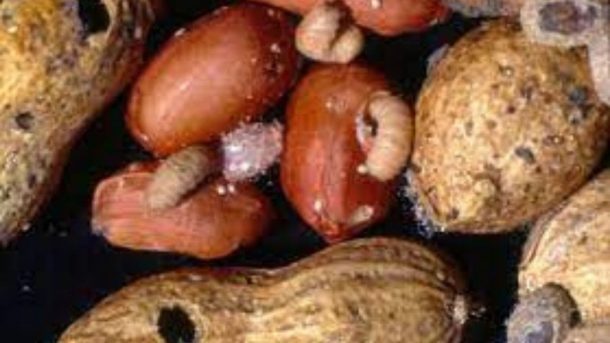
Groundnut bruchid is the pest which occurs in storage. Spray 5% Malathion on pod and gunny bags. Fumigation with aluminium phosphide tablets 3-5 tablets /tonne of groundnut pods. Mixing neem oil 5 ml/kg of pods protect from bruchid.
How red hairy caterpillar is managed in Groundnut?
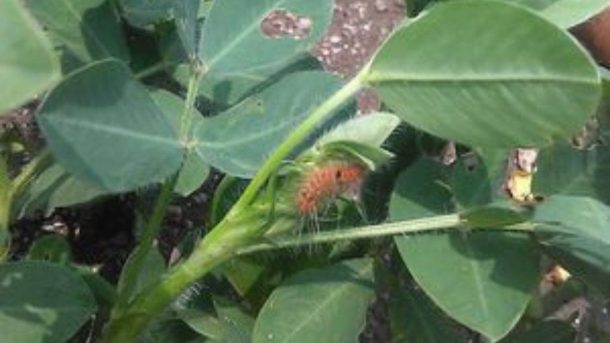
Pre-monsoon deep ploughing (two/three times) will expose the hibernating pupae to sunlight and predatory birds. Removal and destruction of alternate wild hosts which harbour the hairy caterpillars. Use trap crops around main crop E.g.: Cowpea. Monitor the emergence of adult moths through light trap. Organize bonfires on community basis from 7.30 PM to 11.0 PM to attract the newly emerging moths for 3 or 4 succeeding days when good showers are received. Collect and destroy egg masses and early instars larvae. Dust Quinalphos or Carbaryl @ 25 kg /ha to control early instars of the caterpillar. To control grown up larvae, spray Dimethoate @ 2.0 ml or Monocrotophos1.6 ml/l of water. Trap and kill the migrating larvae in deep cut straight trenches by dusting Methyl parathion 2% in the trench around the field.
What are the damage symptoms of Red hairy caterpillar in groundnut?
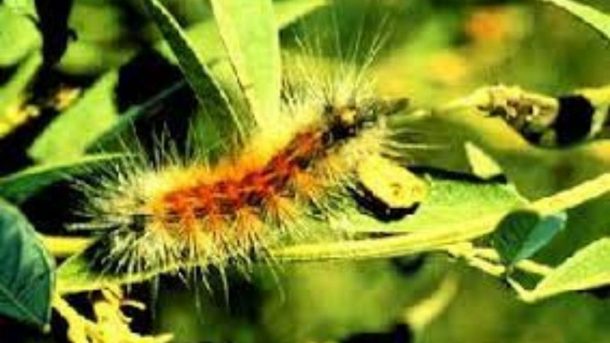
Young larvae feed gregariously on the under surface of leaves. Grown up larvae feed individually by devouring leaves, flowers and growing points. When the pest is severe only the bare stem points remain resulting in heavy yield loss. Early instar larvae are ash brown in colour, but when fully grown assume reddish colour with hairs on the body.
What are the damage symptoms of leaf miner in groundnut?
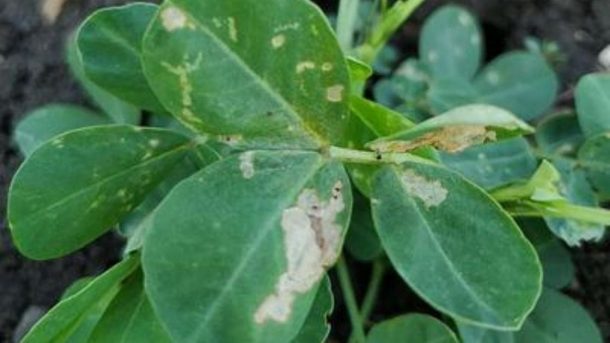
The leaf miner is also one of the major pests of importance on groundnut crop all over India especially when raised under rainfed conditions. Bunch variety is generally severely infested. The larva mines into tender leaflets or it webs together adjacent leaflets and feeds on the tissue. The leaflets get distorted and due to feeding get dried up in course of time. In a very severely infested crop, the whole field presents a burnt-up appearance and the small adults could be seen flying in large numbers when one walks through the crop. The loss in yield of pods is also considerable.
How aphids are controlled in groundnut?
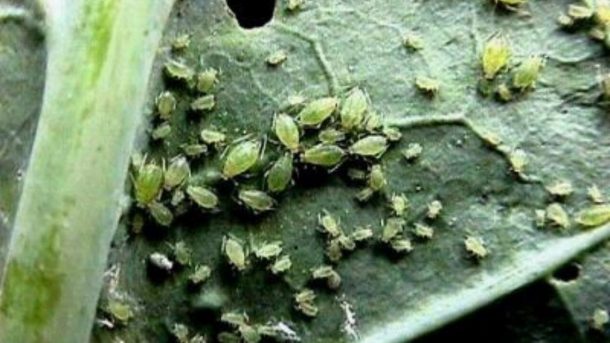
Late sowing of crop should be avoided. Use of Neem based compounds which will be helpful as a deterrent. Use of resistance/ tolerant varieties as well as growing of attractant crops i.e. Carrot family, sunflower family and marigold (to attract syrphid fly, lacewing, damselfly and ladybird beetle). Use of need basis chemical compounds i.e., Imidacloprid and Fipronil for sucking pests because these compounds having lower hazards effects on other fauna and flora.
The Coccinellid beetle, Coccinella septempunctata (Coleoptera: Coccinellidae) and Syrphid fly, Ischiodon javana (Wiedemann) (Diptera: Syrphidae) are the main predators of this pest.
What are the damage symptoms of groundnut aphid?
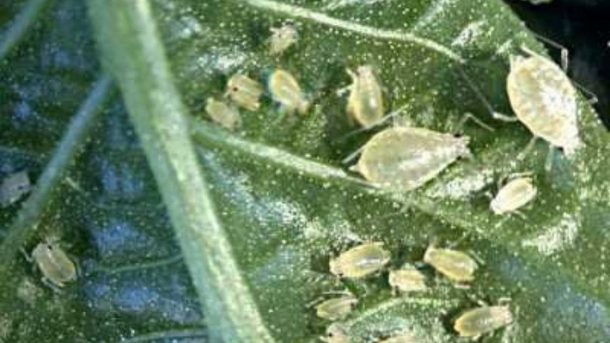
This is one of the most serious pests of groundnut. The nymphs and adults suck the sap, usually from the underside of leaves. Infestation in the early stages causes stunting of the plants as well as reducing their vigour. When the attack occurs at the time of flowering and pod formation, the yield is reduced considerably. Infestation on the groundnut crop usually occurs 4-6 weeks after sowing. The aphid is also vector of rosette disease of groundnut.
How field preparation is done for groundnut cultivation?
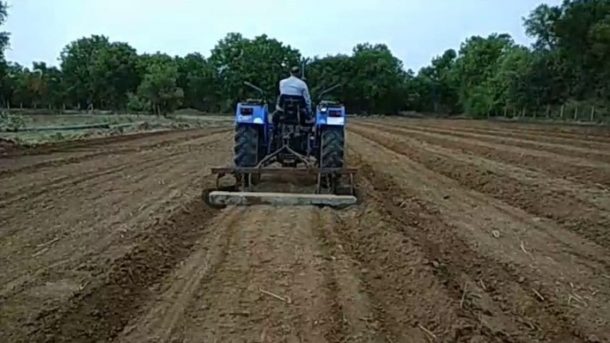
Although the groundnut is a deep-rooted crop, but looking to its underground pod forming habit, deep ploughing should be avoided, because it encourages development of pods in deeper layers of soil which makes harvesting difficult. Adequate rains at sowing are necessary for proper germination and good plant growth and well-distributed rainfall during the crop period ensures normal vegetative growth, increased flowering and proper development of pods. One ploughing with soil turning plough followed by two harrowing would be sufficient to achieve a good surface tilth up to 12-18 cm depth.
What are the critical stages in groundnut for irrigation?
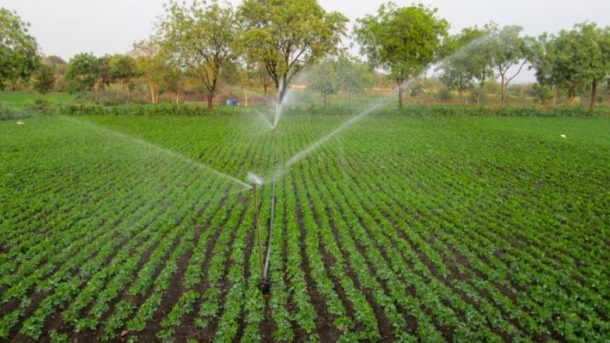
Generally, 8-9 irrigations are required for the crop season. After the crop is established, it is necessary to withheld the irrigation for about 25 days and create stress which will encourage early flush of heavy flowering, root development, nodulation and checks excessive vegetative growth. The first irrigation should be given immediately after sowing the crop. The second irrigation is given when the flowering is observed in 50 % plants. During pegging and pod filling, the irrigation should be given at an interval of 8-10 or 10-12 days. Fifty to eighty (50 – 80) days after sowing are most critical period and during this period there should not be a water shortage because peg penetration, pod formation take place during this period.
How weeds are controlled in groundnut crop?
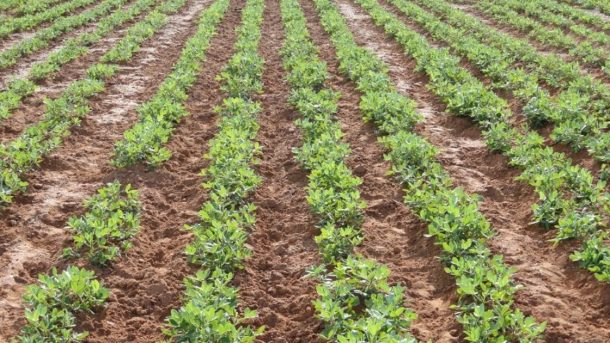
Two hand weeding or interculturing twice or thrice between the rows till the crop permit (up to flowering only) should be carried out for controlling the weeds. In scarcity and unavailability of labour, pendimethalin @ 1.0 kg/ha or fluchloralin @ 1.5 kg/ha as preemergence application is found effective for controlling the weeds.
In summer groundnut, Oxyfluorfen @ 0.24 kg/ha as pre-emergence followed by one hand weeding and interculturing at 45 days of sowing should be carried out for controlling the weeds. If it is not possible to spray the above weedicide after sowing the crop, same should be applied at the same rate as pre-planting. In south Saurashtra, for effective control of weeds in summer groundnut, two hand weeding and interculturing at 20 and 40 days of sowing should be carried out. For chemical weed control, fluchloralin or pendimethalin @ 1.0 kg/ha as pre-emergence along with one hand weeding and two interculturing should be carried out.