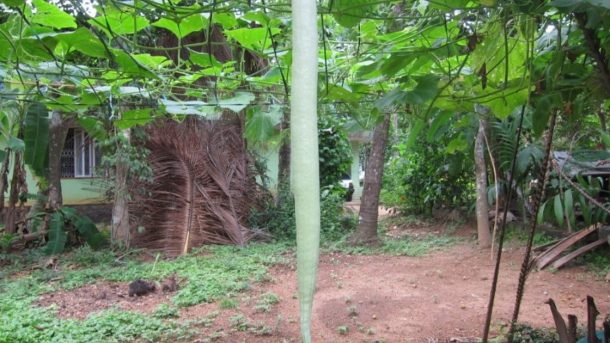
The most-ideal soil for the cultivation of snake gourd is sandy loam or loam, which is well drained and rich in organic matter. The soil pH ranges from 6.5 to 7.5 is most ideal for its successful cultivation. The field is prepared to a fine tilth by repeated ploughing and planking.
ScientificFarmingWeb
What is the climatic requirement for Snake gourd cultivation?
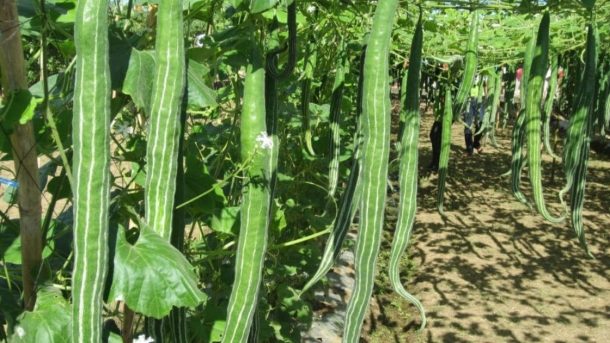
Snake gourd needs a warm and humid climate for better plant growth and fruit development. A temperature range of 30-35°C with a minimum threshold limit of 20°C is ideal for its successful cultivation since temperature below 20°C restricts plant growth, and temperature above 35°C is harmful for its growth, flowering, and fruiting.
What are the symptoms of Aonla rust disease and how it can be managed?
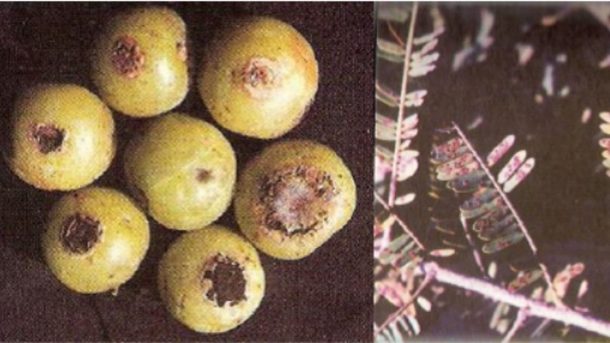
It is also known as ring rust of aonla. It is caused by Ravenelia emblicae var. fructoidae. The conspicuous black pustules appear on leaflets and fruits which later form a ring, join together covering a large area. Pustule’s rupture exposing black spore mass. Pinkish pustules develop on leaves which may be isolated or in group. The affected fruits drop off prematurely. Desi variety is highly affected but Chakaiya and Banarasi are free from it.
It can be controlled by 3-4 sprays of wettable sulphur @ 5 g/l of water at an interval of one month or mancozeb @ 2.5 g/l of water at an interval of 15 days.
How many days Aonla can be stored?
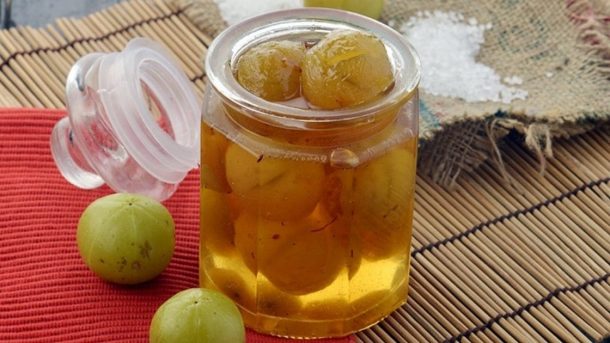
Aonla fruits can be stored for 6-9 days at ambient temperature. However, with a salt solution it can be stored up to 75 days. Fruits can be cut in to pieces and soaked with salt and ajwain solution and dried under sun. It can be stored for long time without loss of ascorbic acid.
How grading is carried out in Aonla?
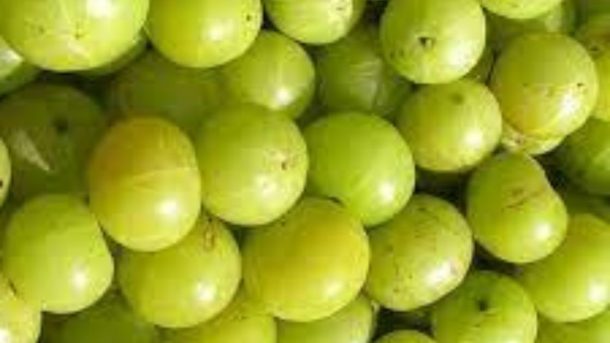
Since, very little work on grading in aonla is reported. However, aonla fruits are graded into 3 grades i.e., large sized, small sized and blemished fruits. Large sized, sound fruits are mostly utilized for preserve and candy; small sized for Chavan rash and trifala and blemished fruits for powder and shampoo making.
When and how harvesting of Aolna is carried out?
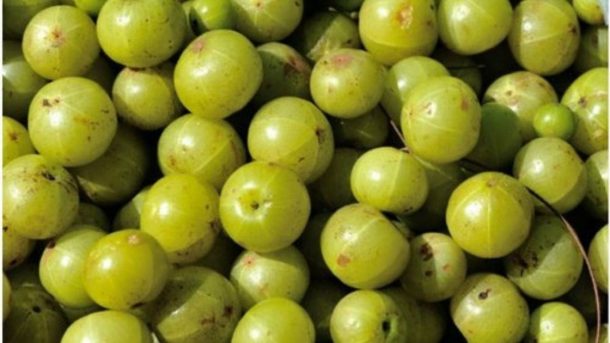
Aonla fruits are ready to harvest during November-December. Maximum ascorbic acid content is observed in mature fruits, while immature fruits are acrid and low in ascorbic acid content and minerals. Fully developed fruits are harvested. Delayed harvesting results in heavy dropping of fruits particularly in Francis and Banarasi. It also adversely affects the following years bearing. Harvesting should be done in early or in late hours of the day. The method of harvesting is hand picking of individual fruits. Individual fruits are plucked by climbing on the tree with the help of pegged bamboo or ladder. A budded/grafted aonla tree starts bearing third year onwards after planting, whereas a seedlings tree may take 6-8 years. Vegetatively propagated plants attain full bearing within 10-12 years and may continue to bear for 60-75 years of age under well managed conditions.
How grafting is done in Aonla cultivation?
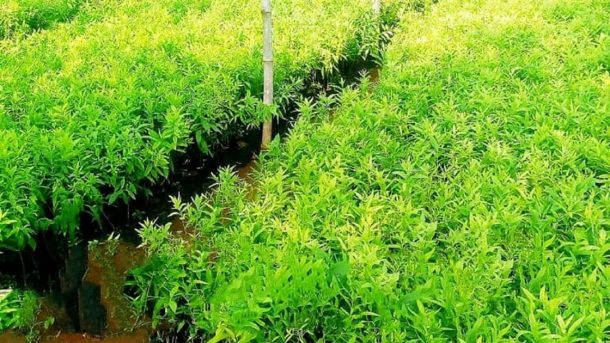
Grafting is also one of the methods for raising good propagules. Soft wood grafting has been attempted with 70 per cent success at the site of terminal shoot of the rootstock raised in situ. It would be advisable to raise seedling rootstocks in situ and graft them with superior types of scions particularly in dry areas where mortality of budded plants is usually high. Besides, veneer and cleft grafting has also been attempted successfully.
How budding is done in Amla cultivation?
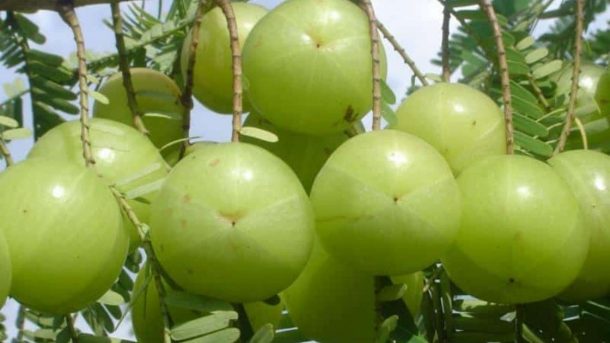
Of various methods of vegetative propagation, budding has been found to be most practical. Shield budding and patch budding are the commercial methods of aonla propagation. One year old seedlings with a girth of about 1 cm should be shield budded in early July with healthy and plump buds from new growth. Shield budding gives a success of 70-80 per cent. Higher percentage of bud-take has been recorded with patch methods under Jammu conditions.
What is NA-10 and it belongs to which cultivar?
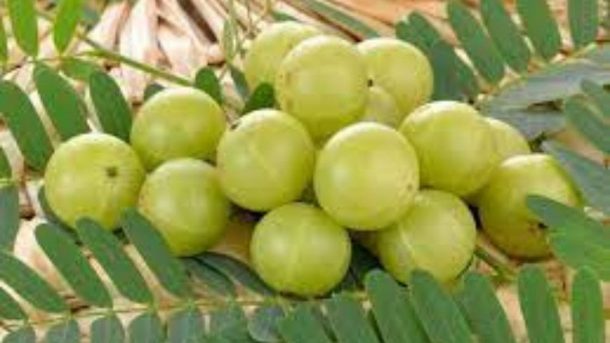
It is the cultivar of Aonla. Chance seedling developed from cultivar Banarasi, locally known as ‘Agra Bold’. Semi-tall and semi-spreading growth habit with deep pink and long inflorescence. Fruits are round and brown in colour, growth initiates early in season, at pea stage appears pinkish yellow, which disappeared gradually later on. Fruit is flattened round with moderate size. Fruit skin rough, yellowish green with pink tinge. Flesh is slightly fibrous, whitish green, soft, juicy and highly astringent. It is the earliest maturing variety with good keeping quality. Mildly susceptible to fruit Necrosis.
What is NA-5 (Kanchan)and it belongs to which cultivar?
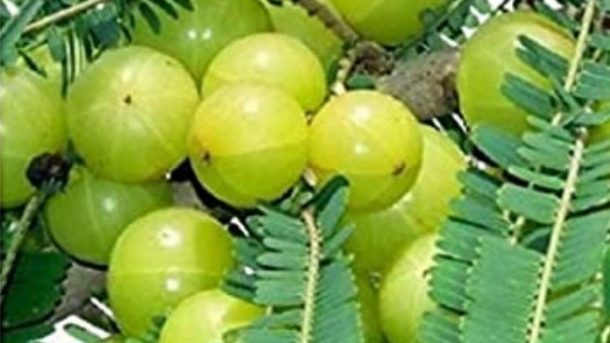
It is the cultivar of Aolna. It is also a seedling selection form Chakaiya. It is a heavy and regular bearing cultivar with medium sized, high fibre content fruits. It is more preferred by industries for pulp extraction and manufacturing of various products. Fruit is small to medium (30-40 g), skin smooth, yellowish in colour and ideally suited for preparation of pickles. The variety has been adopted very well in the semi-arid regions and produce 150-200 kg fruits per tree. Late maturity, fruit has a good keeping quality and is free from necrosis.