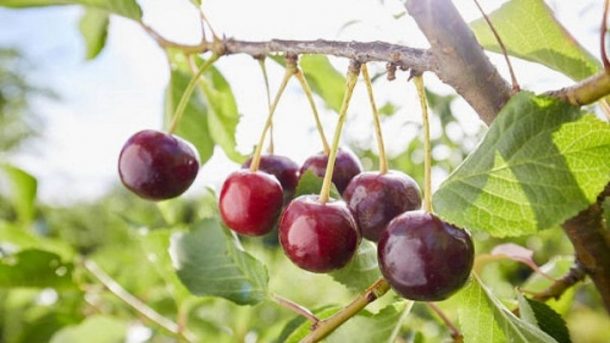
As we all know that cherry grows well in cold climatic conditions, it requires about 1200 hr to 1500 hr chilling period during winter season. Cherry fruits are grown successfully at the height of 2500 meters above sea level. In India, cherry commercial cultivation is carried in the states of Himachal Pradesh, Jammu and Kashmir and Uttar Pradesh sue to suitable climate. An annual rainfall of 100 to 125 cm is required for its growth. Spring frost should be avoided as the cherry blossom is sensitive to frost.
ScientificFarmingWeb
What is average yield of Gerbera?
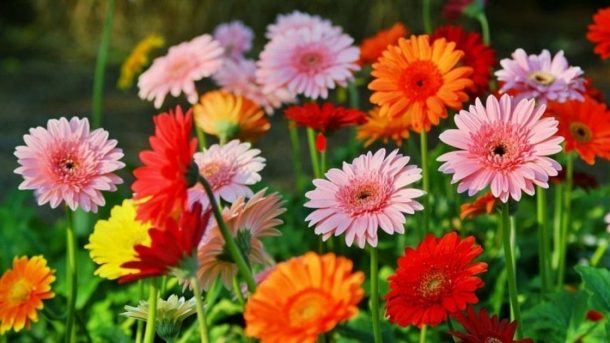
Any crop yield depends on the farm management practices, variety and soil type. In Gerbera cultivation, following is the average yield in open and greenhouse cultivation. Under open field/shade net cultivation: 140 to 150 cut flowers/square meter/year can be expected. Under Greenhouse cultivation: 225 to 250 cut flowers/square meter/year can be obtained.
When harvesting is done in Gerbera flower?
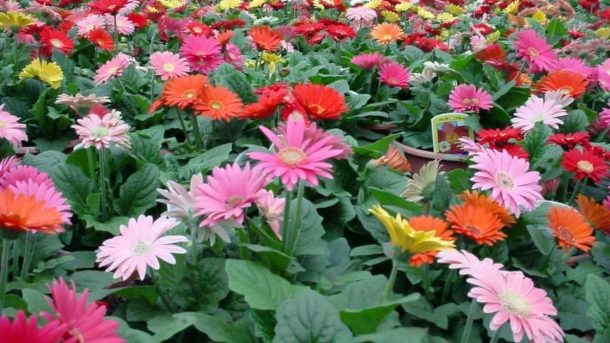
Normally, Gerbera plants starts flowering in about 3 months after planting. Harvesting is done, when flowers completely open or when outer 2 to 3 rows of disc florets are perpendicular to the stalk. To improve the flower life, Flower stalk should be soaked in solution of Sodium hypochlorite (6 to 7 ml/liter of water) for about 5 hours.
What are the basic weeding operations done in Gerbera flower farming?
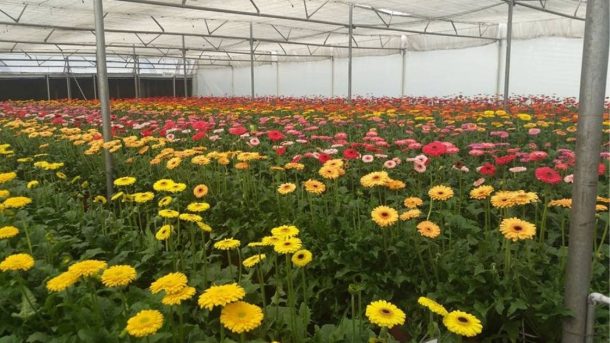
Remove the Gerbera flower buds up to 8 weeks (2 months) & then allow for flowering. For easy absorption of water, fertilizer and providing air circulation to the roots, rake the soil once in 2 weeks. Always remove older leaves for allowing new leaf growth.
How Weeds are Controlled in Gerbera Flower Farming?
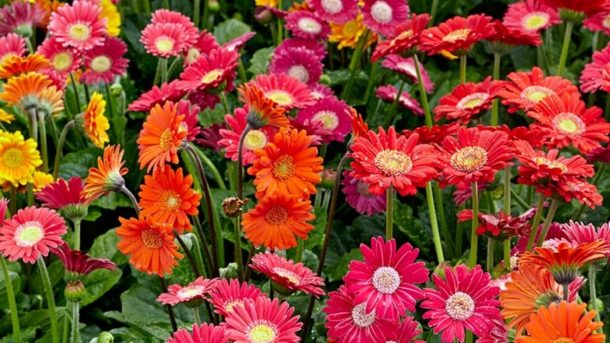
Weed control is an important operation in Gerbera cultivation and should be carried once in 2 weeks for 3 first months of plantation. After 3 months, Subsequent weeding should be done @ 30-day interval. Hand weeding should be done whenever required.
What is the irrigation requirement for gerbera flower farming?
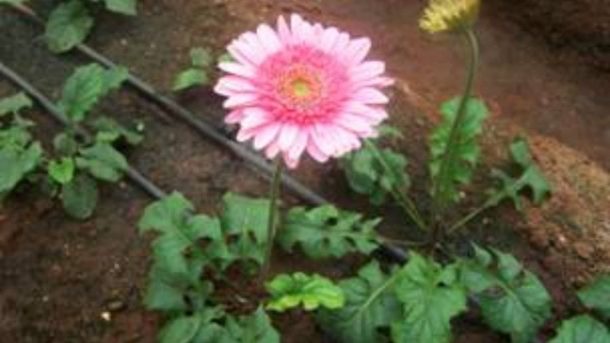
Immediate Irrigation is required after planting and continue to irrigate for a month to enable a good root establishment. Thereafter, drip irrigation should be done once in 2 days @ 4 liter/drip/plant for 15 minutes. An average requirement of water up to 700 ml/day/plant.
What are the Manures and Fertilizers required for Gerbera Farming?
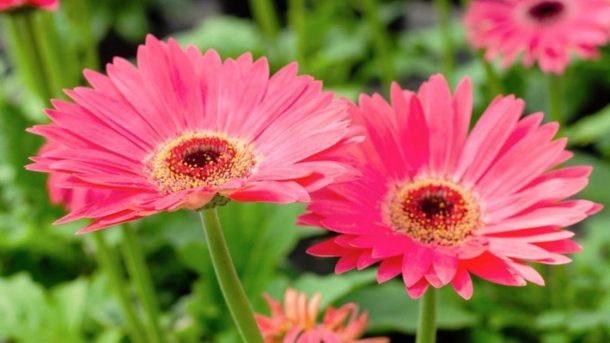
In order to have better growth and excellent yield of Gerbera flowers, field/soil should be incorporated with plenty of organic manure and other major, minor nutrients. Following is the manures and fertilization schedule in Gerbera cultivation.
Apply 8 to 9 kg of Farm Yard Manure (FYM)/square meter. Apply NPK in 12:15:20 grams/square meter during first three months after plantation. Apply NPK in 15:10:30 grams /square/month from fourth month when flowering starts, apply in two split doses @ 2 weeks interval.
Apply micro-nutrients: Spray calcium, boron, copper & magnesium @ 0.15 percent, which is 1.5 grams/liter of water once in 4 weeks gives excellent quality Gerbera flowers.
What is the Spacing maintained in Gerbera Flower Farming?
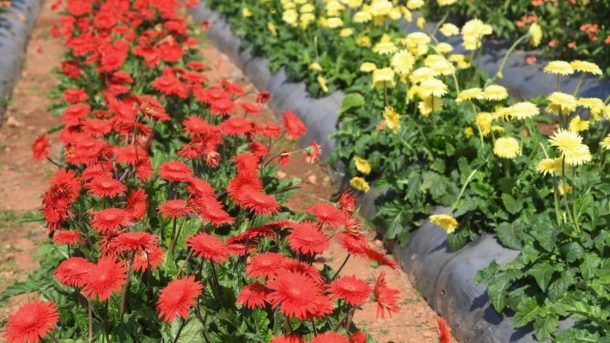
Spacing of 25-30 cm within the row & 30-40 cm between the rows should be maintained to accommodate 7 to 10 plants/square meter.
How Planting is done in Gerbera Farming?
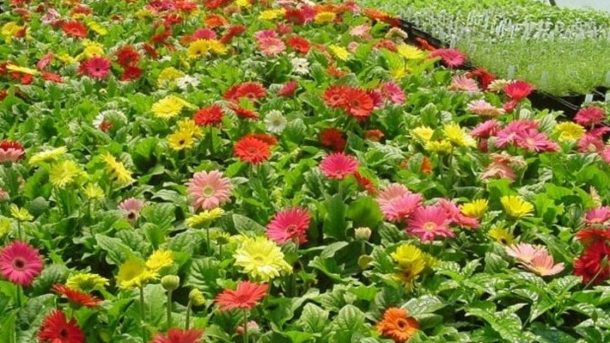
Raising gerberas in bed improves air circulation (Aeration) & drainage. Keep the crown of gerbera plants 1 to 2 cm above the soil level at the time of planting as the root system establishes deep in soil and pulls down from the ground level.
How Propagation is done for Gerbera Flower Farming?
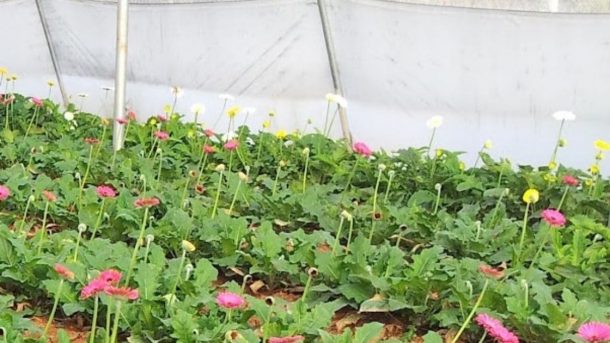
Gerbera plants commercially propagated through suckers & tissue culture.
Division and Micro-Propagation are the two propagation methods used in Gerbera cultivation.
In Division method, propagation is done through division of clumps in June -July month and this most commonly used method.
In Micro-propagation method flower heads, shoots tips, flower buds, inflorescence, capitulum & mid ribs are used as ex-plants. This method, is gaining popularity day by day for fast and large-scale production.