POSTEDITOR OFFICE

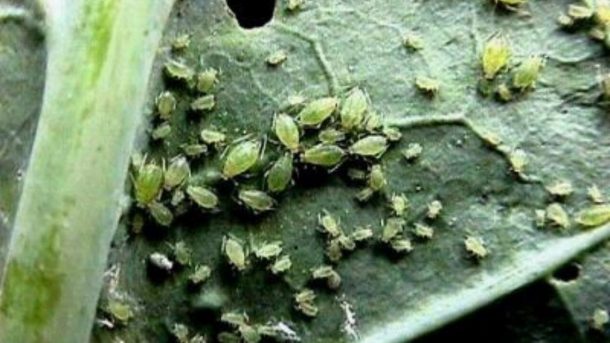
How aphids damage fennel farming?

aphids

Aphids can damage fennel farming by feeding on the sap of fennel plants, causing stunted growth and wilting. They also secrete a sticky substance known as honeydew, which can promote the growth of sooty mold and attract other pests. 

In severe infestations, aphids can weaken the plants and reduce crop yields. To prevent aphid damage in fennel farming, spray dimethoate 30 EC @ 10 ml per 10 lit of water on 50 percent plants having flowering.The higher activity of honeybees is observed during 12 noon to up to 4.00 evening and hence avoid the spraying during this period.

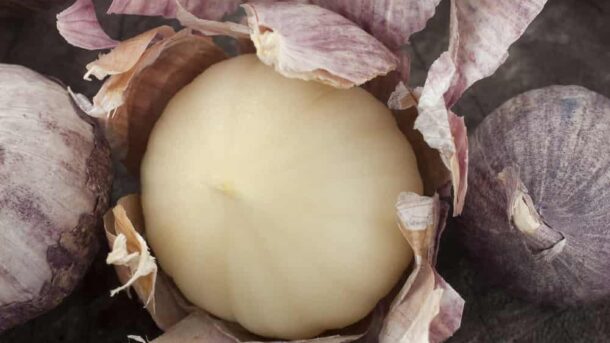
Causes and treatment for Clove rot in garlic.

Clove rot

Clove rot is a fungal disease that affects garlic bulbs and can cause significant yield losses. The disease is caused by the fungus Fusarium oxysporum and is most commonly found in warm and humid growing conditions.

The following are some of the causes of clove rot in garlic:

  • Overwatering: Excessive moisture in the soil can lead to the development of clove rot.
  • Poor air circulation: Stagnant air can increase the humidity around the garlic bulbs and create an environment favorable for fungal growth.
  • Damaged cloves: Cloves that are damaged during harvesting or storage are more susceptible to clove rots.

To prevent and treat clove rot in garlic, it is important to follow these steps:

  • Proper storage: Store garlic bulbs in a cool, dry place to prevent the growth of fungi.
  • Good sanitation: Clean up any plant debris in and around the garlic beds to reduce the risk of disease.
  • Crop rotation: Planting garlic in the same area year after year can lead to the buildup of fungal pathogens in the soil.
  • Fungicide application: detected, fungicides such as captan or mancozeb can be used to control the spread of the disease.

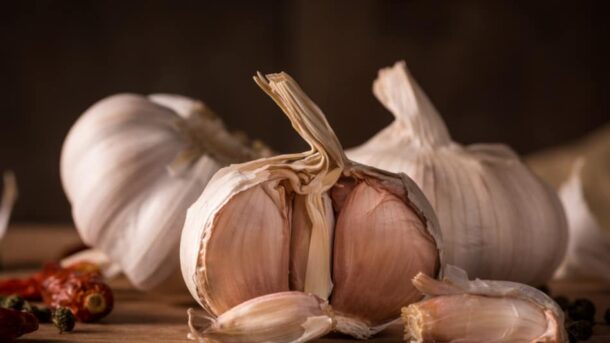
What is Elephant garlic?

Elephant garlic

Elephant garlic is a type of garlic that is larger in size and has a milder flavor compared to traditional garlic. Despite its name, elephant garlic is actually not a true garlic, but rather a member of the leek family.The bulbs, weighing up to 500g, form under the soil, reaching 10 cm in diameter and consisting of 5 or 6 large cloves, surrounded by small bulblets.

This garlic has a large, bulbous head that can be up to four times larger than a traditional garlic bulb. The cloves are also much larger and have a sweeter, milder flavor than traditional garlic. This makes elephant garlics a popular choice for those who are looking for a less pungent garlic flavor in their cooking.

Elephant garlics are easy to grow and can be harvested in late summer. It can be used in a variety of dishes, such as roasted whole, sautéed, or minced and added to sauces, soups, and other recipes.

What is Hardneck Garlic?

Hardneck Garlic

Hardneck garlic is a type of garlic that is characterized by a hard stem (or “neck”) that grows from the center of the bulb. This hard stem is a key distinguishing feature of hardneck garlic, as it differentiates it from softneck garlic, which does not have a hard stem.

Known for larger, more robust bulbs and has a stronger, more pungent flavor than softneck garlic. It is also easier to peel and typically has fewer cloves per bulb compared to softneck garlic.

Hardneck garlic is best suited for cooler climates, as it is more hardy and can survive winter temperatures better than softneck garlic. It is also preferred by some farmers and garlic enthusiasts due to its unique flavor and versatility in cooking. It is generally produces a single ring of 6-10 cloves.

Overall, it is a type of garlic that is well-regarded by many for its taste, versatility, and resilience in growing conditions, making it a popular choice for both culinary and farming purposes.

How does livestock affect the environment ?

livestock affect

Livestock production has a significant impact on the environment, both positively and negatively. Some of the ways that livestock affect the environment include:

  • Greenhouse gas emissions: Livestock farming significantly affects greenhouse gas emissions, including methane and carbon dioxide. This contributes to global warming and climate change.
  • Land use: Livestock production requires large amounts of land, which can result in deforestation and loss of natural habitats. This can lead to soil erosion, loss of biodiversity, and decreased water quality.
  • Water use: livestock affect production also requires large amounts of water, which can result in water scarcity and reduced water quality in areas where water is limited.
  • Waste management: Livestock produces large amounts of manure, which can be a significant source of pollution if not properly managed. Manure can leach into groundwater and streams, causing environmental problems.
  • Biodiversity: Livestock production can also negatively impact biodiversity, as large-scale grazing and the conversion of natural habitats into agricultural land can result in the loss of species and the degradation of ecosystems.

On the positive side, livestock can also provide important environmental benefits, such as the production of organic fertilizer, the creation of grazing lands that support wildlife, and the protection of landscapes through sustainable land use practices.

Which are Vegetable oil yielding plants ?

Vegetable oil

There are many different vegetable oil yielding plants, but some of the most common include:

  • Soybean: This is one of the most widely grown oilseed crops, producing a high-quality vegetable oil that is used in cooking, frying, and for making biodiesel.
  • Rapeseed (Canola): This is another important oilseed crop, which produces a light-colored oil that is used for cooking and in the food industry.
  • Sunflower: Sunflower seeds are the source of sunflower oil, which is used for cooking and in the food industry.
  • Peanut: Peanut oil is a popular cooking oil that is high in monounsaturated and polyunsaturated fats.
  • Palm: Palm oil is extracted from the fruit of the oil palm tree and is used for cooking and in the food industry.
  • Safflower: Safflower seeds are the source of safflower oil, which is used for cooking and in the food industry.
  • Olive: Olive oil is a popular cooking oil that is high in monounsaturated fats and is also used in cosmetics and pharmaceuticals.
  • Coconut: Coconut oil is extracted from the meat of the coconut and is used for cooking and in the food industry.

What is mushroom compost?

mushroom compost

Mushroom compost is the sustainable process of producing compost for use in gardening and farming from waste materials generated by the mushroom growing industry. This compost is created by composting spent mushroom substrates, which are the materials used to grow the mushrooms, such as straw, horse manure and poultry litter.

The composting process is typically carried out in large piles or windrows and can take several months. The end result is a nutrient-rich compost that provides an excellent source of organic matter and essential plant nutrients.

Mushroom substrate can be used to improve soil fertility and structure in a variety of crops, including vegetables, fruits, and flowers.

How land is prepared for Broccoli Farming?

Broccoli

Land preparation for Broccoli farming :

  • Soil preparation: The soil should be well-drained, rich in organic matter and with a pH of 6.0 to 7.0. To prepare the soil, it should be cleared of all weeds, rocks and debris, and plowed or rototilled to a depth of about 8 to 10 inches.
  • Fertilizer application: Add compost or well-rotted manure to the soil before planting. A balanced fertilizer mix, such as 10-10-10, can be added to the soil, but be sure to follow the recommended application rates on the label.
  • Irrigation setup: Irrigation systems, like sprinklers or drip irrigation, should be installed, especially in low rainfall areas for broccoli cultivation.
  • Soil test: It is important to get a soil test before planting to determine the nutrient levels in the soil and any necessary adjustments that need to be made.
  • Rows and spacing: Rows should be spaced about 3 feet apart with plants spaced about 18 to 24 inches apart within the row. This will allow enough space for the plants to grow and develop properly.
  • Mulching: A layer of mulch should be applied to the soil between the rows to conserve moisture, suppress weeds and regulate soil temperature.
  • Proper weeding: Weeds should be kept under control by removing them by hand or using a hoe. Regular weeding is important to prevent competition for light, water and nutrients.

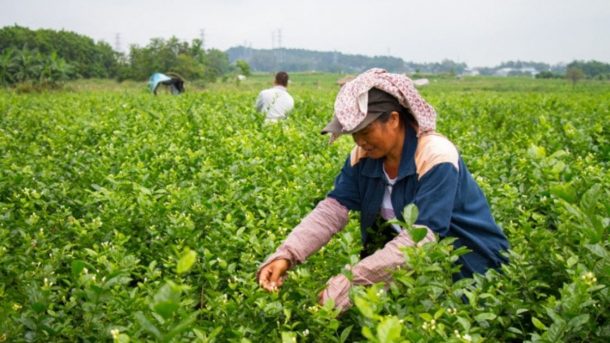
How to plucking and harvesting of tea leaves?

Jasmine

Plucking consists of harvesting 2 to 3 leaves and a bud. It is the most labour intensive operation in a tea industry and also decides the yield and quality of made tea. Normally, a pluckable shoot takes 60 to 90 days for harvesting since its sprouting from the axillary buds.

When the shoot is plucked upto mother leaf, it is known as light removing and if it is plucked below mother leaf, it is called hard removing. It is essential to add one tier of active maintenance foliage to the bush every year. This is done by mother leaf plucking during January to March.

During the rest of the period level plucking can be carried out.Consequent to plucking, bush height increases every year in the order of 10cm over tipping height in the first year, 7.5cm, 7.5cm, 5cm and 5cm over the previous year height in the second, third, fourth and fifth year respectively.

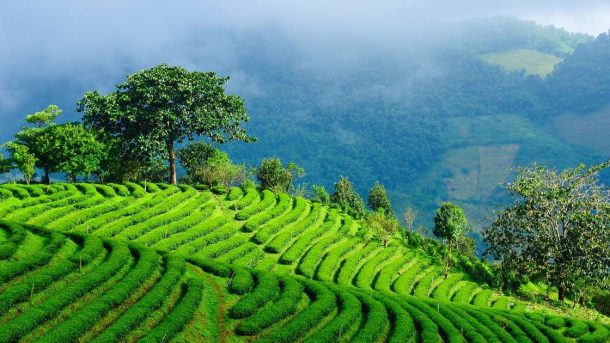
What are the fertilizer recommendation for tea cultivation?

tea

Tea responds to manuring and it has been estimated that to produce 100kg of made tea. The plant utilizes, on average 10.2, 3.2 and 5.4kg of Nitrogen, Phosphorus and Potash per ha.

Starts manuring from the nursery stage itself. Once they strike roots (after 4 months) 30g of soluble mixtures (Ammonium phosphate (20:20) 35 parts, potassium sulphate and Magnesium sulphate each 15 parts and zinc sulphate and Magnesium sulphate each 15 parts and zinc sulphate – 3 parts) is dissolved in 10 litres of water and is applied with rosecan for about 900 plants. This must be repeated at 15 days intervals.