POSTEDITOR OFFICE

What are the benefits of using smart livestock tracking systems?

tracking systems

Real-time Location Monitoring: Intelligent livestock tracking systems technologies allow for the tracking and observation of specific animals in real-time. Within a defined area, farmers may follow the whereabouts of their livestock, making it possible to quickly and precisely identify where their animals are. This is especially helpful in large-scale farms or huge grazing systems where animals have access to vast tracts of land.

Smart tracking systems aid farmers in more effective management of their cattle. Farmers can more efficiently handle duties like feeding, herding, and medical procedures if they are aware of the exact position of the animals. It enables tailored actions, which cuts down on the time and work needed to find and manage individual animals.

Animal Welfare: Tracking systems help to improve the welfare and health of animals. Farmers can immediately see symptoms of distress, harm, or illness by closely observing the movements and behaviour of their animals. This makes it possible for fast medical attention and veterinary care, lowering the danger of disease spread and improving animal wellbeing.

Smart tracking devices are useful in preventing livestock theft and loss. Farmers are informed right away if an animal disappears or wanders beyond of established parameters. This reduces losses from theft, predation, or accidents by enabling swift action to identify and rescue the animal.

How is hyperspectral imaging used for crop disease detection?

hyperspectral

Identification of Disease Symptoms: Hyperspectral imaging aids in the detection of diseases’ subtle effects on plant physiology and biochemistry. Hyperspectral imaging can identify illness symptoms that might not be obvious to the unaided eye by comparing the distinctive spectral fingerprints of healthy and diseased plants. This includes modifications to the leaf’s morphology, biochemistry, and colour and texture.

Early Disease Detection: Hyperspectral imaging makes it possible to identify diseases early, frequently before any outward signs show up. It is possible to find patterns and anomalies connected to the development of diseases by analysing the spectral data. Early detection enables quick management techniques and intervention to lessen the effects of illnesses on crop yield and quality.

Disease Classification and Identification: Specific agricultural diseases can be classified and identified using hyperspectral imaging data. Hyperspectral data can be analysed against reference spectra using machine learning techniques and spectral libraries to determine the presence of particular viruses or diseases. This makes it easier to diagnose diseases accurately and to develop specialised treatment plans.

Monitoring Disease Progression: Throughout the growing season, hyperspectral imaging makes it possible to continuously monitor crop health and disease progression. It is possible to track changes in plant health and disease status over time by periodically collecting spectral data. Farmers can use this information to evaluate the efficacy of disease management systems and make prompt decisions about disease control measures.

What are the advancements in agricultural robotics for crop harvesting?

crop harvesting

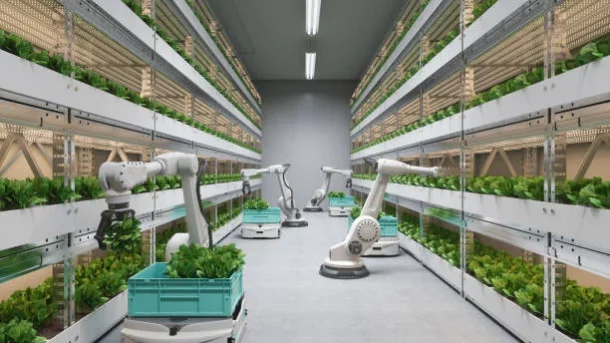
Autonomous Harvesting Robots: To crop harvesting, autonomous robots with robotic arms, computer vision, and machine learning are being developed. These robots are capable of precision field navigation, crop maturity detection, and harvesting operations. They can precisely and dexterously pick fruits, vegetables, or nuts, which decreases the requirement for physical labour and boosts harvesting effectiveness.

Advanced vision systems and sensing technologies are built into harvesting robots to identify and score crop maturity and quality. These tools include cameras, LiDAR sensors, near-infrared spectroscopy, and hyperspectral imaging. They make it possible for crop attributes like colour, size, ripeness, and flaws to be analysed by robots, guaranteeing selective and effective harvesting.

Grippers and Soft Robotics: Soft robotics is a new field that focuses on creating adaptable and flexible robotic systems. Robots can handle fragile or oddly shaped crops without harm thanks to soft robotic grippers that replicate the delicacy and compliance of human hands. Based on the crop being harvested, these grippers, which are made of materials like silicone or elastomers, may change their form and grip intensity.

Swarm robotics: Swarm robotics entails the coordination of numerous little robots cooperating to carry out difficult tasks. Swarm robots can divide the task among several units during harvesting, enabling simultaneous harvesting in various fields. Swarm robotics increases productivity and decreases harvesting operation time.

How is data integration improving farm productivity and decision making?

integration

integration data from several sources, including weather stations, soil sensors, crop monitoring systems, machinery sensors, and historical records, enables farmers to do comprehensive data analysis. Farmers can make wise choices about planting, irrigation, fertilisation, and pest control by combining and analysing this data in order to acquire a thorough picture of the circumstances on their farm. Comprehensive data analysis aids in maximising yield potential, minimising waste, and optimising resource allocation.


Data integration offers real-time monitoring of agricultural operations as well as alerts. Farmers can get immediate warnings and messages about crucial aspects like soil moisture, weather, pest infestations, and equipment faults by integrating data from sensors and monitoring systems. This makes it possible to act quickly, reducing yield losses and raising operational effectiveness.


Supply Chain Optimisation: Data integration incorporates information from a wider range of sources than just the farm level. Farmers can acquire insights into market demands, pricing patterns, and logistical factors by combining data from suppliers, distributors, and marketplaces. With better planning, better inventory control, and better stakeholder coordination made possible by this information, the supply chain is eventually optimised, resulting in effective product distribution.


Decision Support Systems: The cornerstone of agricultural decision support systems is data integration. These systems employ cutting-edge algorithms and models to analyse combined data and produce predictions or recommendations. Decision support systems help farmers make data-driven decisions by offering insights and recommendations on the best crop kinds, planting dates, irrigation schedules, and pest control tactics.

What are the benefits of using biodegradable mulch films in agriculture?

biodegradable mulch

What are the benefits of using biodegradable mulch films in agriculture/

Sustainability in the environment: Biodegradable mulch films are made to decompose organically over time, minimising the environmental impact of plastic mulch films. They are often manufactured from biodegradable substances generated from renewable resources, such as starch-based polymers, polyhydroxyalkanoates, or polylactic acid (PLA). They minimise pollution and the buildup of plastic trash since they decompose quickly and do not leave behind plastic residues in the soil.

Microbial Activity and Soil Health: Biodegradable mulch films encourage microbial activity, which improves soil health. They act as a carbon source for soil microbes as they break down, promoting their diversity and growth. This enhances the soil’s general fertility, nutrient cycling, and soil structure. Biodegradable mulch films also aid in water retention and infiltration, which lowers soil erosion and enhances moisture control.


What is the role of bioinformatics in crop improvement?

bioinformatics

Bioinformatics plays a crucial role in crop improvement by leveraging computational tools and techniques to analyze and interpret large-scale biological data related to crops. It involves the integration of biological, statistical, and computational approaches to gain insights into crop genetics, genomics, proteomics, and other omics data. Here are some key roles of bioinformatics in crop improvement:

  1. Genome Sequencing and Assembly: Bioinformatics facilitates the sequencing and assembly of crop genomes, providing a blueprint of their genetic makeup. This enables researchers to identify genes, regulatory elements, and structural variations associated with important traits such as yield, disease resistance, and nutritional quality.
  2. Functional Annotation of Genomes: Bioinformatics tools are used to annotate the genes and other functional elements in crop genomes. This process involves identifying coding regions, regulatory sequences, non-coding RNAs, and other genomic features. Functional annotation helps in understanding gene function, regulatory networks, and the underlying mechanisms of crop traits.

omparative Genomics: Bioinformatics enables comparative analysis of crop genomes with related species, including model organisms. By comparing genomic sequences, researchers can identify conserved regions, evolutionary relationships, and genetic variations that may be relevant to crop improvement. Comparative genomics he

How are predictive analytics being used for yield forecasting?

yield forecasting

A lot of businesses, especially agricultural, are using predictive analytics to forecast yield. Organisations may estimate agricultural yields accurately using predictive analytics, which improves planning, decision-making, and resource allocation by utilising historical data, statistical models, and sophisticated algorithms. Predictive analytics is used for yield forecasting in the following ways:

Predictive analytics begins by examining historical data, such as weather patterns, soil characteristics, crop kinds, and previous yield records. The patterns, correlations, and trends found in this data are utilised to forecast potential yields in the future.

Integration of weather data: Predicting crop yields requires careful consideration of the weather. In order to evaluate the impact of weather on crop growth and productivity, predictive analytics integrates both historical and real-time meteorological data for accurate yield forecasting.

Predictive analytics makes use of machine learning algorithms to analyse complex data sets and spot trends that may not be obvious to human analysts. These algorithms can produce precise crop yield projections by spotting subtle correlations between different elements.

Data-driven Decision Making: By fusing insights from predictive analytics with additional data sources, including as market trends, historical prices, and input costs, organisations may make well-informed choices about planting, fertilising, irrigating, managing pests, and harvesting. This data-driven methodology maximises agricultural productivity and forecasts of yield.

What are the advancements in precision nutrient application in agriculture?

application

 With the use of variable rate technology (VRT), farmers can apply fertilisers at various rates throughout their fields according to site-specific requirements. To gather information on soil fertility, crop development, and other pertinent parameters, soil sensors, remote sensing, and GPS technologies are employed. The creation of prescription maps that direct the application of fertilisers is then done using the data. By carefully tailoring the distribution of nutrients to the needs of the crop and the various soil conditions, VRT maximises nutrient uptake while minimising nutrient loss.

Sensor-Based Nutrient Management: Several sensors are used to monitor soil nutrient levels and crop health in real-time, including soil moisture sensors, electrical conductivity sensors, and optical sensors. Farmers can use these sensors to gather precise and timely data that will help them decide how to apply nutrients. 

Fertilisers with Controlled-Release: Controlled-release fertilisers are made to release nutrients gradually over an extended period of time. These fertilisers give the crops a more consistent supply of nutrients, which lowers the chance of nutrient leaching, volatilization, or runoff. These fertilisers increase the effectiveness of nutrient utilisation while minimising environmental effects by releasing nutrients in a regulated manner.

Software Tools for Nutrient Management: Tools for nutrient management are available to help farmers make knowledgeable decisions about the application of nutrients. To produce optimised fertiliser recommendations, these software systems take into account elements including soil type, crop type, yield targets, nutrient requirements, and environmental considerations. These tools, which generate customised nutrient management plans taking into account crop nutrient needs, present nutrient levels, and regulatory guidelines, can be used by farmers to input their field data.

 What are the advancements in robotic milking systems for dairy farms?

robotic milking

Animal Health Monitoring: Numerous robotic milking systems come with sensors that keep an eye on cow activity, rumination habits, behaviour, and body temperature. The system can spot potential health problems or alterations in cow behaviour by analysing this data, warning farmers to take appropriate steps like veterinary intervention or more careful observation.

Analytics and Data Integration: Modern robotic milking systems are linked to platforms for data analytics and farm management software. Farmers now have access to real-time information and analysis about characteristics such as feeding, cow health, and milk production. Farmers can enhance herd management, spot trends, and make data-driven decisions to increase productivity and animal welfare with the use of data analytics.

Robotic milking system producers are constantly attempting to enhance their systems, which include software upgrades, user interfaces, and equipment durability. These developments are meant to increase system performance, usability, and reliability, which will ultimately lower maintenance needs and boost uptime.

 What are the advancements in biological pest control methods?

biological

Biopesticides: These biological chemicals come from living things like fungi, bacteria, plants, and other microbes. There have been significant improvements in the creation and use of biopesticides. These products are less damaging to the environment and beneficial organisms while yet being able to target certain pests. Examples include mycoinsecticides based on entomopathogenic fungi and Bacillus thuringiensis products that target insect pests.

IPM (Integrated Pest Management) strategies have advanced with the addition of biological control techniques. IPM integrates a number of pest management techniques, such as biological control, cultural practises, monitoring, and the prudent application of chemical pesticides. Combining other IPM techniques with the use of beneficial insects—such as predatory mites, parasitoids, and nematodes—has proven to be an efficient way to manage pests while using the fewest chemicals possible.

Biological control is the use of living organisms to suppress pest populations, making them less damaging than they would otherwise be. Natural enemies of insects play an important role in limiting the densities of potential pests. These natural enemies include predators, parasitoids, and pathogens.