POSTEDITOR OFFICE

How are farmers using social media and digital marketing to connect with consumers?

social media

Farmers are connecting with consumers and sharing their stories, goods, and beliefs more and more using social media and digital marketing techniques. Here are some examples of how farmers are using social media and online advertising:

Developing an Online Presence: Farmers are setting up social media accounts, websites, and blogs to have an online presence. These platforms are used by them to promote their farm, inform consumers about their products and agricultural methods, and interact with them. Farmers can engage with customers who are interested in supporting local and sustainable agriculture by having an online presence and reaching a wider audience.

Sharing Farm tales: Farmers can use social networking as a platform to communicate with consumers about their experiences, tales, and daily activities. Farmers can provide consumers with visual, verbal, and written content
Direct Communication: Social media platforms make it possible for farmers and customers to communicate directly. Real-time responses, updates, and problems can be addressed by farmers. Through this direct communication, farmers are able to inform consumers about their goods, farming practices, and the value of promoting regional agriculture while also fostering connections and trust.

Sales and Product Promotion: Farmers employ digital marketing strategies to sell their goods and increase sales. They might operate specialized web advertising efforts, provide details about where and how people can buy their products, and run specific deals or discounts. Farmers can use social media to promote events like farmers markets, CSA (Community Supported Agriculture) sign-ups, and on-farm activities
What are the recent developments in sustainable packaging for agricultural products?

sustainable packaging

Aiming to lessen the environmental impact of packaging materials, increase recyclability, and support more sustainable supply chain practices, recent advancements in sustainable packaging for agricultural products. These significant changes are listed below:

Packaging materials that are biodegradable and compostable are being developed and used more frequently. These materials are made from renewable resources. These materials provide alternatives to conventional plastic packaging, such as bioplastics derived from plant-based ingredients like corn starch or sugarcane. In natural settings, they decompose more quickly, preventing the buildup of plastic trash.

Packaging that is recycled and recyclable: Many businesses use recycled materials in their packaging, such as cardboard, paper, or plastic. Utilizing recycled materials lessens the need for new resources and aids in preventing waste from ending up in landfills. Additionally, efforts are being made to provide packaging with clear labelling and disposal instructions that is simple to recycle.

Innovative Materials: Exploring fresh sustainable packaging materials is the focus of research and development. This includes switching from conventional paper or plastic to fibers derived from plants, such as bamboo or bagasse. Other advances include the use of mycelium (packaging made from mushrooms), films made from seaweed, or edible coatings that can increase the shelf life of goods while requiring less packing.

How is agri-tourism contributing to rural development and diversification?

agri-tourism

By utilizing agricultural resources and drawing tourists to rural areas, Agri-tourism, often referred to as agricultural tourism or farm tourism, is playing a vital role in rural development and diversification. Here is how agritourism helps with each of these factors:

Economic development: Agritourism gives farmers and rural areas a second source of income. Farmers can make money from tourism-related activities in addition to their regular farming activities by providing farm tours, farm stays, agricultural workshops, or other agrarian experiences. This revenue diversification promotes economic stability in rural areas, job growth, and the expansion of nearby establishments like hotels, eateries, and artisanal producers.

Rural entrepreneurship is supported by agri-tourism, which also fosters the growth of small companies. Agritourism businesses, such as farm-to-table restaurants, farm shops, craft markets, or leisure pursuits like pick-your-own fruit farms or corn mazes, can be started by farmers and locals. As a result, rural communities are encouraged to be creative, innovative, and self-sufficient, which helps the local economy.

Cultural Preservation and legacy: Local customs, rural lives, and agricultural legacy are frequently highlighted through agritourism, providing chances for cultural preservation. Visitors can taste regional cuisine and crafts, take part in seasonal events, and learn about traditional farming methods. This encourages pride in local culture, preserves rural customs, and safeguards rural history as a whole.

What are the advancements in precision livestock farming and animal welfare?

livestock farming

Quality Control and Certifications: Blockchain can be used to hold and confirm certifications for sustainability, fair trade, organic farming, and other standards of quality, including livestock farming. On the blockchain, certifying authorities can store audit findings and generate digital certificates that can be viewed by all parties involved in the supply chain. Consumers may readily check the authenticity and compliance of the products they buy, ensuring transparency and fostering trust.

The improvement of animal wellbeing has been facilitated by advances in precision livestock farming (PLF), which allow for more accurate monitoring, management, and care of cattle. The following are some significant developments in PLF and how they affect animal welfare:

Sensor technology: Different facets of animal behavior and health are being tracked using sensors. For instance, wearable technology can monitor an

Environmental Monitoring: PLF covers the monitoring of environmental variables in livestock facilities, such as temperature, humidity, and air quality. Preventing stress and health problems in animals can be achieved by maintaining ideal environmental conditions. Automated systems can change the ventilation, lighting, and temperature to give the animals a more relaxing and comfortable habitat.

Artificial intelligence and data analytics: PLF systems gather and analyze enormous amounts of data from numerous sources, including sensors and monitoring equipment. Algorithms for advanced analytics and artificial intelligence can find trends, outliers, and indications of animal care. Farmers can use this to make data-driven decisions, put preventive measures in place, and act quickly when necessary.

How are emerging technologies like blockchain being applied to improve transparency in agricultural supply chains?

transparency

New technologies like blockchain are being used in many ways to increase transparency in the supply chains for agricultural products. Here are a few instances:

Traceability and provenance: With the help of blockchain technology, every transaction and movement that takes place along the supply chain may be recorded in an unchanging, transparent manner. This enables the verification and traceability of agricultural products from the farm to the table. The blockchain enables the recording of every stage of the supply chain, including production, processing, packing, and distribution, giving customers comprehensive details on the provenance, caliber, and handling of the products they buy.

Supply Chain Visibility: By storing and exchanging data across numerous stakeholders, blockchain enables real-time supply chain visibility in the agricultural industry. This makes it easier to locate bottlenecks, keep track of product movement, and check inventory levels.

Quality Control and Certifications: Blockchain can be used to hold and confirm certifications for sustainability, fair trade, organic farming, and other standards of quality. On the blockchain, certifying authorities can store audit findings and generate digital certificates that can be viewed by all parties involved in the supply chain. Consumers may readily check the authenticity and compliance of the products they buy, ensuring transparency and fostering trust.

Food Safety and Recall Management: Blockchain technology can speed up the process of identifying impacted products and their origins in the event of food safety concerns or product recalls. Stakeholders may easily identify the cause of contamination or quality issues by storing information about each batch or lot of products on the blockchain.

What are the current debates on agricultural subsidies and trade protectionism?

agricultural subsidies

Environmental Impact: Some agricultural subsidies may encourage actions that are bad for the environment, like excessive use of water, pesticides, and fertilizers. According to detractors, it could be more advantageous for long-term sustainability to redirect subsidies towards conservation efforts, environmental preservation, and sustainable farming methods.

Agricultural subsidies may result in trade disagreements and international hostilities. Subsidies, particularly in affluent nations, are criticised for undercutting agricultural producers in developing countries and making it difficult for them to compete on the global market. This worsens trade imbalances and may obstruct the growth of the agriculture industries in developing countries.

Protecting domestic agricultural firms from unfair competition, especially when dealing with imports that are too subsidised or produced to lower standards, is crucial, according to supporters of trade protectionism. They argue that barriers such as tariffs or import limits can defend domestic farmers and uphold the nation’s food security.

Market Errors: Trade protectionist policies, in the opinion of their critics, have the potential to distort markets and hinder the efficiency gains that can be achieved through specialization and comparative advantage. Protectionist measures might artificially drive up costs, limit consumer choices, and make it more challenging for farmers to export their goods, all of which would hamper the growth of the world economy.

How is agroforestry being integrated into sustainable farming systems?

agroforestry

As a means to advance ecological harmony, boost productivity, and increase the sustainability of agricultural practices, agroforestry is being progressively included into sustainable farming systems. Here are a few typical methods for integrating agroforestry:

Alley cropping: Alley cropping is the practice of alternating rows of trees or shrubs with rows of agricultural crops. Through nutrient cycling and leaf litter decomposition, the trees improve soil fertility, provide shade, and lessen soil erosion. Reduced wind speeds, an enhanced microclimate, and the availability of nutrients from the trees all benefit the crops.

Windbreaks and Shelterbelts: Planting rows or strips of trees as windbreaks or shelterbelts along field edges or between fields reduces wind erosion, safeguards crops from wind damage, and creates microclimates that enhance crop development. Additionally, windbreaks offer habitat to pest-controlling birds and beneficial insects.

Silvopasture: In a mutually beneficial system, silvopasture blends trees, forage crops, and cattle grazing. While livestock grazing aids in the management of vegetation and enhances nutrient cycling, trees provide shade, lumber, and feed for livestock. Systems of silvopasture can improve animal welfare, stop soil erosion, and give farmers other sources of revenue.

What are the implications of land degradation and soil erosion in agriculture?

land degradation and

Reduced Soil Fertility: The loss of topsoil, which is rich in nutrients essential for plant growth, can be caused by land degradation and soil erosion. Soil fertility declines as a result, which has an impact on agricultural productivity. Lower yields, lower quality agricultural produce, and a greater reliance on synthetic fertilizers can all result from nutrient depletion, which can have negative effects on the environment and the economy.

lower Water Holding Capacity: Because of the loss of organic matter and soil structure, eroded soils frequently have lower water holding capacity. Increased soil moisture deficits and increased irrigation needs may arise from this since water runoff and infiltration may be reduced and increased, respectively. land degradation and soil erosion’s effects on agricultural output might be further exacerbated by a lack of water or by ineffective water management techniques.

The loss of fertile soil and the exposing of less productive subsoil are the results of soil erosion, which is the process by which the top layer of soil is removed by water or wind. Water can carry away eroded soil particles and deposit them in water bodies, generating sedimentation. This sedimentation can harm aquatic ecosystems, degrade the quality of the water, and diminish reservoirs’ ability to store water.

How are governments and organizations addressing food waste and loss?

organizations

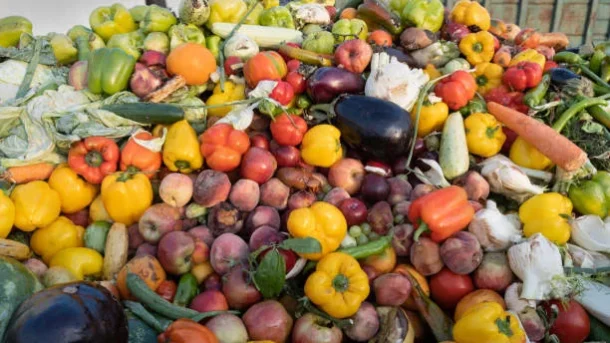
Through a variety of initiatives and tactics, governments and organizations from all over the world are actively tackling the problem of food loss and waste. Here are a few typical methods:

Awareness and Education: Through campaigns, educational initiatives, and community outreach, governments and organizations are educating the public about the effects of food loss and waste. They seek to raise awareness of the value of waste reduction and the adoption of sustainable practices among people, organizations, and communities.

Many governments have put rules and regulations in place to address food loss and waste. Setting waste reduction goals and timelines, enacting landfill restrictions on organic waste, encouraging food donations, and promoting sustainable packaging techniques are a few examples.

Food Recovery and Redistribution: Efforts are underway to recover surplus food from various stages of the supply chain and redistribute it to those in need. Governments and organizations are partnering with food banks, non-profit organization, and food rescue initiatives to facilitate the collection, storage, and distribution of excess food.

What are the challenges and opportunities in agricultural supply chain management?

supply chain

Fragmentation: There are many different parties involved in the agricultural supply chain, including farmers, suppliers, distributors, and retailers. Due to the industry’s fragmentation, it might be difficult to coordinate and integrate their efforts.

Seasonal Variability: Seasonal elements, such as weather patterns and crop cycles, have a significant impact on agriculture. It can be challenging to manage changes in supply and demand throughout the year; this calls for good planning and forecasting.

Transporting agricultural goods from farms to markets can be difficult, particularly in isolated locations with poor infrastructure. Post-harvest losses and increased costs might result from poor logistics and insufficient storage facilities.

Maintaining the high standards of quality and safety for agricultural goods all the way through the supply chain is essential. But problems like contamination, spoilage, and pest infestation might arise at different times and call for strong quality control procedures and traceability systems.