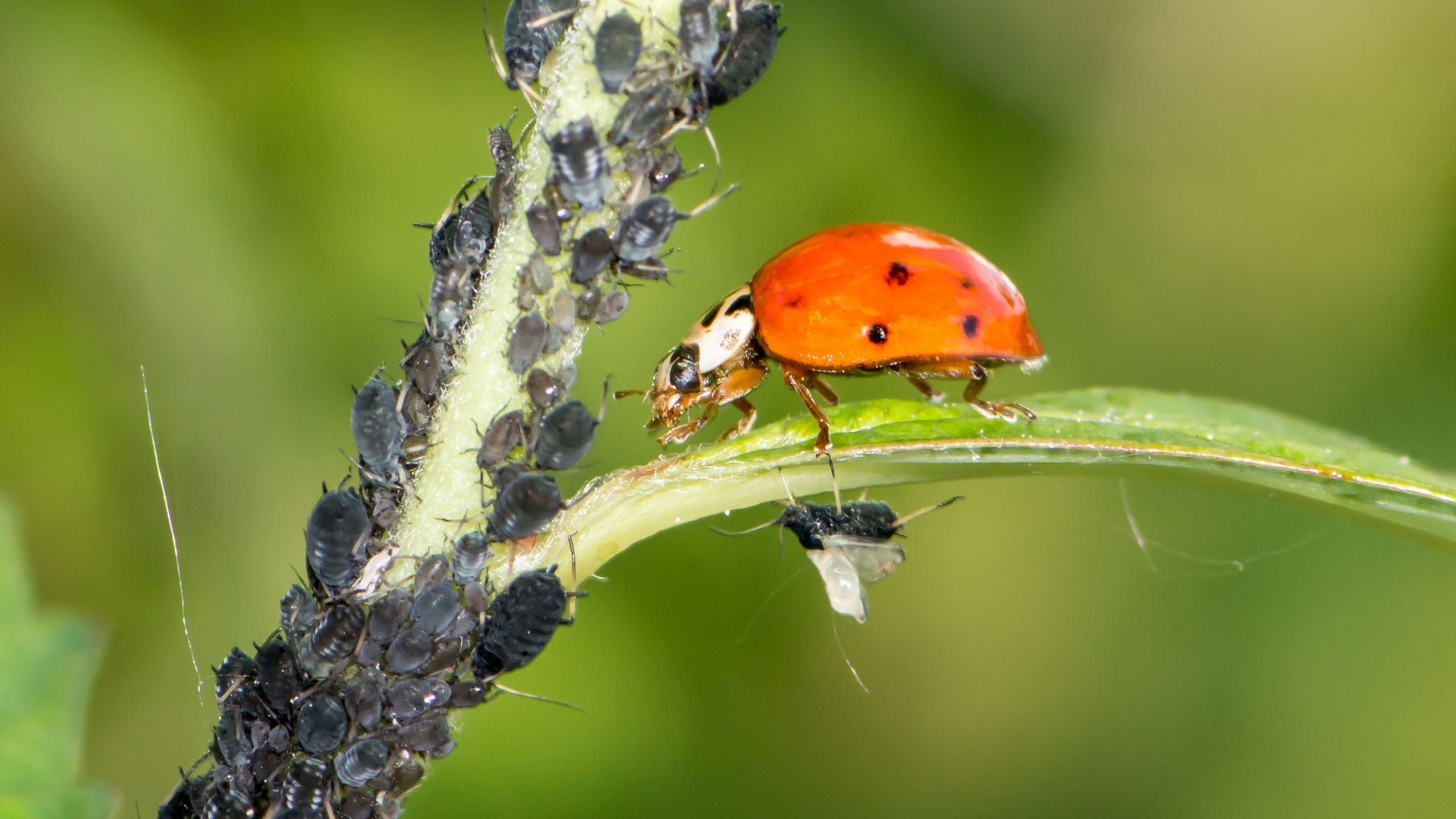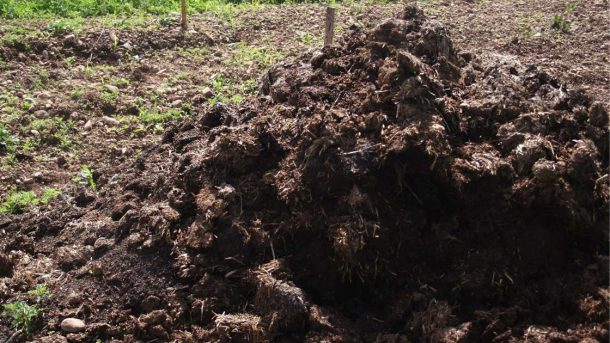
Organic manures helps in increasing organic matter in the soil. It releases plant food in available form for the use of crops. Manures enable soil to hold more water and helps in increasing drainage in clay soil. They provide organic acids that help to dissolve soil nutrients and make them available for the plants. It helps in maintaining C:N ratio in the soil and also increases the fertility and productivity of the soil. Application of organic manure improves biological activity in the soil, that helps in making nutrients that are deep in the soil available to the plants. Organic manures also reduces the loss of moisture from soil in the form of evaporation.
What are the symptoms of nitrogen deficiency?
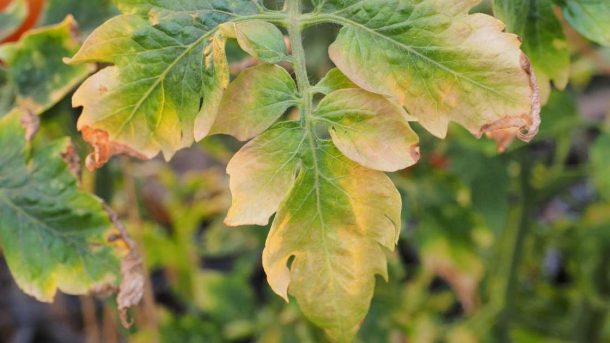
Nitrogen deficiency symptoms include stunted growth, lower protein content reduced deficiency incase of acute deficiency. Other symptoms include appearance of pale-yellow color leaves in the older leaves, starting from the tip due to reduced chlorophyll content. This is followed by death or dropping of older leaves depending on degree of deficiency. Low root/shoot ratio is observed due to increased root growth and stunted shoot growth. Nitrogen deficiency is common in nature. Plants have developed response mechanisms to nitrogen deficiency which include hormonal up regulation of root growth, and closing of aqua pores which results in shoot water stress and stunted shoot growth.
How green lacewings are beneficial?
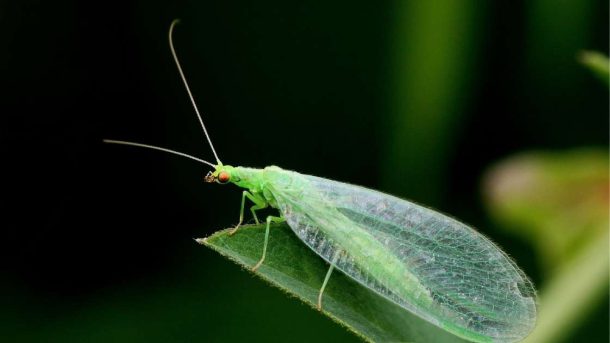
The green lacewings (Chrysoperla sp.) are a common beneficial insect found in the landscape. They are predators that act as bio-control agents by feeding on aphids, but will also control mites and other soft-bodied insects such as caterpillars, leafhoppers, mealybugs and whiteflies. They helps in control of arthropod insects in greenhouses. The larvae of this insect are voracious feeders. A larvae can consume approximately , 200-300 aphids during its three stages of development.
What are biopesticides?
Biopesticides are naturally occurring substances derived from animals, plants, bacteria and certain minerals that helps in controlling pests using non-toxic mechanisms. They have inhibitory effects on crop diseases and insect pests. Biopesticides are considered safer alternatives to chemical pesticides in pest management. They are non-toxic, naturally environmentally friendly and are a key ingredient in sustainable farming The 3 categories of biopesticides include microbial pesticides, plant-incorporated protectants and biochemical pesticides. Different species of fungi , bacteria , insects and other organisms are used as biopesticides .
What are parasitoids?
Parasitoids are among the most widely used biological control agents. Parasitoids lay their eggs on or in the body of an insect host, which is then used as a food for developing larvae. The host is ultimately killed. Developing in or on a host requires the parasitoid to have very specialized methods to attack, feed on and avoid the host’s immune system. This high level of specialization means most parasitoids only attack one or a few closely related species. Parasitoids perform an important ecosystem service by suppressing pest populations. The majority of pests are attacked by at least one parasitoid.. Wasps and flies contain the vast majority of insect parasitoids. There are over 70,000 parasitoid species across the globe.
What is soil organic matter?

Soil organic matter (SOM) is the mix of plant and animal matter in different stages of decay. Soil organic matter plays a key role in biological, physical, and chemical function in soil. Soil organic matter is the organic component of soil, consisting of three primary parts including small (fresh) plant residues and small living soil organisms, decomposing (active) organic matter, and stable organic matter (humus). Organic matter serves as a reservoir of nutrients and water in the soil, aids in reducing compaction and surface crusting, and increases water infiltration into the soil.
What is the importance of soil pH?
Soil pH is of utmost importance in plant growth as it influences nutrient availability, toxicities and the activity of soil organisms. Soil pH regulates plant nutrient availability by controlling the chemical forms of the different nutrients and also influences their chemical reactions. As a result, soil and crop productivities are linked to soil pH value. Though soil pH generally ranges from 1 to 14, the optimum range for most agricultural crops is between 5.5 and 7.5. However, some crops have adapted to thrive at soil pH values outside this optimum range. Soil pH is affected by the mineral composition of the soil parent material and the weathering reactions undergone by that parent material.
What is intercropping system?
Growing more than one crop in the same area in rows of definite proportion and pattern. The most common goal of intercropping is to produce a greater yield on a given piece of land by making use of resources that would otherwise not be utilized by a single crop. Intercropping strategies include planting a deep-rooted crop with a shallow-rooted crop, or planting a tall crop with a shorter crop that requires partial shade .Numerous types of intercropping are mixed intercropping, row cropping, relay cropping, etc.
What is surface irrigation?
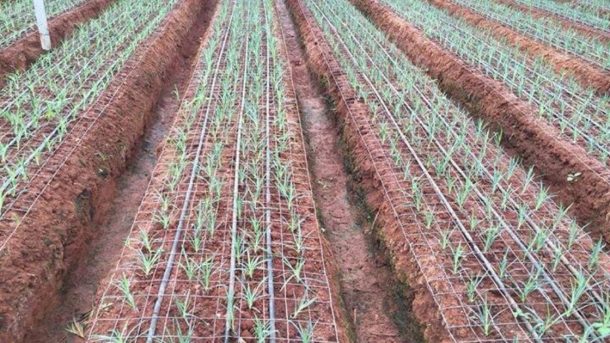
Various methods can be used to supply irrigation water to the plants like surface irrigation. Surface irrigation is the application of water by gravity flow to the surface of the field. Either the entire field is flooded (Basin Irrigation) or the water is fed into small channels(furrows) or strips of land (borders).
What is Bio control agents?
A biological control agent is an organism, such as an insect or plant disease, that is used to control a pest species.